Last Updated: October 12, 2026
Last Updated: October 12, 2026





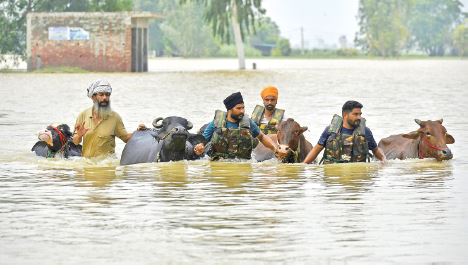
Punjab witnessed severe flooding in 2025, affecting thousands of residents, damaging agricultural land and disrupting normal life across several districts. The state government undertook multiple measures to protect lives, provide relief and support rehabilitation. The focus remained on evacuation, medical aid, livestock protection and restoration of essential services. The response involved coordinated efforts from the Revenue, Animal Husbandry, Health and Disaster Management departments along with the National Disaster Response Force, State Disaster Response Force, the Army and district administrations.
The Punjab Government reported that 23,337 people were evacuated from flood-hit areas as water levels rose in various parts of the state. Evacuation efforts continued on a daily basis, with rescue teams moving residents from marooned villages to safer locations. Relief camps were set up across districts to provide temporary shelter. At one stage, 111 relief camps were operational, housing more than 4,500 displaced people. These camps provided basic necessities including food, drinking water, sleeping arrangements and healthcare support.
Floodwaters impacted 2,214 villages across 22 districts, affecting a population of more than 3.88 lakh. Many villages saw extensive damage to homes and local infrastructure. The state government confirmed that the floods led to the loss of lives, reporting 55 deaths across various districts. Rescue operations continued to be a priority as teams worked through affected regions by boat and foot patrol.
Agricultural damage was significant, with over 1.92 lakh hectares of farmland affected across 18 districts. Standing crops suffered due to prolonged waterlogging, raising concerns over the incomes of farming households. The government worked alongside district authorities to assess crop loss to facilitate compensation procedures and planning for the next farming cycle.
In order to manage the on-ground rescue and evacuation operations, multiple specialised forces were deployed. The state reported that 8 National Disaster Response Force teams, 2 State Disaster Response Force teams, 14 Army columns and 2 Engineer Task Force units were active in flood-hit areas. In addition, 184 boats were used to reach cut-off locations, transport supplies and evacuate residents. The deployment of trained personnel and equipment was intended to ensure timely movement of people from high-risk zones and reduce casualties.
Alongside protecting lives, the state placed significant emphasis on livestock protection. Punjab’s rural economy relies heavily on cattle and buffaloes for dairy production and livelihood. Recognising the threat of disease outbreak following floods, the Animal Husbandry Department launched a large-scale vaccination campaign. More than 1.75 lakh animals were immunised against Haemorrhagic Septicaemia within one week of the campaign launch. This mass vaccination effort was carried out in 713 villages across districts including Amritsar, Fazilka, Ferozepur, Gurdaspur, Hoshiarpur, Jalandhar, Kapurthala, Moga, Pathankot, Rupnagar and Tarn Taran.
The immunisation drive formed part of the state’s flood rehabilitation action plan aimed at preventing livestock losses that could lead to further economic hardship for farmers. The campaign was described as a protective measure to secure the financial stability of families dependent on dairy and animal husbandry.
To further support livestock health, the state organised more than 1,300 special veterinary relief camps in flood-affected villages. These camps delivered medical treatment to over 2.52 lakh animals. Veterinarians and field staff were mobilised to reach even remote villages. Supplies including mineral mixtures, Uromin licks and potassium permanganate crystals were distributed to help prevent infections and strengthen livestock immunity. Door-to-door outreach was carried out to identify animals in need of care and to deliver feed and medication where grazing land remained waterlogged.
Public health services were also expanded in response to the floods. Medical teams were deployed in vulnerable areas to prevent the spread of waterborne diseases. Mobile medical units visited relief camps and villages to conduct check-ups, distribute medicines and provide awareness on hygiene practices. The Health Department worked to ensure safe drinking water supply and sanitation measures in areas where sources had been contaminated by floodwater.
District administrations were directed to monitor relief work, assess damage, and assist families in processing loss-related documentation. Coordination between departments was maintained through regular field reporting and communication at the state level.
The government stated that the response was guided by the objective of ensuring that affected families and livestock received timely assistance. The administration focused on both immediate relief and on building conditions for recovery. Animal health measures, crop loss assessment and continued medical services were considered essential to stabilise livelihoods in the months following the flooding.
The 2025 floods underscored the challenges that Punjab faces due to heavy rainfall and river overflow. The state’s response highlighted the importance of preparedness, rapid deployment of resources and coordination among departments. The measures taken during this period reflected an approach that aimed to safeguard lives, protect livestock and support the agricultural economy. While the floods caused damage to homes, fields and public infrastructure, the relief and rehabilitation work was directed at reducing long-term hardship for affected communities and helping them regain stability.
Punjab BJP President Kewal Singh Dhillon on Monday said a poster promoting a protest being held in Delhi...

The Enforcement Directorate (ED) has arrested Harcharan Singh Bhullar, the then Deputy Inspector General (DIG) of the Ropar...
In accordance with the instructions of the Election Commission of India, the Special Intensive Revision (SIR) of Electoral...

Flight operations were affected near Sri Guru Ram Dass Ji International Airport in Amritsar, Punjab, on Sunday night...

Enforcement Directorate (ED) has arrested Ludhiana Police Commissioner Swapan Sharma and others have been summoned to appear in...

The Punjab Vigilance Bureau (VB), during its ongoing crusade against corruption in the state, has been able to...

Aries: The day will be auspicious...