Last Updated: October 21, 2026
Last Updated: October 21, 2026






One of the most vital senses, taste perception aids in identifying healthful foods and guiding us away from dangerous things. For example, our preference for both savoury and sweet foods stems from our need to eat proteins and carbohydrates.
A research team led by Associate Professor Hidenori Nishihara from Kindai University and Professor Yoshiro Ishimaru from Meiji University, Japan, have identified five new, previously undiscovered groups within the TAS1R family. This discovery is a result of a genome-wide survey of jawed vertebrates including all major fish groups.
Researchers from all over the world are examining the origins and evolutionary history of taste receptors due to their significance as an evolutionary feature. They can better depict the evolution of life on Earth by gaining these insights into the feeding habits of organisms.
One of the important tastes in our taste palette is umami, or the savory taste, which is associated with proteins that form a vital part of the diets of many organisms. The taste receptor type 1 (T1R) detects sweet and umami tastes among mammals. This taste receptor is encoded by the TAS1R, a family of genes, including TAS1R1, TAS1R2, and TAS1R3, and comes from a common ancestor of bony vertebrates. However, this gene pattern is not observed in coelacanth and cartilaginous fishes, where ‘taxonomically unplaced’ TAS1R genes have been identified, suggesting an incomplete understanding of the evolutionary history of taste receptor
Good Evening Viewers! Catch up on the day's biggest stories with The Savera Times Evening Bulletin. Get the...

Congress leaders continued their protest outside the Jaipur Police Commissionerate on Tuesday, demanding the registration of a zero...

On the auspicious occasion of Vijayadashami, Prime Minister Narendra Modi on Tuesday called on the countrymen to unite...

A historic milestone was achieved on Tuesday in the expansion of Chhattisgarh's rail networkA historic milestone was achieved...

Model Shraddha Dubey, one of the main accused in the death of Lucknow businessman Shiv Sharma, has been...

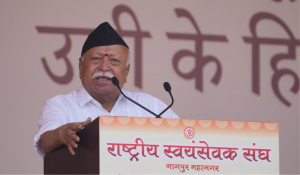
Rashtriya Swayamsevak Sangh (RSS) chief Mohan Bhagwat on Tuesday called for strengthening national unity, social harmony, indigenous practices...
Aries: The day will be auspicious...