Last Updated: October 22, 2026
Last Updated: October 22, 2026





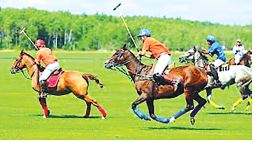
Field polo is often seen as a niche sport, and rightly so. Yet behind its exclusivity lies a game steeped in history, tradition, and remarkable athleticism.
According to popular belief, polo originated in ancient Persia, where it was used to train elite cavalry units. Over time, it evolved into a sport enjoyed by royalty and nobility. Today, the sport is dominated by countries such as Argentina, England, and the United States, all of which have developed highly competitive leagues, world-class players, and top-quality horses. Nations like Australia, New Zealand, South Africa, France, Germany, and Switzerland also maintain a strong presence on the international polo circuit.
India, too, has a long and illustrious association with the game. Once part of the Olympic roster from 1900 to 1936, polo in India has historically been linked to its royal families and military traditions. The Calcutta Polo Club, founded in 1862, is among the oldest in the world and played a central role in reviving and promoting the sport. The Jaipur Polo team, established in the early 20th century by Maharaja Sawai Man Singh II, continues that legacy today. The current Maharaja of Jaipur, Padmanabh Singh, upholds the family tradition as both player and captain of the team, which remains one of the strongest polo outfits in the country.
Among the team’s standout members is veteran South African professional Lance Watson, a four-goal player who has made a name for himself across the global polo scene. Watson has played professionally in major polo nations such as Argentina, England, and New Zealand, and has also competed in Asia and Africa, including China, Malaysia, Dubai, Zambia, and Kenya. His consistency and skill have made him a key figure in the Jaipur lineup and one of its most dependable performers.
Having played across continents, Watson brings a deep understanding of the sport’s nuances. He also runs a polo academy with his brother in Underberg, South Africa, where they train young players and work to expand the game’s reach. In conversation, Watson offers insights into aspects of polo that often remain unseen by casual observers. He describes it as a sport that is as technical as it is thrilling, combining speed, strategy, teamwork, and horsemanship in a way few other games do.“People often underestimate how demanding polo is,” he explains. “It’s not just about riding or hitting the ball. The connection with the horse, the timing, the awareness of teammates and opponents, and the ability to read the field all come together in split seconds. It’s physical, mental, and tactical all at once.”
Watson also notes that India occupies a special place in the sport’s global story. Widely regarded as the birthplace of modern polo, India was where the British first encountered the game before taking it back to England in the 19th century, laying the foundation for its international expansion. The country continues to play a central role in polo’s development.
According to the Indian Polo Association, there are currently 37 clubs and around 470 tournaments held under its banner across the country. These include competitions supported by the armed forces, heritage clubs, and private teams, reflecting the game’s blend of tradition and modern professionalism.
Good Evening Viewers! Get the latest updates from India and around the world with The Savera Times Evening...

Bharatiya Janata Party (BJP) National General Secretary Smriti Zubin Irani launched a scathing attack on Congress MP and...

New Delhi: Cockroach Janata Party (CJP) leaders Saurav Das and Ashutosh Ranka will be released from judicial custody...

According to police, three suspicious young men are seen in CCTV footage. Efforts are underway to identify them....

A video has surfaced of an alleged attempted assault on Jan Suraj Party's Bihar president Manoj Bharti. The...

Two accused have been convicted and sentenced to 10 years of rigorous imprisonment in a 2017 drug trafficking...

Aries: The day will be auspicious...