Last Updated: October 21, 2026
Last Updated: October 21, 2026






The Gita is about maintaining harmony within the inner world while the law is about maintaining order in the outer world. Any karma has two parts; one is the intent and the other is execution. In the words of law, they are called, using Latin words, mens rea and actus reus, respectively, in the context of crime.
For example, a surgeon and a murderer both plunge a knife into someone’s stomach. The surgeon’s intention is to save/cure, but the murderer intends to damage/kill. Death can occur in both situations, but their intentions are entirely opposite. Gita is eternal whereas law is situational. Driving on the left side of the road is legal in one country and may be an offence in another. Law is black and white, but not life which has many grey areas.
The Gita can help us navigate these difficulties.Law is very comfortable as long as we perform actions which are within the defined parameters of the law of the land. For example, when we pay taxes (actus reus), the law is not concerned about whether it was done with pleasure or pain (mens rea). If someone is thinking of committing a crime, the law would be helpless to stop that thinking. On the other hand, as per the Gita, we should drop even such thinking or intention.
Gita says, be aware of karma when it is at the intention stage as we don’t have any control once it goes to execution. It’s similar to the saying that we can shape the tree when it is still young.While the focus of the law is on execution, contemporary moral literature encourages us to have noble intentions. But Gita exhorts us to transcend beyond intentions. When intention- good or bad- meets with success or failure, it triggers a reaction. Either ahankaar may grow stronger or internal tension builds up like lava. Neither situation is desirable as they take us away from the eternal state of our inner self.The solution is to observe our intentions so that we can transcend them to reach the eternal state of our inner self.
Start your day with The Savera Morning Brief, bringing you the latest news from India and around the...

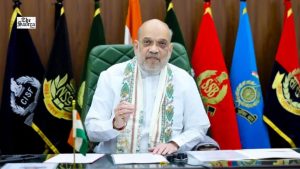
Union Home Minister Amit Shah will pay tribute to police martyrs at the National Police Memorial in New...
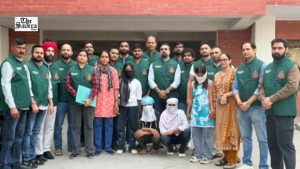
Four more people, including two women, have been arrested in the Tiger Shroff firing case. Delhi Police are...
We are very proud that at present India is the number one country in the world by surpassing...

Every investor wants the wealth-creating power of equity and the reassuring stability of debt. Balanced Advantage Funds attempt...

Tourism is a major source of government revenue in our country. There are different types of tourism. Scenic...
Aries: The day will be auspicious...