Last Updated: October 24, 2026
Last Updated: October 24, 2026





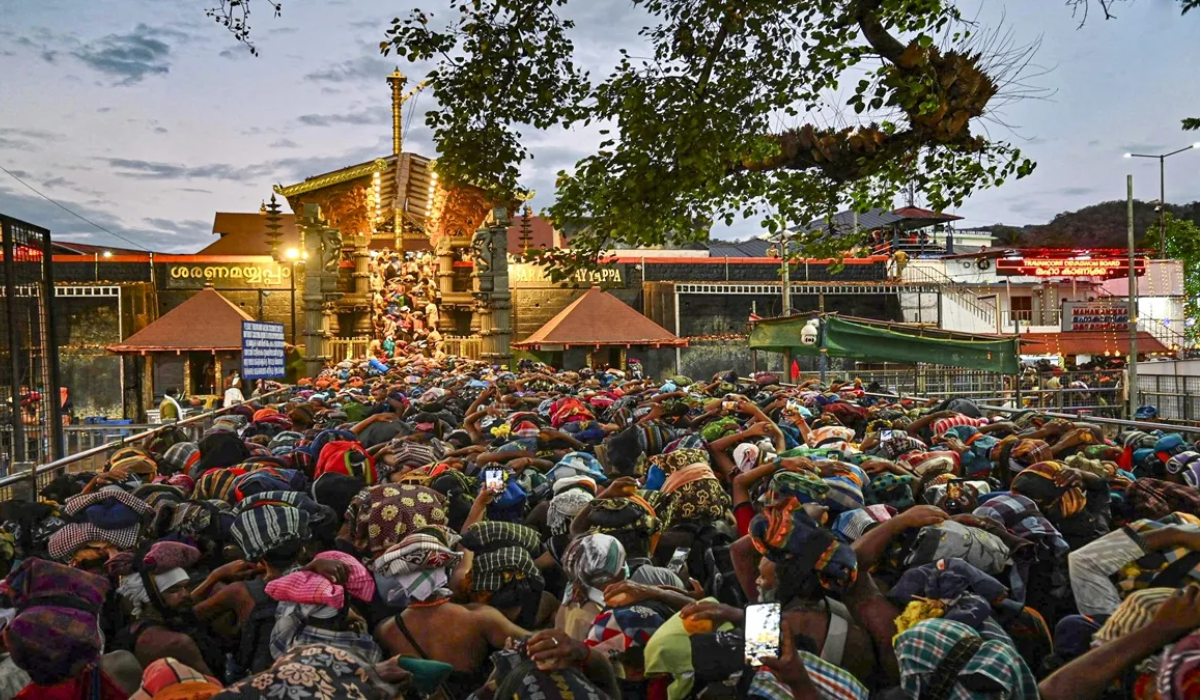
New Delhi: Supreme Court Justice B V Nagarathna said during a hearing on Tuesday that it is not right to consider women ‘untouchable’ for three days a month and that they cannot suddenly be freed from untouchability on the fourth day. This comment came during the hearing of the Sabarimala case and other cases.
Comments during the hearing
Solicitor General Tushar Mehta, representing the central government, objected to the 2018 Sabarimala verdict, which held that barring women aged 10 to 50 from entering the temple amounted to ‘untouchability’ under Article 17 of the Constitution.
Justice Nagarathna said, “I don’t understand how this argument can be made on Article 17 in the context of Sabarimala. Speaking as a woman, untouchability cannot exist for three days in a month and suddenly not on the fourth day.”
Debate on the interpretation of ‘untouchability’
This comment came after Mehta said that “India is not as patriarchal or gender conservative as the Western world.”
In the Sabarimala case, Justice D.Y. Chandrachud had previously said that barring women from entering a temple on the basis of age or menstrual status amounts to ‘untouchability,’ places women in a subordinate position, promotes patriarchy, and affects their dignity.
Centre’s stand on the temple ban
Mehta argued that the ban on women’s entry was not linked to menstruation, but was based on a specific age group.
He said, “Sabarimala is a case involving only a particular age group. There should be no room for confusion. Other Ayyappa temples in India and the world are open to women of all ages. Only one temple has this restriction. This is a unique case.”
Nine-Judge Constitution Bench
The case is being heard by a nine-judge Constitution Bench, which is examining discrimination against women at religious places and the limits of religious freedom in different religions.
The bench comprises Chief Justice Surya Kant, along with Justices B.V. Nagarathna, M.M. Sundaresh, Ahsanuddin Amanullah, Arvind Kumar, Augustine George Masih, Prasanna B. Varale, R. Mahadevan, and Joymalya Bagchi.
Amaravati: At least five people were killed on Saturday after a fire broke out at a road construction...

Uttar Pradesh: The road to a seat-sharing agreement between the Samajwadi Party (SP) and Congress appears challenging ahead...
New Delhi: Congress Parliamentary Party (CPP) Chairperson Sonia Gandhi has shared a video on social media recalling how...

Jaipur: Three people were killed and 18 others injured when a Traveller van carrying devotees from Maharashtra rammed...

New Delhi: India and Uzbekistan discussed strengthening bilateral cooperation across various sectors, including counter-terrorism, the Ministry of External...

Mumbai: Katherine Schwarzenegger has shared a string of pictures of her husband and actor Chris Pratt sleeping, calling...

Aries: The day will be auspicious...