Last Updated: October 20, 2026
Last Updated: October 20, 2026





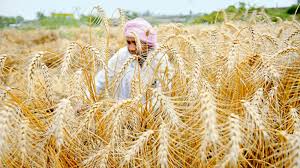
The recent announcement of an interim India-US trade deal has sparked understandable anxiety among Indian farmers, fueled largely by a tweet from US Agriculture Secretary Brooke Rollins. On February 2, 2026, she declared that the agreement would “export more American farm products to India’s massive market, lifting prices, and pumping cash into rural America,” while noting the reduction of the US agricultural trade deficit with India.
Farmer organisations, including the Samyukta Kisan Morcha, voiced fears of subsidised US produce flooding Indian markets, potentially devastating domestic livelihoods in agriculture and dairy. Opposition parties echoed these concerns in Parliament, demanding clarity on whether India had agreed to zero tariffs on US agricultural imports.
Such apprehensions are not unfounded in a sector where protection has long been a political red line. India’s farmers have historically resisted market-opening measures in trade pacts, from the WTO to bilateral deals, wary of unfair competition from heavily subsidised producers abroad. Yet Commerce and Industry Minister Piyush Goyal’s statements in the Lok Sabha on February 4, 2026, offer a clear and reassuring counter-narrative.
Goyal told the House that “India’s sensitive sectors of agriculture and dairy have been protected” and “excluded” from concessions that could disrupt domestic markets. He emphasised that Prime Minister Narendra Modi “has never allowed their interests to be compromised” and that “adequate safeguards are built in to protect these sectors from unfair competition.” In response to Opposition protests and queries, he reiterated that “in the sector of fertiliser and agriculture, India’s sensitivity has been taken care of.” Union Agriculture Minister Shivraj Singh Chouhan reinforced this in Parliament, confirming protections for agriculture and dairy.
These assurances are not mere rhetoric. The deal, finalised after nearly a year of negotiations, reflects India’s consistent stance: core agricultural staples, dairy products, and other sensitive items remain ring-fenced. While the US side has highlighted gains for its farmers—Rollins’ tweet was framed in “America First” terms, projecting benefits for rural US communities—Indian negotiators have prioritised safeguards. There is no blanket commitment to zero tariffs on US agricultural exports across the board. Any tariff reductions appear limited to non-sensitive categories, with explicit exclusions for vulnerable segments. The joint statement, expected soon, will provide final contours, but Goyal’s parliamentary intervention has already clarified that farmers’ interests were non-negotiable.
The deal’s broader architecture supports this position. India has secured a reduction in US tariffs on its exports from as high as 50 per cent to 18 per cent—lower than rates applied to several competitor nations. This will boost labour-intensive sectors such as textiles, apparel, leather, gems and jewellery, engineering goods, and seafood, creating jobs and enhancing export competitiveness. These gains align with Atmanirbhar Bharat and Viksit Bharat goals, strengthening MSMEs and rural economies without undermining agriculture. Access to US technology in AI, semiconductors, critical minerals, and data centres could also aid precision farming and value addition in agri-processing over time.
Critics may argue that any opening, even selective, risks indirect pressure. Yet India’s negotiating record shows resilience: dairy and agriculture have been shielded in past talks, and the current pact appears to follow suit. The US tweet, while celebratory from Washington’s perspective, does not override India’s red lines. It reflects domestic political messaging in the US, not the agreed terms.
Farmers deserve transparency, not alarmism. The government must follow up with detailed briefings on the deal text once finalised, perhaps through consultations with farmer unions. But the evidence so far—Goyal’s direct assurances in Parliament—suggests this is not a sell-out but a balanced agreement that protects the rural backbone while opening doors for growth.
Indian agriculture faces real challenges: climate change, input costs, market volatility, and the need for modernisation. A calibrated trade engagement that safeguards livelihoods while attracting investment can help address these, provided protections remain ironclad. For now, the fears stirred by one tweet should not overshadow the facts: India’s farmers remain secure.
Greater Noida (UP): While Dussehra is celebrated across India by burning the effigies of Ravan, Meghnad and Kumbhkaran...

Kanpur: While Vijayadashami is traditionally marked by the burning of Ravana’s effigies across the country, a temple in...

New Delhi: Global crude oil prices advanced on Tuesday, hovering near a five-month high as traders continued to...

Mumbai: Mumbai Police have recovered five empty bullet shells and two live cartridges from the site of the...

New Delhi: Mexican drug cartels are increasingly exploring local production of narcotics in India, using rented houses as...

Kolkata: Ainul Haque, a resident of Cooch Behar district in West Bengal, who has been arrested on charges...
Aries: The day will be auspicious...