Last Updated: October 12, 2026
Last Updated: October 12, 2026





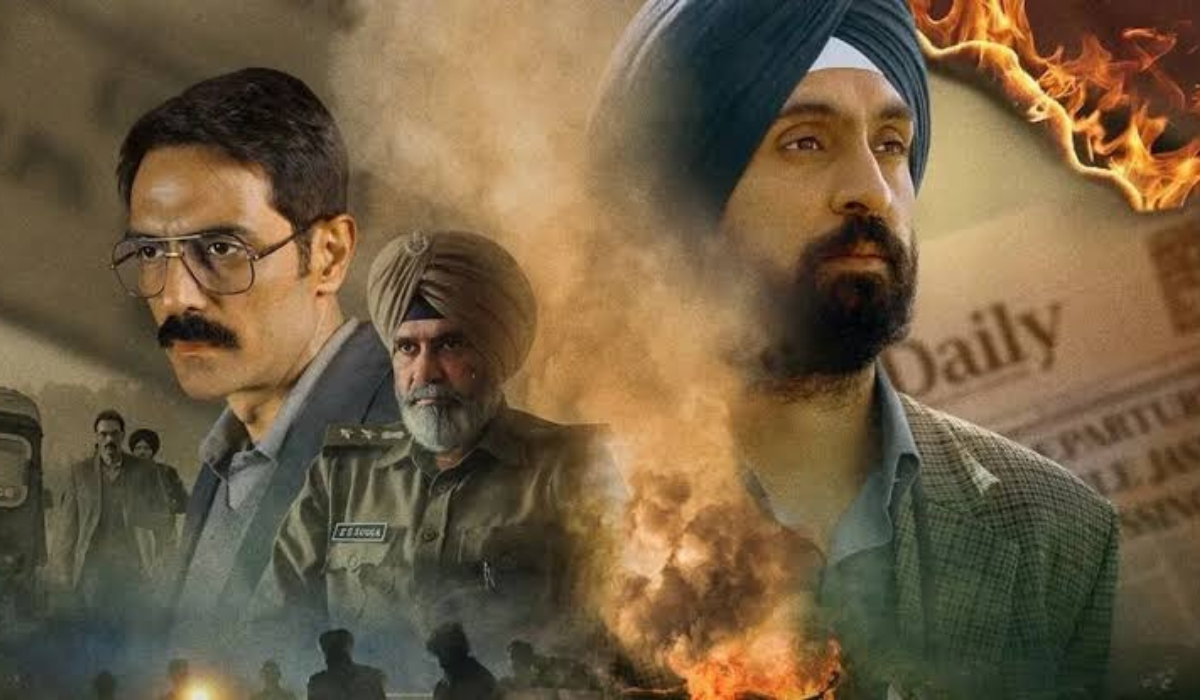
History is rarely a battle between saints and villains. More often, it is a tragic struggle in which societies are forced to make impossible choices in extraordinary circumstances. The insurgency that engulfed Punjab between the late 1970s and mid-1990s was one such period—a dark chapter marked by terrorism, fear, communal polarization and immense human suffering. Any attempt to depict this era in cinema carries a profound responsibility. Films do not merely entertain; they shape collective memory, particularly among younger generations who did not witness the events themselves. This is precisely why the release of Satluj— earlier titled Ghallughara and later Punjab 95—has generated deep concerns. The film is based on the life of Jaswant Singh Khalra and, judging from publicly available information and promotional material, appears to focus primarily on allegations of human rights violations by the security forces. Every allegation of abuse by state agencies deserves scrutiny and accountability. Yet, presenting only one side of the story risks distorting history itself. Punjab’s insurgency was not an ordinary law-and-order challenge. It was a violent separatist movement that claimed thousands of lives. Ordinary villagers, government employees, journalists, political workers and religious leaders became targets. Bus passengers were lined up and executed based on their identities. Markets and public places were bombed. Families lived under constant fear of extortion, assassination and intimidation. Equally significant is the sacrifice of the security forces. More than 1,600 officers and men of the Punjab Police laid down their lives fighting terrorism. Many were assassinated in front of their families; others endured years of threats and isolation. Along with the central security forces, the Punjab Police played a decisive role in restoring peace and preserving the constitutional order in the state. To narrate the story of Punjab during those years while minimizing or ignoring the atrocities committed by militants is to create an incomplete and potentially misleading historical narrative. Cinema, by its very nature, simplifies complex events. A two-hour film cannot adequately capture the moral ambiguities and competing truths of a fifteen-year insurgency. The danger arises when simplification turns into selective remembrance and selective remembrance, in turn, becomes political messaging. Punjab today enjoys relative peace after decades of trauma and healing. Yet the wounds of the insurgency have not entirely disappeared. The state remains vulnerable to attempts by hostile forces to exploit historical grievances and identity politics. In such a sensitive environment, a film that portrays the state and its security institutions almost exclusively as oppressors, while downplaying the terror inflicted upon civilians and policemen, can contribute to a distorted understanding of the past. Young viewers who did not experience the violence firsthand may come away with the impression that Punjab’s tragedy was merely a story of state repression rather than a complex conflict involving terrorism, separatism, communal tensions and difficult counter-insurgency operations. This concern is not an argument against freedom of expression. Democracies must permit debate, criticism and artistic expression. However, freedom of expression also carries responsibilities. Every democracy recognizes that artistic expression cannot be divorced from its potential consequences for public order and social harmony. The issue, therefore, is not whether the life and work of Jaswant Singh Khalra can be discussed or portrayed. They certainly can and should be. The issue is whether a cinematic representation of one of India’s most traumatic periods should present only a single narrative while omitting the suffering of thousands of other victims. A mature historical account of Punjab’s insurgency would remember everyone—the disappeared and the bereaved, the victims of terrorism and the victims of excesses, the activists who sought justice and the policemen who died defending the state. Anything less risks turning history into advocacy rather than history. Until a more balanced and comprehensive portrayal is possible, there is a legitimate argument that a film capable of reopening old wounds, deepening social divisions and presenting a selective version of one of Punjab’s darkest chapters should not be exhibited publicly. Societies emerging from conflict need remembrance, but they also need responsibility. History should heal, not become an instrument for reigniting the very wounds that generations struggled to overcome.
Diljit Dosanjh has rescheduled his Delhi Aura Tour concert from November 1 to October 30 following Rajya Sabha...

BJP leader Kirit Somaiya has announced plans to file a complaint against actor Imran Khan over alleged OCI...
Mumbai Police have filed an FIR against actor Imran Khan and others in connection with the August Kranti...

Bollywood actress Shilpa Shetty remembered her late father Surendra Shetty on his 10th death anniversary on Sunday. The...
Bollywood actress Nusrat Bharucha has shared her first post on social media since suffering a spinal cord injury...

Mahesh Babu wished filmmaker SS Rajamouli on his birthday, saying he cannot wait for audiences to see their...

Aries: The day will be auspicious...