Last Updated: October 21, 2026
Last Updated: October 21, 2026





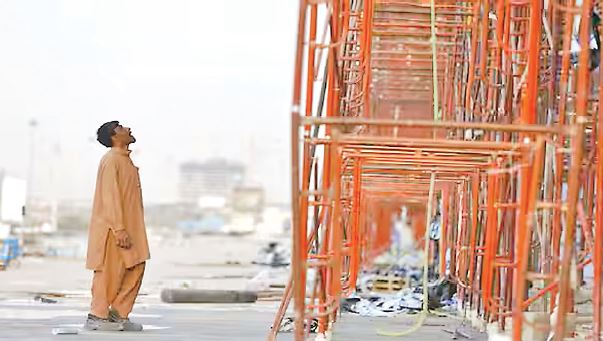
In a landmark move that reshapes the labour landscape of the Gulf, Saudi Arabia has formally abolished the decades-old kafala or sponsorship system — a framework that long governed the employment of foreign workers and drew global criticism for fostering exploitation. The reform, first announced in June 2025, has now come into effect and is expected to significantly improve the welfare and rights of millions of migrant workers across the Kingdom.
For decades, the kafala system defined the relationship between migrant workers and their employers across most Gulf states. Introduced in the 1950s, it was designed to attract cheap foreign labour to fuel economic development. Under this arrangement, employers — known as kafeels — acted as sponsors responsible for their workers’ legal status, employment, and, in many cases, their personal freedom.
The word kafala derives from the Arabic term for “sponsorship” and traces its roots to Islamic jurisprudence. Over time, this system became entrenched in the economies of Bahrain, Kuwait, Oman, Qatar, Saudi Arabia, and the United Arab Emirates, as well as Jordan and Lebanon. While the system played a role in rapid economic expansion, it came at a human cost, particularly for low-wage workers from Asia and Africa.
In Saudi Arabia, the system was most prevalent among blue-collar and domestic workers in sectors such as construction, cleaning, hospitality, and caregiving. Under kafala, workers were tied to their employers for the duration of their contracts and could not change jobs or leave the country without their sponsor’s written consent. Their passports were often confiscated, and they were excluded from the Kingdom’s labour laws, leaving them with little recourse against abuse or unfair treatment.
Human rights organisations and the International Labour Organization (ILO) have for years described the system as “modern-day slavery.” Workers’ dependence on sponsors left them vulnerable to exploitation, with reports of withheld wages, physical abuse, and unsafe living conditions. In many cases, sponsors illegally sold or transferred work permits to other employers, forcing labourers into new roles under different terms, often without their consent.
Women domestic workers faced even greater hardships due to isolation, lack of legal protection, and limited oversight. Their stories, echoed in reports and films such as the Malayalam-language Aadujeevitham, which depicts the ordeal of an Indian worker forced into desert servitude, brought renewed global attention to the issue.
Saudi Arabia’s decision to dismantle the kafala framework represents a major policy shift and aligns with its broader Vision 2030 agenda to modernise the economy and improve its international reputation. The reform introduces a contract-based employment model, replacing sponsorship with legal agreements that enhance workers’ rights and mobility.
Under the new system, foreign workers can now change jobs without their current employer’s approval once their contracts expire. They can also leave the country without requiring an exit visa or the consent of a sponsor — a move that eliminates one of the most restrictive elements of the old regime.
In addition, the reform gives workers direct access to labour courts and formal complaint mechanisms, ensuring that employment contracts are legally enforceable. This allows employees to claim unpaid wages or report violations through official channels with better protection.
Officials have described the change as a crucial step toward ensuring fairness in the labour market. The Ministry of Human Resources and Social Development said the reform aims to make the Kingdom’s economy “more attractive, transparent, and competitive,” aligning it with international labour standards.
However, experts caution that implementation will be the real test. While the policy is expected to improve living and working conditions, monitoring compliance and preventing abuses will require strict enforcement and regular inspections. Labour rights advocates have also called for public awareness campaigns to ensure both employers and workers understand the new framework.
The scale of the impact is significant. Saudi Arabia is home to about 13.4 million migrant workers — roughly 42 per cent of its total population. The majority come from South and Southeast Asia, particularly India, Bangladesh, Nepal, and the Philippines. Many are employed in construction, domestic service, and other manual jobs essential to the Kingdom’s economy.
For Indian workers, who form the largest expatriate community in Saudi Arabia, the reform is especially meaningful. As of 2023, around 2.65 million Indians were employed in the Kingdom, up from 2.4 million in 2022. Most work in low-income sectors where kafala restrictions were deeply felt. The end of the system promises improved job mobility, safer housing, and fairer working conditions.
India’s Ministry of External Affairs has welcomed the reform, noting that it could strengthen bilateral ties and make Saudi Arabia a more attractive destination for skilled and unskilled workers alike. Recruiters also believe that the new system will help reduce cases of contract substitution and forced labour, problems that have long plagued migration to the Gulf.
Saudi Arabia follows Qatar, which introduced similar reforms ahead of the 2022 FIFA World Cup, abolishing exit permits and allowing workers to switch jobs freely. These changes were widely seen as efforts to improve international labour standards and attract foreign investment.
While the Kingdom’s move marks a major victory for migrant rights, experts emphasise that the true measure of progress will depend on how effectively the new rules are enforced. Ensuring accountability for employers, providing accessible grievance redressal systems, and protecting the most vulnerable — especially domestic workers — remain critical challenges.
For now, the abolition of kafala stands as a historic milestone. It signals not only a policy shift but also a broader cultural change in one of the world’s most influential labour markets. As the reform takes effect, millions of workers who once lived under rigid control may finally experience greater autonomy, legal protection, and dignity at work — a long overdue transformation in the Gulf’s employment system.
North Korean leader Kim Jong-un's influential sister, Kim Yo-jong, and a military marshal inspected fortification work along the...

New Delhi: US Secretary of State Marco Rubio has assured India that America’s relations with any country in...

The family of 5-year-old Fabiana Cabello in New York City, USA, is in deep shock after her death....

A Cessna 177A crashed onto Capitol Expressway in San Jose on October 17. Three people on board, including...

Protests in Jakarta, Yogyakarta and Bandung brought students onto the streets over rising costs, forest fires and civil...
Organisations linked to Neville Roy Singham are under US congressional scrutiny over funding. Their coverage of protests in...