Last Updated: October 18, 2026
Last Updated: October 18, 2026





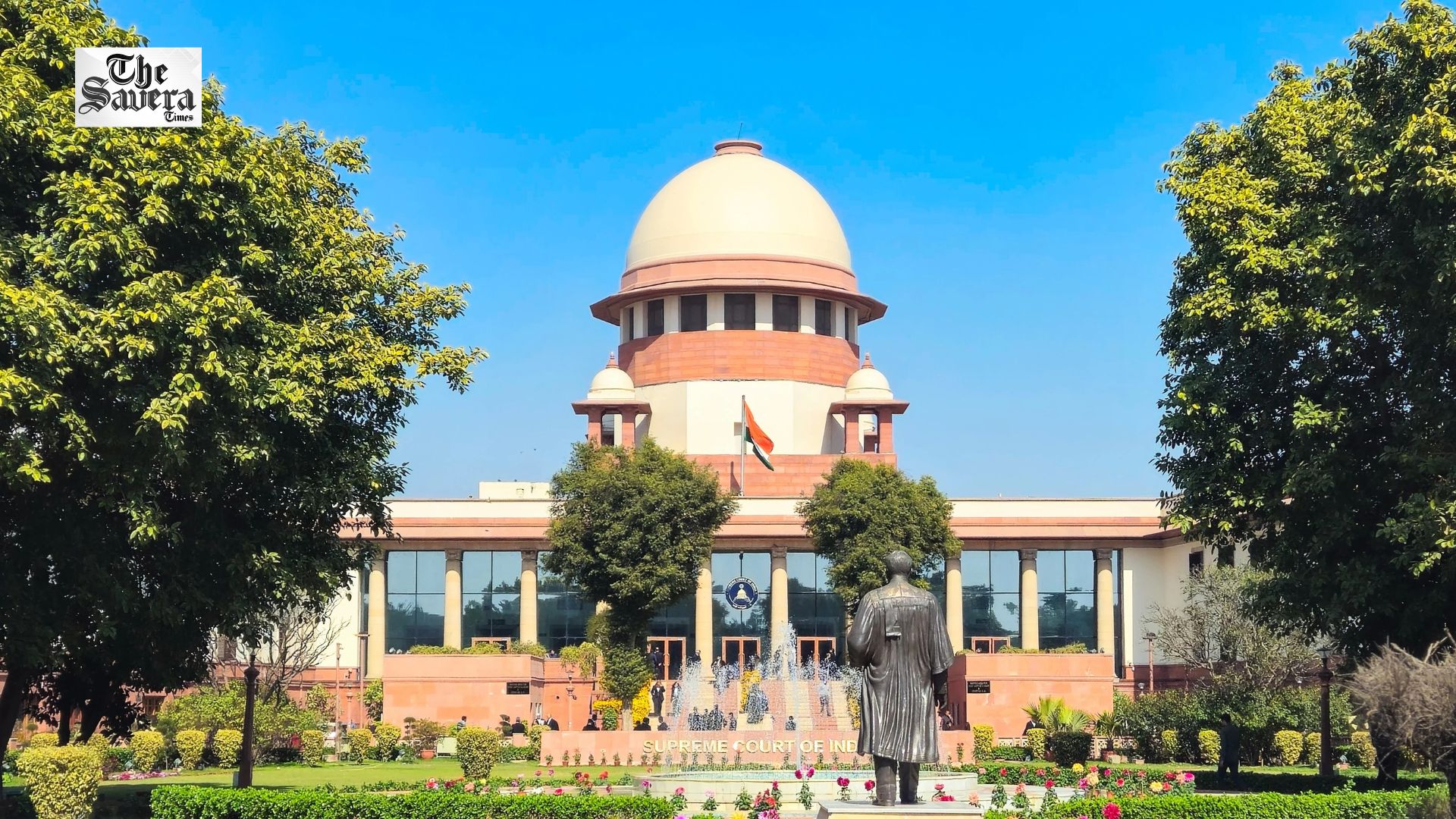
New Delhi: The Supreme Court on Monday expressed concern over the alleged availability of child abuse content on social media platforms and sought the Centre’s response on alleged lapses by intermediaries in reporting such material to Indian authorities.
A bench comprising Justice J.B. Pardiwala and Justice K.V. Chandran sought replies from the Ministry of Electronics and Information Technology (MeitY) and the Law Ministry while hearing petitions seeking action against social media platforms allegedly failing to comply with mandatory reporting requirements under the Protection of Children from Sexual Offences (POCSO) Act.
Petitioners allege platforms fail to report cases to Indian authorities
The petitions have been filed by the Just Rights for Children Alliance (JRCA) and Bachpan Bachao Andolan, which have raised concerns over the handling of Child Sexual Exploitation and Abuse Material (CSEAM) on social media platforms.
The petitioners alleged that platforms currently report instances of CSEAM to the US-based National Centre for Missing and Exploited Children (NCMEC), but do not directly report them to juvenile police units or local law enforcement agencies as required under Indian law.
The pleas also raised concerns over alleged paid advertisements on social media platforms promoting CSEAM.
SC seeks Centre’s stand on centralised reporting mechanism
The Supreme Court sought the Centre’s response to a proposal for creating a centralised online mechanism through which intermediaries could report CSEAM and share digital evidence with Indian law enforcement agencies.
The petitioners have also sought a uniform Standard Operating Procedure (SOP) for social media intermediaries covering the detection of such content, mandatory reporting, preservation of digital evidence and sharing of relevant IP details with authorities.
The court allowed the petitioners to implead the intermediaries in the proceedings and press for implementation of its earlier directions issued in September 2024.
SC had warned platforms over POCSO obligations
The latest proceedings come against the backdrop of the Supreme Court’s observations in 2024 that social media intermediaries cannot automatically claim safe-harbour protection under the Information Technology Act if they fail to comply with mandatory reporting obligations under the POCSO Act.
The court had emphasised that intermediaries must comply with due-diligence requirements to claim safe-harbour protection and that POCSO provisions would prevail in case of any inconsistency with other laws.
The apex court had also observed that retaining child pornographic material without deleting or reporting it could indicate an intention to transmit such material and may constitute an offence under the POCSO Act.
The matter has been listed for further hearing on September 24.
The Bankshall Court on Sunday remanded seven people arrested in connection with the stampede at the Chorbagan Durga...

Suspected militants allegedly set fire to at least 15 houses belonging to the Kuki tribal community in Chasad...

Good Evening Viewers! End your day with The Savera Times Evening Bulletin, bringing you the latest updates from...

The Delhi High Court has upheld the Election Commission's (ECI) existing procedure for deletions from the voter list...
The DRI seized 137 kg of suspected crystal methamphetamine worth over Rs 100 crore in Nagapattinam, Tamil Nadu....

The Central Bureau of Investigation (CBI) team investigating the Ankita Bhandari murder case arrived at Urmila Sanawar's residence...

Aries: The day will be auspicious...