Last Updated: October 18, 2026
Last Updated: October 18, 2026





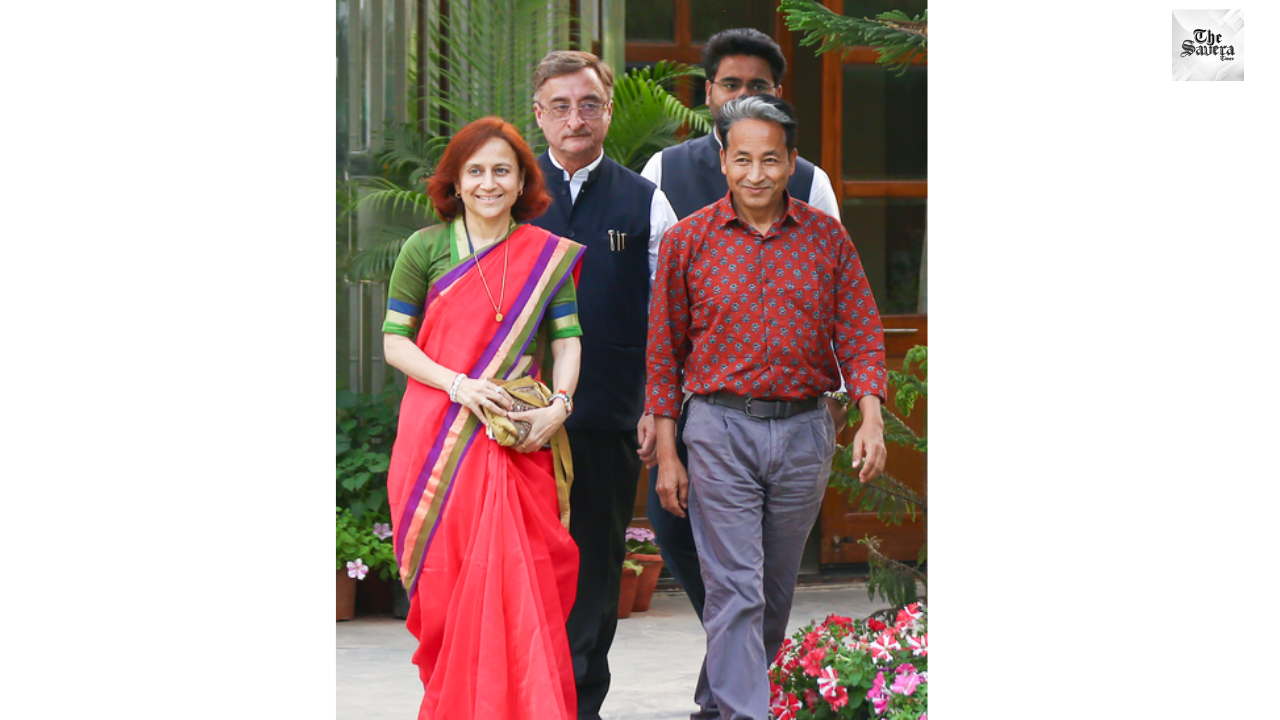
The Supreme Court has closed the plea challenging the detention of noted climate activist Sonam Wangchuk under the National Security Act (NSA), following the Centre’s decision to revoke his detention earlier this month.
A bench of the Supreme Court disposed of the habeas corpus petition filed by Wangchuk’s wife, noting that the primary grievance no longer survives after the government withdrew the detention order.
The petition had challenged the legality of Wangchuk’s preventive detention under the NSA, arguing that it violated fundamental rights and lacked proper procedural safeguards. However, with the revocation of the detention, the court decided to close the matter.
The Centre had earlier revoked Wangchuk’s detention, leading to his release from Jodhpur Central Jail after nearly six months in custody.
He had been detained on September 26, 2025, under the NSA in connection with protests in Ladakh demanding statehood and Sixth Schedule status. Authorities had alleged that his actions contributed to unrest and violence during the protests.
The plea challenging the detention was filed by Wangchuk’s wife, Gitanjali J. Angmo, under Article 32 of the Constitution. She argued that the detention was arbitrary and that full grounds for the detention were not properly communicated.
During earlier hearings, the Supreme Court had examined issues such as access to evidence, supply of detention grounds, and procedural compliance by authorities. The case had been adjourned multiple times over several months before reaching its conclusion.
During the hearings, the Centre had defended its decision, stating that all legal safeguards were followed and that the detention was necessary to maintain public order in a sensitive region like Ladakh.
The government maintained that the preventive action was taken in the backdrop of a volatile situation, where protests had turned violent and posed a threat to law and order.
Following his release, Wangchuk expressed hope that the Supreme Court would still record observations that could guide future use of laws like the NSA. He emphasised the importance of ensuring that such stringent provisions are not misused and are applied with accountability.
The case has sparked a wider debate on the use of preventive detention laws in India, particularly in situations involving protests and dissent.
Legal experts believe that although the Supreme Court has closed the plea, the case remains significant in highlighting concerns over civil liberties, transparency, and the balance between security and individual rights.
The revocation of Wangchuk’s detention just days before the final hearing was also seen as a key factor influencing the court’s decision to dispose of the petition.
With the case now closed, attention is likely to shift towards policy discussions and judicial scrutiny regarding the use of the NSA in similar situations.
The development marks the end of a high-profile legal battle, but the broader questions raised by the case are expected to remain part of public and legal discourse.
Mumbai: Bollywood actor Imran Khan has filed a writ petition in the Bombay High Court seeking a stay...
What if a decision taken in Washington could influence India’s oil bills, export earnings and trade relations with...

Apia: Minister of State (MoS) for External Affairs, Pabitra Margherita, on Saturday interacted with members of the Indian...
At least five workers were killed and six injured after a 15-kilolitre reactor exploded during a hydrogenation process...

New Delhi: Union Minister of State Jitendra Singh has said that India’s space economy — currently valued at...

New Delhi: The Supreme Court-constituted High Powered Enquiry Committee (HPEC) has started inviting complaints and representations from people...
Aries: The day will be auspicious...