Last Updated: October 21, 2026
Last Updated: October 21, 2026





Abhishek Vij
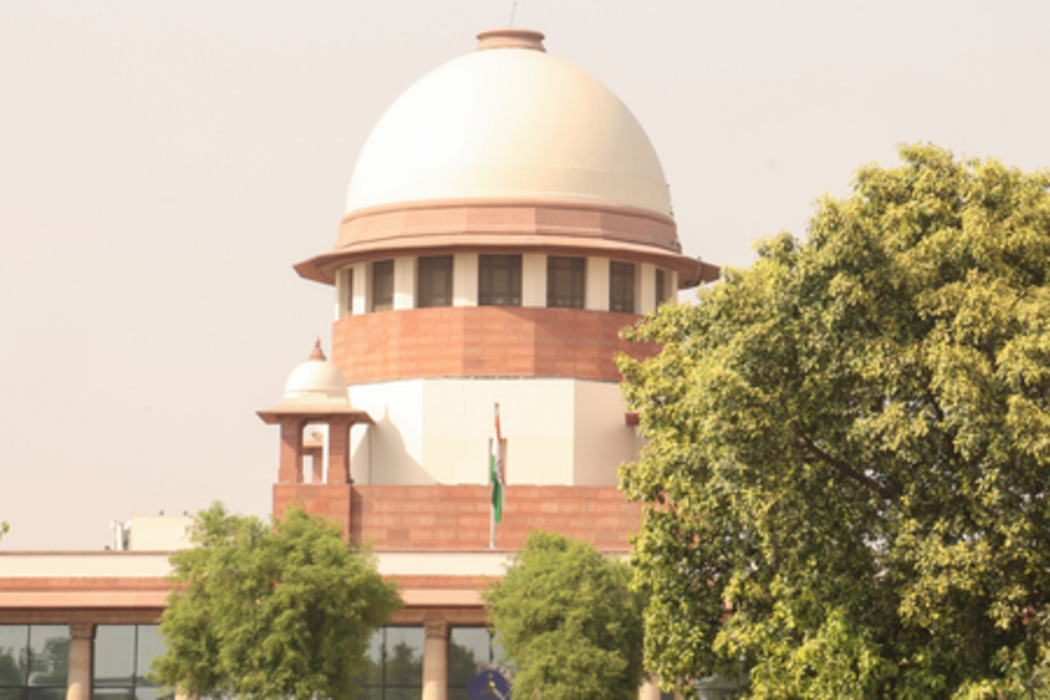
Amidst the toxic problem of environmental pollution, the dispute over mining in the Aravalli hills is intensifying. The latest news is that the Supreme Court has stayed its own previous decision of November 20 and ordered a review. The dispute is that the mining mafia wants to target the Aravalli hills and mountain ranges for its mining business. The Aravalli hills are a continuous range of low-lying mountains. When the activities of the mining mafia increased, the very existence of the Aravalli hills came under threat. The Aravalli mountain range extends across Delhi, Haryana, Rajasthan, and Gujarat.
Environmentalists had demanded a ban on the allocation of mining leases here. They raised this issue in the Supreme Court, which took cognizance of it. The Aravalli hills act as a barrier between the Thar Desert and the northern plains. These hills are of low height. The order was that if there is a gap of more than 500 meters between one mountain range and another, or if the height is more than 100 meters, then mining should be banned in such hilly areas, and the mining recommendations of a committee of the Ministry of Environment, Forest and Climate Change should be accepted for the remaining areas. However, the Supreme Court has now reviewed its own decision and has not only stayed the mining leases but also stayed its previous decision.
The previous decision was issued on November 20, but now, in light of criticism and the possibility of a toxic, barren, and sandy crisis in the concerned states, the Supreme Court has stayed its own decision.
A review and further hearing have been scheduled for January 21, 2026, to examine issues such as the environmental impact of mining, definitional limitations, and continuity of protection. Until then, the Supreme Court’s order of November 20 will also not be implemented. The main point is that experts should convene to decide on the prohibition or permission of mining at altitudes above 500 meters and with a difference of more than 100 meters. This high-powered expert committee should consider the expert opinions on mining, ecological continuity, and structural impacts and submit its new report by January 21, 2026.
The Aravalli mountain range needs to be protected, and the Supreme Court is strict on this. But attention must also be paid to other mountain ranges. Uncontrolled development is a harbinger of destruction for humanity, not progress. But the problem is not only with the mountains, but also with the plains that are susceptible to earthquakes. Remember that many areas from Delhi to Punjab and Himachal Pradesh are located in seismically active zones. Whatever development takes place here should be done in a way that protects against the risks of earthquakes. The real cause of environmental pollution has not yet been determined.
For a long time, Punjab has been accused of contributing to air pollution in Delhi through stubble burning, causing the AQI to reach dangerous levels above 400. But now experts have clarified that it is uncontrolled development, the proliferation of vehicles, and the improper disposal of waste that are increasing environmental pollution. A campaign against stubble burning has been launched, but how will the other major problems of environmental pollution be addressed? For this, a comprehensive policy that brings about radical change will have to be formulated. Simply making political statements about stubble burning will not solve the problem.
Good Evening Viewers! Get the latest updates from India and around the world with The Savera Times Evening...

Bharatiya Janata Party (BJP) National General Secretary Smriti Zubin Irani launched a scathing attack on Congress MP and...

New Delhi: Cockroach Janata Party (CJP) leaders Saurav Das and Ashutosh Ranka will be released from judicial custody...

According to police, three suspicious young men are seen in CCTV footage. Efforts are underway to identify them....
A video has surfaced of an alleged attempted assault on Jan Suraj Party's Bihar president Manoj Bharti. The...

Two accused have been convicted and sentenced to 10 years of rigorous imprisonment in a 2017 drug trafficking...
Aries: The day will be auspicious...