Last Updated: October 12, 2026
Last Updated: October 12, 2026





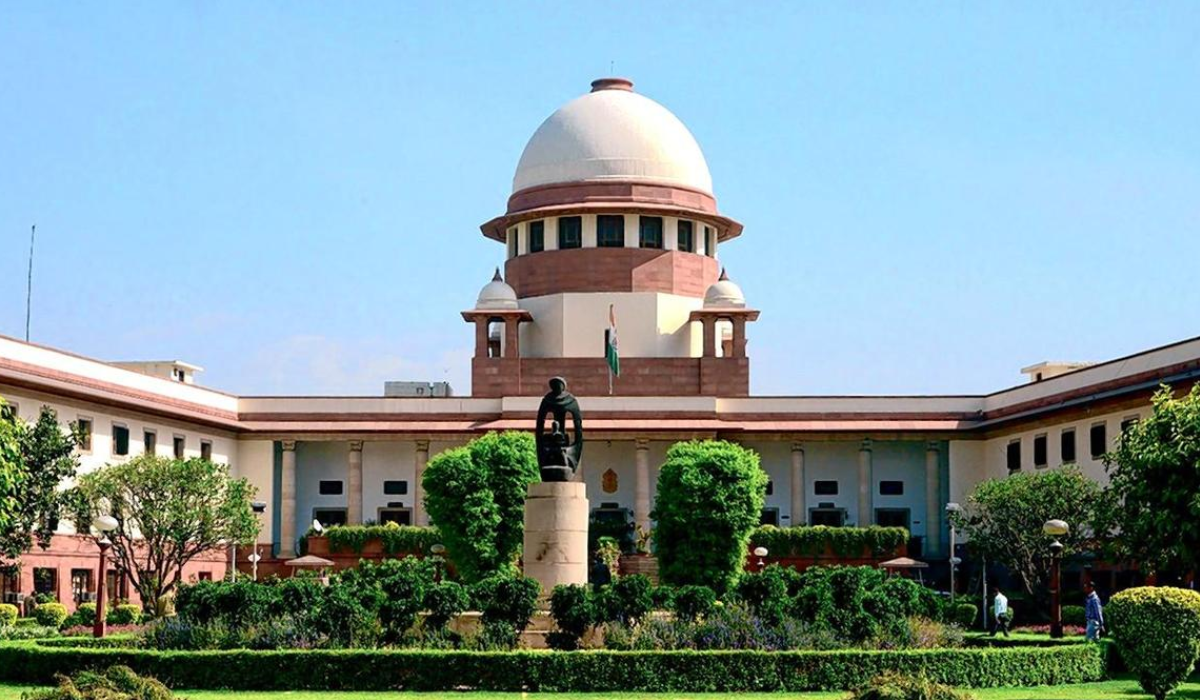
Adopting a firm stance on the delays involved in delivering verdicts in reserved cases, the Supreme Court has issued detailed and binding guidelines for all High Courts across the country. The apex court has clarified that in cases where the judgment is reserved, the verdict should be pronounced within three months, as far as possible.
A bench comprising Chief Justice Surya Kant and Justice Joymalya Bagchi observed that matters involving personal liberty—particularly petitions for regular bail and anticipatory bail—must be treated with special urgency. According to the Supreme Court, orders on bail petitions should be pronounced and uploaded on the very same day. If the judgment is reserved, it shall be mandatory to pronounce it on the following day.
What is the full case about?
The apex court delivered this verdict while hearing certain criminal appeals pending before the Jharkhand High Court. The petitioners had alleged that, despite the completion of hearings on their appeals, judgments were not pronounced for two to three years, resulting in a violation of their fundamental rights.
The Supreme Court stated that justice delayed is justice denied. Therefore, all High Courts must ensure that mechanisms are in place to deliver judgments in a time-bound manner and make them public.
10 Key Directives from the Supreme Court
* An endeavor should be made to pronounce a reasoned judgment in reserved cases within three months.
* Priority must be accorded to cases involving regular bail and anticipatory bail.
* Orders on bail petitions should be pronounced on the same day or, at the very latest, on the following day.
* Upon the grant of bail, the order must be immediately transmitted to the prison administration to prevent any delay in the release of the inmate.
* Judgments pronounced in open court must be uploaded to the website within 24 hours.
* If only the operative order has been pronounced, the detailed judgment must be uploaded within 15 days.
* If a judgment is not delivered within three months, the matter shall be brought to the notice of the Chief Justice.
* In the event of a delay exceeding three months—plus an additional one-month grace period—the litigants may request that the case be assigned to a different bench.
* The status and dates of reserved judgments must be publicly displayed on the High Court’s website. Parties and lawyers will be notified via email once the judgment is uploaded.
Reduce burden of pending cases
The Supreme Court has directed the Registrars General of all High Courts to expeditiously amend the necessary rules and administrative procedures to implement these guidelines. The Court clarified that these directives constitute significant steps towards enhancing transparency in the judicial process and reducing the burden of pending cases.
Former BJP MLA Attar Singh Bhedana died at Jaipur’s SMS Hospital after a violent clash at a crusher...

An eyewitness has recounted the fatal Mini Cooper crash in Nedumbassery, Kochi, claiming the driver said his father...

The Cockroach Janata Party plans to approach Parliament Street Police Station for permission to hold a peaceful protest...

BJP leader Kirit Somaiya has announced plans to file a complaint against actor Imran Khan over alleged OCI...

Start your day with The Savera Morning Brief, bringing you the top India and world news, breaking developments,...

Maharashtra MPSC Chairman Vivek Bhimanwar has been sent on compulsory leave until the inquiry into the alleged paper...

Aries: The day will be auspicious...