Last Updated: October 21, 2026
Last Updated: October 21, 2026





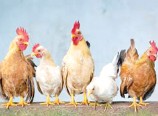
India’s backyard and rural poultry sector has shown notable growth over the past decade, yet it remains a small fraction of the overall poultry industry. According to the 2019 livestock census, the backyard poultry population increased by 46 percent since 2012 but accounted for only about a third of India’s total poultry population, with the remaining two-thirds produced by commercial poultry systems. By 2023-24, backyard poultry contributed just 15.4 percent of the country’s total egg production, highlighting the dominance of commercial systems.
While commercial poultry provides high productivity, these systems are often unsustainable. Birds are reared in confined, high-density conditions, making them vulnerable to zoonotic diseases, antibiotic resistance, and other health risks. In contrast, backyard and rural poultry production is more sustainable, cost-effective, and environmentally friendly. Free-range systems require minimal investment, provide safe and nutritious food, and offer small and marginal farmers an opportunity to enhance both livelihood and household nutrition. Poultry products from these systems can be consumed locally or sold in nearby markets, contributing to income generation and reducing dependence on large-scale industrial production.
A key factor in scaling up backyard poultry is the use of resilient indigenous breeds. Native breeds and their improved varieties are adapted to local conditions, resistant to diseases, and require low inputs. Improved varieties developed through selective breeding or cross-breeding enhance productivity in terms of egg and meat production while remaining suitable for small-scale operations. Low-input technology (LIT) breeds serve smallholder farmers, while high-input varieties support small-scale commercial farming, bridging the gap between productivity and sustainability.
Several replicable models illustrate the potential of backyard poultry. KeggFarms’ Kuroiler program has improved nutrition and livelihoods for rural women while creating micro-entrepreneurs and reducing disease risk. In Maharashtra, an Aga Khan Rural Support Programme initiative has enabled landless farmers to increase income and improve nutrition through community-led backyard poultry with native breeds, vaccination, and herbal interventions. Similarly, the WASSAN-led Backyard Poultry Cluster Program empowers women across nine states, pairing desi poultry with multi-layer eco-farms and decentralized breeding and healthcare systems.
Government initiatives, such as the National Livestock Mission and the National Rural Livelihoods Mission, support backyard poultry through subsidies, parent farm development, hatcheries, and promotion of LIT breeds. Several states also implement location-specific schemes. However, challenges remain, including high early mortality, limited access to quality chicks, inadequate veterinary support, and lack of market access. Establishing mother units, promoting public-private partnerships, strengthening veterinary guidance, and developing dedicated markets are crucial to scaling up backyard poultry, ensuring sustainable livelihoods, safer food, and enhanced resilience against antimicrobial resistance.
The Ayushman Bharat Pradhan Mantri Jan Arogya Yojana (PMJAY) is proving to be a significant relief for poor...
Rescue teams recovered the bodies of four youths from the Kotri canal in Kota on Wednesday morning, after...

A balloon containing a suspected flammable chemical burst during a stage play in Siwan, injuring around 10 spectators....

State Bank of India has confirmed that 3,897 customer records containing personal information were found on the dark...

A fire in a hut in Nonapar village of Deoria district claimed three lives, including those of a...

Amit Shah paid tribute to police personnel who died in the line of duty at the National Police...

Aries: The day will be auspicious...