Last Updated: October 15, 2026
Last Updated: October 15, 2026





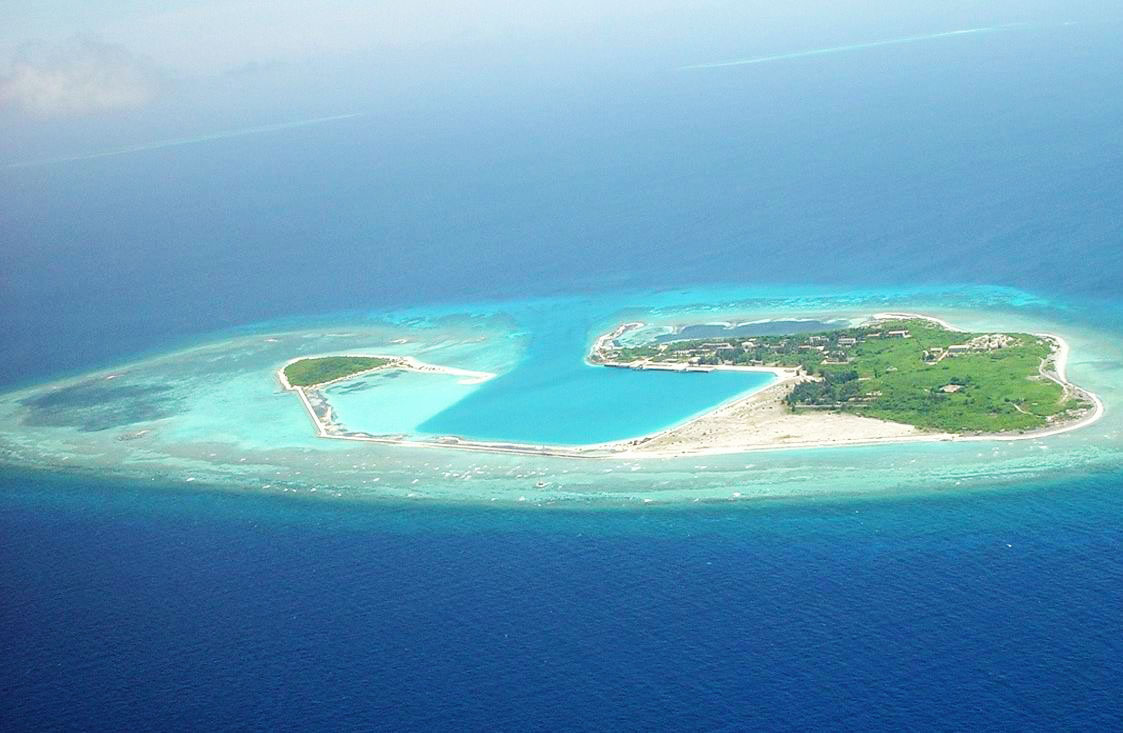
Ch i n a’s p l a n t o establish a national nature reserve at Scarborough Shoal has reignited one of the South China Sea’s most persistent flashpoints, drawing strong condemnation from the Philippines and raising fresh concerns about Beijing’s strategy in contested waters. On Wednesday, China’s State Council gave its approval to a proposal by the Ministry of Natural Resources to designate the shoal as a protected ecological site.
Official notices said the reserve would cover 3,524 hectares on the northeastern side of the atoll, including the main entry point for larger vessels into its lagoon. Authorities in Beijing framed the decision as an environmental safeguard, intended to preserve coral reefs and secure what they described as the “diversity, stability and sustainability” of the marine ecosystem.
Under Chinese law, national n a t u r e r e s e r v e s a r e divided into three zones. The core area is off-limits to all human activity, the buffer zone is restricted to scientific research, and the experimental zone permits limited research and controlled visits. Applying this framework to Scarborough Shoal would give Beijing regulatory authority over access, with enforcement left to its coast guard. Chinese scholars have d e f e n d e d t h e m o v e . Yang Xiao, of the China Institutes of Contemporary International Relations, argued that the plan was justified and reflected the “gradual improvement of our jurisdiction and governance over this sea area.”
Officials from the National Forestry and Grassland Administration described the designation as an important step toward ecological preservation. Manila has reacted sharply, calling the decision unlawful and politically motivated. National Security Adviser Eduardo Año dismissed the announcement as “a clear pretext towards eventual occupation.”
He said the proposal had little to do with environmental protection and everything to do with reinforcing China’s control. “It is less about protecting the environment and more about justifying its presence,” he declared. The Department of Foreign Affairs announced that the Philippines would lodge a formal diplomatic protest, accusing Beijing of infringing on its rights and interests. In its statement, the department said Bajo de Masinloc, the Philippine name for Scarborough Shoal, was a “longstanding and integral part” of the country’s territory.
It called on China to withdraw its designation and comply with international law, particularly the 1982 United Nations Convention on the Law of the Sea (UNCLOS). Scarborough Shoal, a triangular atoll about 200 kilometres off the Philippine coast, lies well within Manila’s exclusive economic zone under UNCLOS. Its lagoon serves as a natural refuge for fishing vessels, and the surrounding waters are rich in fish stocks. The feature also holds strategic weight. It is situated near vital shipping lanes through which more than \$3 trillion worth of trade passes annually.
Control over the shoal provides not only access to resources but also a vantage point over one of the world’s busiest maritime corridors. The shoal has been contested for decades. In 2012, China gained de facto control after a standoff with Philippine forces. Four years later, the Permanent Court of Arbitration in The Hague invalidated Beijing’s sweeping claims to much of the South China Sea. While the ruling criticised China’s blockade of Scarborough Shoal, it stopped short of assigning sovereignty. Beijing rejected the verdict outright and has since consolidated its presence in disputed waters, drawing protests from its neighbours. Philippine concerns about the new reserve are amplified by China’s record in the region.
A 2023 report by the Centre for Strategic and International Studies documented large-scale ecological damage caused by Chinese construction of artificial islands, which buried more than 4,600 acres of coral reefs. The report also cited destructive giant clam harvesting by Chinese fishing crews, which wiped out another 16,000 acres of reef habitat. Manila has accused China of dredging and resource extraction at Scarborough Shoal, charges Beijing denies. Chinese officials, in turn, have blamed Filipino fishermen for environmental harm, alleging overfishing and pollution. Analysts in Manila see the latest move as part of a broader strategy. Jay Batongbacal of the University of the Philippines said China was trying to present its actions under the banner of conservation to blunt criticism. “By clothing its actions as environmental protection, Beijing hopes to dissuade other countries from supporting Philippine activities and attempts to reintroduce traditional fishing,” he said. He warned that the new designation could be used to restrict Filipino fishermen further, possibly leading to arrests t h at m i gh t s e r ve a s bargaining chips in future disputes.
China has rejected these interpretations. At a press briefing, Foreign Ministry spokesperson Lin Jian reiterated that Scarborough Shoal, which Beijing calls Huangyan Island, is Chinese territory. He described Manila’s objections as “unreasonable” and urged the Philippines to stop what he called “provocations and wanton hype.” The shoal remains a tinderbox in an already volatile sea. Recent years have seen repeated clashes involving coast guard ships, fishing vessels, and military patrols. These encounters have included ramming incidents, water cannon attacks, and aerial shadowing by fighter jets. In August, a China Coast Guard vessel collided with a Chinese navy ship during a confrontation with a Philippine vessel near the shoal, the first known collision between two Chinese forces in the area.
Around the same time, China claimed to have expelled a US Navy ship from nearby waters, a claim the United States denied, saying its operation was lawful under international navigation rights. Such encounters highlight the risks of escalation. The Philippines is a treaty ally of the United States, and under the 1951 Mutual Defense Treaty, Washington is bound to come to Manila’s aid if its forces are attacked. Scarborough Shoal, though small, therefore carries weight well beyond its size, symbolising both sovereignty disputes and broader strategic competition. Beijing’s nature reserve plan appears unlikely to ease tensions. For Manila, the move is a provocation that undermines its sovereignty. For China, it is another step in consolidating authority over contested waters. With neither side backing down, Scarborough Shoal is set to remain one of the South China Sea’s most combustible flashpoints.
The India-BrazilSouth Africa Maritime Exercise (IBSAMAR) remains an important platform for strengthening naval interoperability, maritime security cooperation and...
Pakistan, which signed the Mecca Joint Defence Agreement (called the Mecca Pact) with Saudi Arabia and Turkey, is...

An investigation cited by the Africa Defense Forum alleges that China’s ICBC lent hundreds of millions of dollars...
The World Bank’s October 2026 regional update highlights that roughly 48 per cent of all people living below...

Pakistan government’s decision to impose emergency rule in the Khyber Pakhtunkhwa province has intensified an already volatile political...

Jerusalem: The Israel Defence Forces (IDF) said in a statement on Wednesday that it had killed a Hamas...
Aries: The day will be auspicious...