Last Updated: October 12, 2026
Last Updated: October 12, 2026





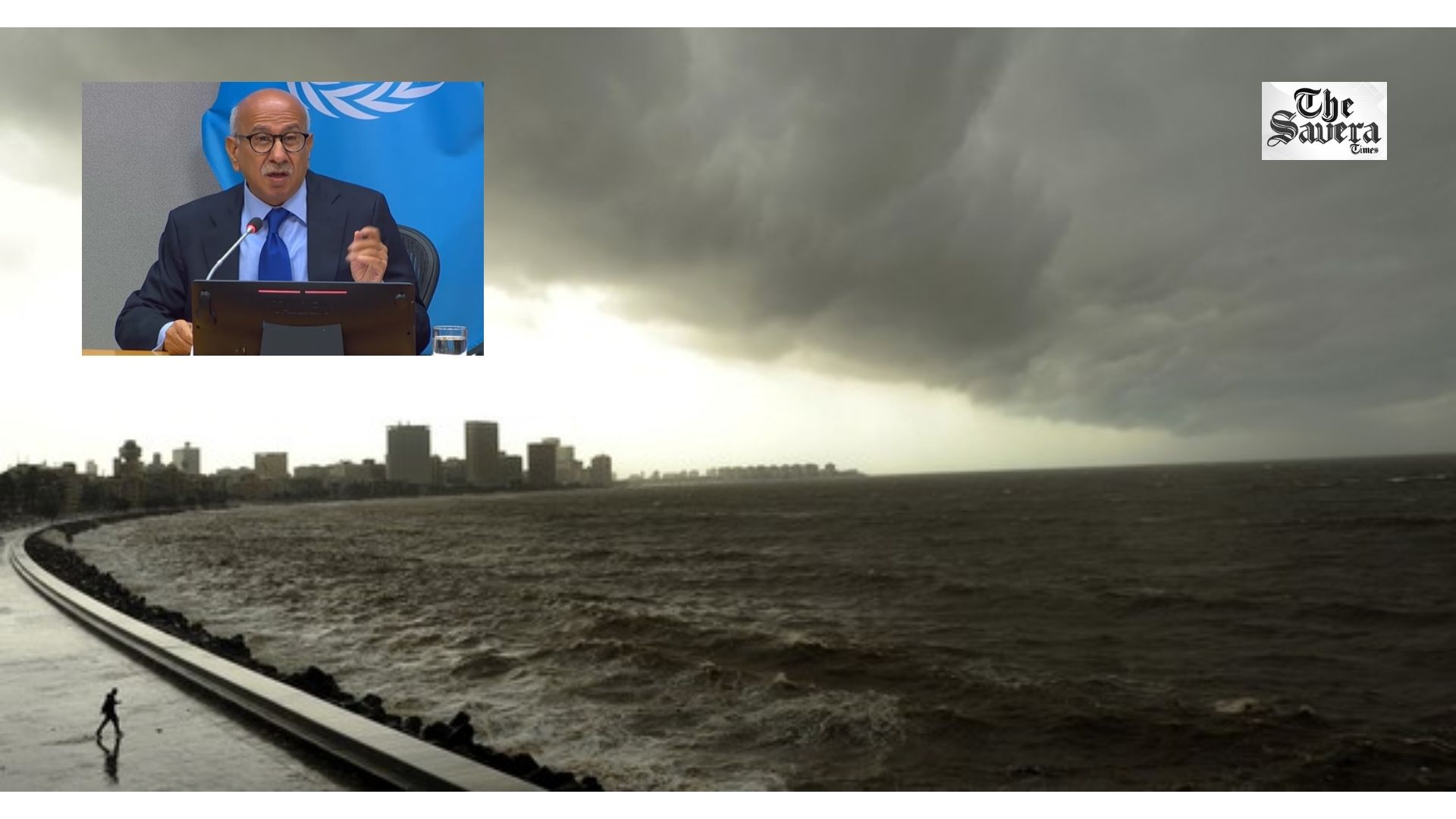
United Nations: Kolkata and Mumbai are among the South Asian cities facing serious risks from rising sea levels, with more than 14 million people across low-lying deltas in South Asia potentially at immediate risk of losing their homes to permanent inundation, according to a United Nations report.
The report, released on Monday by UN Secretary-General Antonio Guterres, highlights the growing global threat posed by sea-level rise driven by global warming. Melting glaciers and ice sheets, along with the warming of ocean waters, are contributing to rising sea levels and putting people, property, infrastructure and cultural heritage at risk.
The annual rise in sea levels reached a record high in 2024, at nearly 6 millimetres, according to the report. It was released by UN Deputy Secretary-General Amina Mohammed at the 55th Pacific Islands Forum Leaders Meeting in Palau, a Pacific island nation particularly vulnerable to rising ocean waters.
Kolkata, Mumbai Face Growing Displacement Risk
The UN report warned that in the low-lying deltas of South Asia, including cities such as Kolkata and Mumbai in India and Dhaka in Bangladesh, the most significant impact could be human displacement.
“More than 14 million people” in these areas are at immediate risk of losing their homes to permanent inundation, the report said. It did not specify a particular deadline for when the projected scenario could occur.
At a news conference in New York, Assistant Secretary-General Navid Hanif said rising sea levels were creating a major challenge as communities were gradually losing their coastlines.
Hanif stressed that the consequences would extend well beyond coastal areas and should be treated as a systemic threat. He pointed to risks to health, food security, human rights, culture, ancestral land and people’s sense of identity.
He called for governments to incorporate sea-level rise into their long-term planning and adopt a comprehensive approach to dealing with its effects.
Himalayan Glaciers Could Bring Flooding, Drought Risks
The UN warning comes amid growing concern over the impact of melting Himalayan glaciers on South Asia. Hanif described the Himalayan region as the world’s “Third Pole” because of its concentration of glaciers, alongside the North and South Poles.
He said scenarios for the next 15 to 20 years indicate that South Asia could face severe flooding as glaciers melt. Such flooding could potentially be followed by drought, affecting agriculture and food security and creating significant risks for communities across the region.
A tsunami-like mixture of water and mud linked to a glacier breaking loose and crashing down from the Himalayas killed hundreds near the Nepal-Tibet border last week and caused widespread destruction, according to the report.
770 Million People Globally at Risk
The threat from rising seas extends far beyond South Asia. The UN report estimates that around 770 million people — nearly one in every 10 people worldwide — live in coastal areas less than five metres above the high-tide line and already face significant risks.
Infrastructure worth at least $1.8 trillion is also estimated to be exposed to sea-level-rise-related risks globally.
The report said rising seas are already damaging urban infrastructure, water systems, transport networks, energy grids, buildings and groundwater resources. These impacts could have far-reaching consequences for human rights and long-term development.
While island nations are expected to experience the most severe effects, the report stressed that sea-level rise does not respect geographical boundaries.
In high-income coastal cities such as Miami and New York in the United States and Guangzhou in China, the primary concern is the enormous financial exposure of coastal infrastructure. Assets at risk in these cities are estimated at between $2 trillion and $3.5 trillion.
A major fire broke out at a scrap warehouse opposite the Maruti Temple in Sangameshwar, Maharashtra, around midnight....

A 48-year-old man, Pawan Sharma, died after an alleged altercation over a senior citizen seat at Delhi’s Supreme...

Shiv Sena (UBT), in its mouthpiece Saamana, has criticised the Centre over security measures and detentions during anti-government...
Former BJP MLA Attar Singh Bhedana died at Jaipur’s SMS Hospital after a violent clash at a crusher...

An eyewitness has recounted the fatal Mini Cooper crash in Nedumbassery, Kochi, claiming the driver said his father...

The Cockroach Janata Party plans to approach Parliament Street Police Station for permission to hold a peaceful protest...

Aries: The day will be auspicious...