Last Updated: October 23, 2026
Last Updated: October 23, 2026





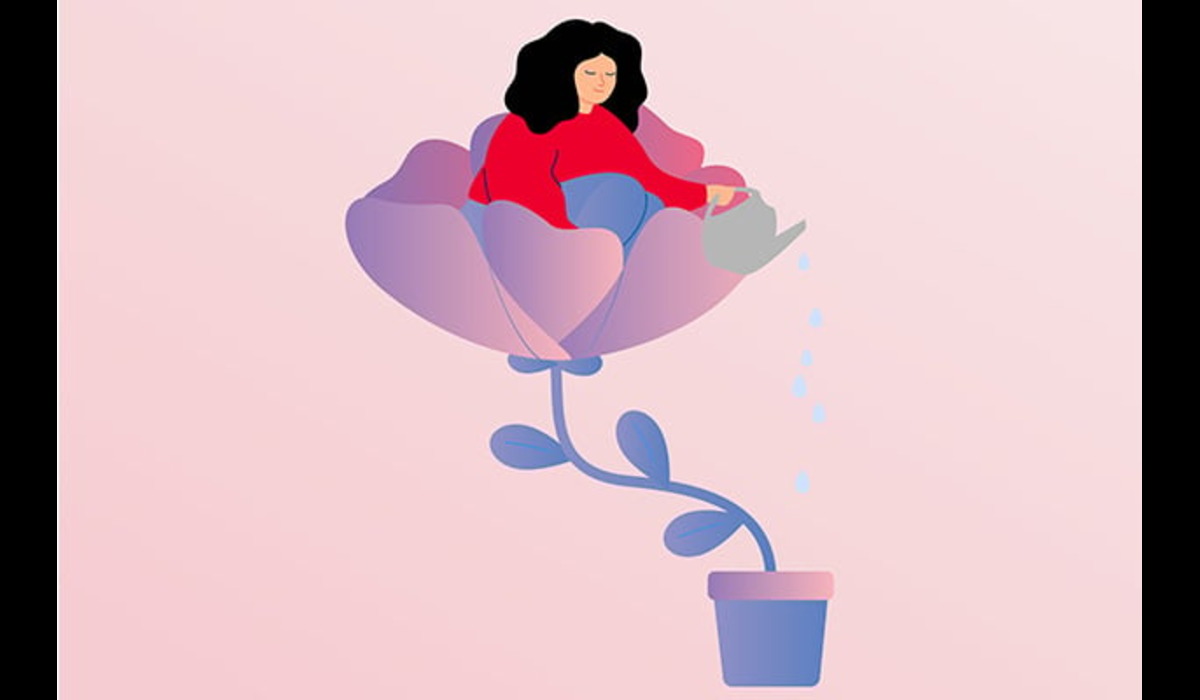
A friend of mine suffers from mild depression. His friends and internet ‘helpers’ recommended that he practice some ‘self-care’. He should distract his mind, watch some happy reels to focus on the positive etc. The result is that he is now addicted to reels, sleep deprivated and worse off.
On the other hand, Vidyamala Burch (born Prudence Burch) suffered severe, chronic physical injury and pain. During hospitalisation when pain was unbearable and her body largely paralysed, she had an insight: “the present moment is always bearable … much of my torment had grown from fear of the future.”
Her focus was not just on affirming “I am worthy” or buying comforts — she implemented structured behaviours and practices. Her method addresses framing of self-care as stress-management rather than mere pampering(Wikipedia).
IS SELF CARE THE SAME AS SELF INDULGENCE?
An entire industry now parades under the banner of self-care—selling everything from scented oils to spa retreats—but rarely does anyone stop to understand the term. Is all this self-care?
At its core, self-care is the art and discipline of managing stress—both before it overwhelms us and after it does. It is the conscious regulation of one’s inner climate amid life’s weather.
In the mid-20th century, nursing theorist Dorothea Orem developed Self-Care Deficit Theory, arguing that in rehabilitation and stress management, success often depends on what people do for themselves between appointments.
Shanna B. Tiayon, writes that today the term self-care has been coopted and commodified, referring to everything from luxury handbags to Netflix binging.
When self-care becomes anything and everything, it interferes with our capacity to effectively heal as it only offers a momentary distraction from our stress.
THE COSTS OF MIXING UP SELF CARE WITH BUYING SELF GIFTS IS ENORMOUS
WHO and the ILO estimate that long working hours were associated with roughly 745,000 deaths from stroke and ischemic heart disease in 2016. No amount of herbal tea or buying dresses can offset that arithmetic; only redesigned work can.
In other words, authentic self-care is necessary for recovery and resilience.Reclaiming starts with returning to health systems and communities. WHO’s living guideline on self-care interventions—self-testing for HIV, self-administered contraception, self-sampling for HPV, among others—treats self-care as an evidence-based interface between people and the health system, not a retreat from it.
UNPACKING THE SCIENCE OF MIND-BODY BENEFITS IN SELF-CARE
Let us travel into some simple science.
When we perceive a situation as threatening—say, an upcoming presentation, or a period of prolonged personal or professional stress—the sympathetic nervous system activates, releasing hormones such as epinephrine (adrenaline), norepinephrine and cortisol. These hormones induce elevated heart rate, increased muscle tension (often in the neck, shoulders or back), and gastrointestinal disruption, among others.
At the heart of this dynamic lies the vagus nerve—the principal cranial nerve (tenth cranial nerve) that extends from the brainstem into the heart, lungs and digestive tract. Its dual role illuminates the mind-body connection: on one hand, signals flow from the brainstem via the vagus nerve to the body (which explains the “butterflies in the stomach” when you sense threat). On the other hand, afferent signals from the gut, heart or lungs travel back toward the brain, influencing mood, cognition and emotional regulation (Cleveland Clinic).
Because the vagus nerve is a primary component of the parasympathetic nervous system—the system responsible for the “rest and digest” response—it acts as a kind of brake on the stress (sympathetic) response. Thus, self-care is effective when it enables the body and mind to recover, regulate and adapt, rather than merely distract or indulge.
THE HOW OF SELF CARE FOR HEALING
Let us examine a few scenarios and identify the authentic ones.
Exercise:
Planned, structured, or repetitive physical activity, with the focus of improving physical fitness at a low effort of 50-60% of VO2 Max, equivalent to light walking, releases epinephrine etc. Over timei.e with more exercise, our hormonal stress response attenuates. This is where the magic happens, because this attenuated hormonal stress response carries over to stressors other than exercise, helping us to better cope with them.
Exercise produces beta-endorphins in our bloodstream, but beta-endorphins are too big to permeate the blood-brain barrier. They reduce pain and trigger the release of dopamine in the brain. However, current science focusses on endocannabinoids, alsoreleased during exercise, that easily cross the brain-blood-barrier. Endocannabinoids are structurally and functionally similar to cannabinoids found in cannabis and are believed to be a key driver in the post-exercise “high”( Shanna B. Tiayon).
Binge watching Reels or Netflix : A recent survey from Pew Research Center found that 83% of U.S. adults say they watch streaming services. The Stream 2025, TV Tech’s write-up lists as a bullet: “57% of viewers stream TV and movies for 13 hours in one sitting.”
The bad news is that binge watching activates our brain’s reward system, triggering the release of dopamine. Bingeing on reels distracts us from our stress and offers a temporary small emotional boost, but excessive screentime has been linked to poorer sleep quality, insomnia, higher fatigue, and worse mood(PMC). It also gives poor posture, musculoskeletal strain (neck, shoulders, back), eye strain(PMC).
Therefore, binge watching is definitely a NO vis-à-vis self-care.
Spending time with loved ones:
Oxytocin is widely known as the love hormone. It helps us to pull those we love closer in the presence of stressors. This behavior is called the tend-and-befriend response.
Therefore, spending time with loved ones and seeking their support is a huge plus towards Self-care. One very critical issue involves not opening up to anyone and everyone. One irresponsible person can severely damage our coping mechanisms.
Drinking:
For those who seek to drown their sorrows in the bottle, the news from science is not good.Alcohol can disturb our endocrine system, cause inflammation in the gastrointestinal system.Alcohol can penetrate the blood-brain barrier in five minutes, and you start to feel the effects within 10 minutes. It acts as a central nervous system depressant, increasing GABA neurotransmitter levels (which produce a calming effect). Alcohol also decreases the neurotransmitter glutamate, decreasing alertness. These all combine to produce a relaxed, euphoric, and less excited state—almost immediately.
Alcohol provides a pharmacological illusion of calm. Yet as the sedative effect fades, the nervous system rebounds into hyper-arousal; heart rate and cortisol surge, mood drops, and sleep quality deteriorates. Over time, this cycle erodes the brain’s natural ability to regulate stress, amplifying anxiety and depressive symptoms rather than soothing them.(National Institute on Alcohol Abuse and Alcoholism, 2022.)
Breathwork and Meditation:
Vagal nerve activity decreases during inhalation and increases during exhalation. Consequently, the heart rate accelerates during inhalation and decelerates during exhalation. Breathwork helps to counteract increased heart rate, a common symptom of the stress response. Breathing techniques focused on extended exhalation, slowing down the breathing, holding the breath briefly, and then exhaling have all been shown to slow down the heart rate. The magic is in the exhale(Psychology Today).
Another very powerful technique for self care is the Meditation of Surrender. This relies upon the body’s natural ability to heal. After doing some breathwork for about a minute, the person lets go. Not doing anything, just observing gently whatever is happening. Something similar to a state before falling asleep. This too has shown great promise in healing and is a big Yes for self care.
The writer does not suggest discarding every form of distraction. At times, a temporary release—even with its accompanying drawbacks—can serve a necessary purpose. However, a conscious effort must be made to ensure that such coping mechanisms do not replace genuine self-care. It is essential to remain honest, recognizing each for what it truly is.
(Views expressed are the author’s own).
written by Parneet Sachdev, IRS is the Chairman of Real Estate Regulatory Authority and a leading author.
Delhi’s season of despair starts with the winter setting in. Soon toxins will settle closer to the ground...
Police in the Handwara subdivision of Jammu and Kashmir have busted a terrorist poster module and arrested one...

Social media influencer Aamir Shokin has been arrested for allegedly racially harassing and publicly humiliating a Tripura student....
Good Evening Viewers! Welcome to The Savera Times Evening Bulletin, bringing you the biggest news stories and major...

Two workers died and five others fell unconscious after a fire broke out at a gold jewelry factory...

Congress Parliamentary Party (CPP) Chairperson Sonia Gandhi launched her account on the social media platform Instagram on Thursday.

Aries: The day will be auspicious...