Last Updated: October 20, 2026
Last Updated: October 20, 2026






Abhishek Vij
In recent years, there has been a significant emphasis on culturalizing well-known public places, buildings, and cities by renaming them. In this vein, the South Indian state of Kerala will now be known as “Keralaam.” Chaired by Prime Minister Narendra Modi, the cabinet approved the proposal. This proposal, passed in the Kerala Assembly and then submitted to the Central Government, will now return to the Kerala Assembly for approval. After the President’s approval, all formalities will be completed and Kerala will be called “Keralaam.” New shades of politics emerge daily.
Claiming to be connected to folk culture is also a characteristic of political parties’ politics. Some time ago, Allahabad was renamed Prayagraj. Varanasi was renamed Kashi. Kerala, in keeping with folk culture, was previously called Keralam. Assembly elections in Kerala are imminent. Even before this, the rulers have changed the state’s name, stating their intention to proudly acknowledge the Malayalam language. This demand for a name change has been made since the national independence struggle. Now, this long-cherished desire of the people of Kerala has been fulfilled. But is that all? Politicians believe that by embracing the treasures of the common language, they are moving closer to the people’s lives.
Such resolutions are passed in the Legislative Assembly and Parliament, but political parties of both the ruling and opposition parties claim to be the guardians of folk culture. The question is: does being adorned with names from the past in this way make a state or country more dignified? Or does this name change improve the language used there? Recently, the Modi government announced the appropriate honor for India’s first Governor General, C. Rajagopalachari, and installed his statue in the Central Hall of Parliament.
Claiming that Sardar Patel’s contribution to the freedom struggle was greater than Nehru’s, a very tall statue of Sardar Patel was erected in Gujarat. Recently, the 1000th anniversary of the reconstruction of the Somnath Temple was also celebrated. The question remains: does showcasing such cultural connections enhance a country’s economic achievements or simply glorify it globally? We envision India becoming a fully developed nation and the number one economy in the world on the centenary of its independence in 2047.
Cultural development is also being included in the development index.
There’s nothing wrong with this, but why does the majority of the country’s population find themselves mere spectators in this journey of economic and cultural progress? The country is climbing the ladder of economic development, but the average citizen’s well-being index is declining. The majority of the population still lacks sufficient livelihood. They are being lured with subsidized schemes and free food grains.
This is the era of Gen-G. A new youth force is emerging, both in India and around the world, recognizing right from wrong. They raise their voices for it. His demand is that the flag of development should fly high in the country, but not just on the rooftops of the wealthy.
If the majority of the country’s population finds itself excluded from the journey of development, then no matter how much new name you give to the transformation of the economic or social environment, its impact will remain the same. Therefore, along with changing the name and returning the country to the revival of its cultural history, the deprived sections should also be given opportunities to earn a living with dignity. Until this happens, the purpose of changing the name will remain incomplete.
Good Evening Viewers! Catch up on the day's biggest stories with The Savera Times Evening Bulletin. Get the...

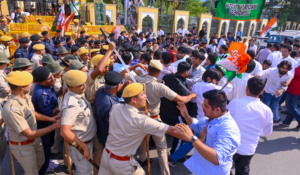
Congress leaders continued their protest outside the Jaipur Police Commissionerate on Tuesday, demanding the registration of a zero...
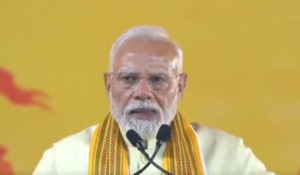
On the auspicious occasion of Vijayadashami, Prime Minister Narendra Modi on Tuesday called on the countrymen to unite...
A historic milestone was achieved on Tuesday in the expansion of Chhattisgarh's rail networkA historic milestone was achieved...

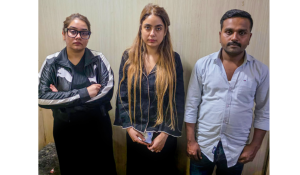
Model Shraddha Dubey, one of the main accused in the death of Lucknow businessman Shiv Sharma, has been...
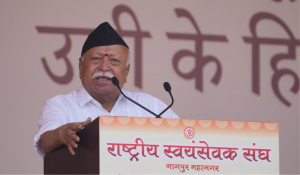
Rashtriya Swayamsevak Sangh (RSS) chief Mohan Bhagwat on Tuesday called for strengthening national unity, social harmony, indigenous practices...
Aries: The day will be auspicious...