Last Updated: October 18, 2026
Last Updated: October 18, 2026





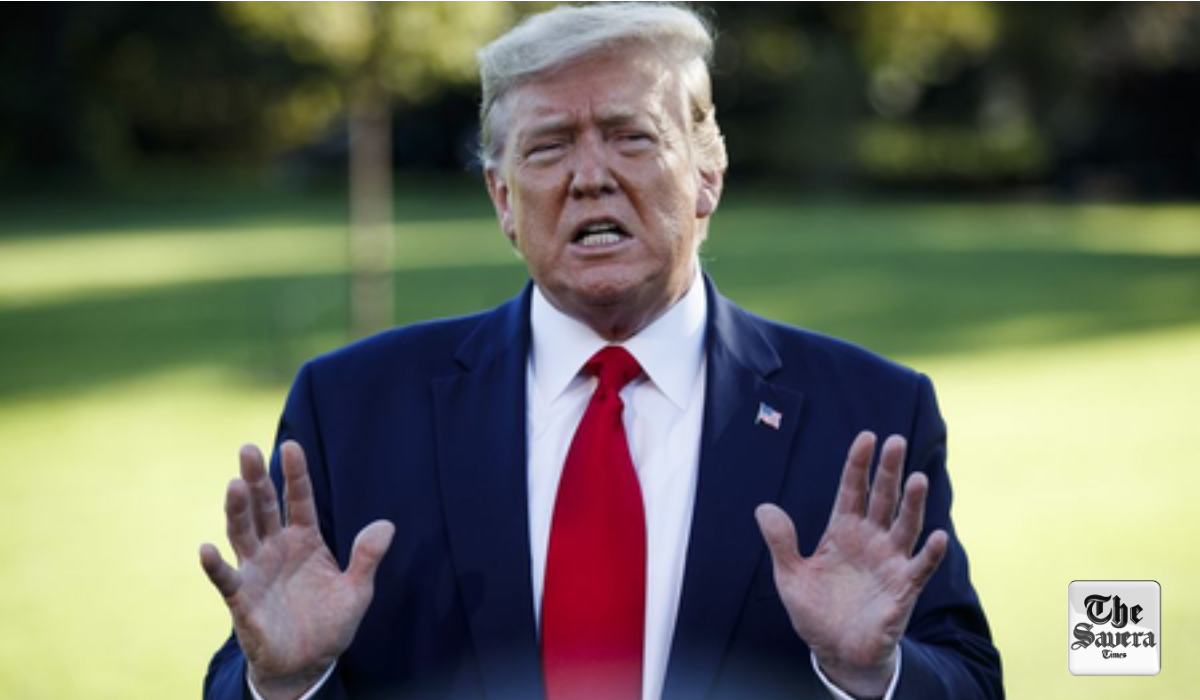
The ongoing conflict in Western Asia is, in a sense, a war that the United States has waged against Iran—at the instigation of Israel. The Trump administration failed to accurately assess Iran’s capabilities. The premise upon which the US initiated this conflict was the claim that, by virtue of the enriched uranium it had accumulated, Iran was on the verge of developing a nuclear bomb.
It was argued that if Iran were not stopped, it would devastate not only Israel but other Gulf nations as well. It is worth noting that Iran—along with Iraq, Saudi Arabia, Kuwait, and other Gulf states—supplies one-quarter of the world’s demand for crude oil, LPG, and fertilizers. These Gulf nations transport goods to other countries via containers and cargo vessels passing through the Strait of Hormuz.
Indeed, 90 percent of China’s crude oil imports originate from Iran. In any event, Donald Trump suffered his first major setback when Iran—despite the disparity in power—courageously stood its ground against America’s formidable military might. A report by the US Congress’s Congressional Research Service itself acknowledges that, since February 28, the conflict with Iran has resulted in damage to 42 aircraft. Meanwhile, a charade of ceasefire negotiations between the US and Iran—mediated by Pakistan—played out in Islamabad.
Throughout these talks, the conditions for negotiation proposed by each side were repeatedly rejected by the other. In the interim, the United States, Iran, and other Gulf nations incurred financial losses amounting to billions of dollars. The financial toll on the US was particularly heavy, as Israel, too, was waging this battle utilizing American weaponry. Iran—acting in concert with Hezbollah and the Houthi rebels—forcefully countered these powerful nations using their arsenal of missiles and drones, steadfastly refusing to yield.
Meanwhile, the situation within the United States has reached a point where both the general public and—increasingly—Republican representatives have grown weary of the exorbitant costs associated with this war.
Trump is rapidly losing his popularity. Consequently, when it comes to making outlandish and baseless claims, he is now outdoing even the most fanciful of daydreamers. A commotion erupted in the U.S. Congress over the issue of limiting the military powers of President Trump, who has shown no signs of backing down from conflict. The central argument raised was that Trump had unilaterally instigated a highly costly war without even seeking congressional authorization.
Trump asserted that, in a state of emergency, he possesses the authority to initiate military action. However, Congress retains the ultimate authority to approve the massive financial expenditures incurred by the U.S. in such conflicts—and on this front, Congress dealt Trump a significant blow.
A resolution to limit Trump’s military powers has been passed in Congress, with four lawmakers from Trump’s own party siding with the opposition’s proposal. Three Republican lawmakers abstained from the vote.
Passed by a margin of 50-47, the resolution against Trump demands that he cease hostilities, asserting that he lacks the authority to continue the war and that such authority must rest with Congress. Admittedly, this is a preliminary measure; it now awaits a final vote in the Senate. Subsequently, it must secure approval from the Republican-majority House of Representatives, where Trump holds veto power.
Overriding Trump’s veto would require a constitutional amendment passed by a two-thirds majority in the Senate—a prospect that currently appears unlikely. Nevertheless, even if such a measure fails to materialize, Trump’s popularity continues to wane day by day. Trump is attempting to placate an American public already distressed by rising inflation by claiming that he has achieved total dominance over Iran in the conflict and that Iran has effectively lost the war. In reality, however, Iran has reiterated that if the United States were to resume hostilities, it would face “major surprises.”
India’s reported three-part truce proposal aims to halt attacks on energy infrastructure, protect Black Sea shipping and maintain...

A major fire at Canadian Forces Base Wainwright in Alberta has left several people dead and others injured....

Paris: France witnessed widespread unrest on Saturday as demonstrations over the rising cost of living, deteriorating public services...

Azad M. Madni, an Indian-American engineer and USC professor who grew up in Mumbai, has won the 2026...

Nairobi: Kenya’s Ministry of Health on Saturday confirmed four new cases of Ebola Bundibugyo virus disease, bringing the...

Increasing Houthi attacks on Saudi Arabia are testing Pakistan’s ability to defend Riyadh without affecting its ties with...
Aries: The day will be auspicious...