Last Updated: October 11, 2026
Last Updated: October 11, 2026





~Abhishek Vij
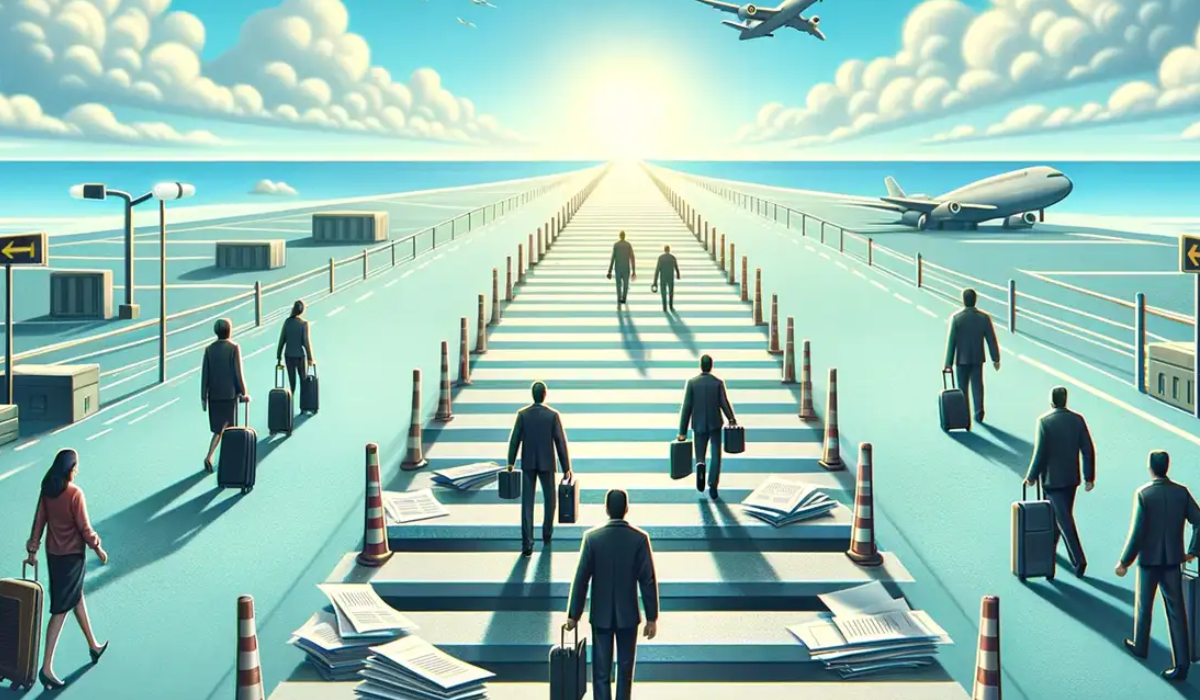
It is becoming increasingly difficult for India’s younger generation—specifically young people seeking a meaningful life after completing their education—to earn a livelihood abroad. While solutions to their problems are being sought through mere rhetoric at home, the actual need is for appropriate employment—guaranteeing jobs commensurate with an individual’s qualifications. The government guarantees that citizens will not starve to death, yet there is no guarantee of employment. As avenues for domestic employment appear to be closing—with permanent government recruitment halted, a trend of relying on temporary jobs emerging, and the country gradually shifting from a public-sector focus to embracing the private sector—enterprises have effectively become the exclusive domain of the private sector. Although this is termed “Public-Private Partnership,” the driving force is often profit maximization rather than the spirit of public welfare characteristic of the public sector. Due to digitalization, automated machines and robots are replacing human workers. Now, Artificial Intelligence (AI) has also entered the fray. Youth constitute half of the country’s population and seek meaningful work; unable to find it at home, they have begun migrating abroad in large numbers. England, the United States, and Canada are popular destinations. Canada has a vast Punjabi population, while the US is viewed as the most lucrative destination. However, following Donald Trump’s rise, not only the US but other nations as well have begun to restrict the large-scale influx of Indians. These countries perceive Indians as taking jobs away from native citizens by working for lower wages. Beyond study visas, the most common method Indians use to enter these countries is the “spouse visa”—whereby an individual holding a Green Card or Permanent Residency (PR) marries someone in India and brings their partner abroad. When the US discontinued this policy, other nations followed suit. Another popular route involves study visas that allow for part-time work alongside studies; the earning potential is so attractive to Indians that young people prioritize securing these visas to move to the US and Canada. Now, however, the terms for study visas have been tightened. A new rule mandates that students must pursue the specific subject for which the visa was granted; they cannot bring guardians along and must return home once the visa expires. Despite this, students arriving in the US on study visas have consistently found ways to extend their stay, and the number of Indians migrating to the US via this route has not declined. Fundamentally, the US is a commercial nation; the Trump administration began attaching a price tag to Indian entry into the country. They started demanding hundreds of thousands of dollars for direct entry. The cost of study visas for Canada has also nearly doubled. The US is aware that Indian students seek visas that allow them to work parttime while studying, enabling them to earn an income alongside their education. Capitalizing on this specific demand, the US has announced that foreign students wishing to earn while they study will now have to pay a higher price. The Trump administration has proposed a fee of $70,000—approximately ₹67 lakh—for foreign students. On top of this, there will be the additional burden of travel costs and initial living expenses. While the stated objective is to curb the flood of foreign students—with the attitude that if Indian students are affected, so be it—fees have also been imposed on the ‘Practical Training Program’ (often used by Indian students as an easy entry route into the US); extending the duration of this program will now cost $30,000 each time. For countries like India, there is a major lesson here: the youth should contribute to nation-building while remaining in the country, and the government should provide them with employment. This is how the nation will become self-reliant.
New Delhi: Delhi Traffic Police has announced traffic restrictions and possible diversions at around 30 key intersections and...

Pakistan’s religious minorities continued to face violence, discrimination and persecution throughout 2025, with blasphemy accusations and minority women...
Pakistan’s record of blasphemy cases over the past decade, including cases emerging in 2026, highlights the human cost...

A recent nationwide survey conducted by ‘Local Circles’ has revealed that the fruits and vegetables available to the...
A woman experienced chronic pain due to endometriosis. She spent five years visiting doctors who barely recognised her...

Bangladesh is facing acute environmental and public health risks from rising pesticide and chemical fertiliser use. Chemical fertiliser...
Aries: The day will be auspicious...