Last Updated: October 12, 2026
Last Updated: October 12, 2026





Sheena Sandhu
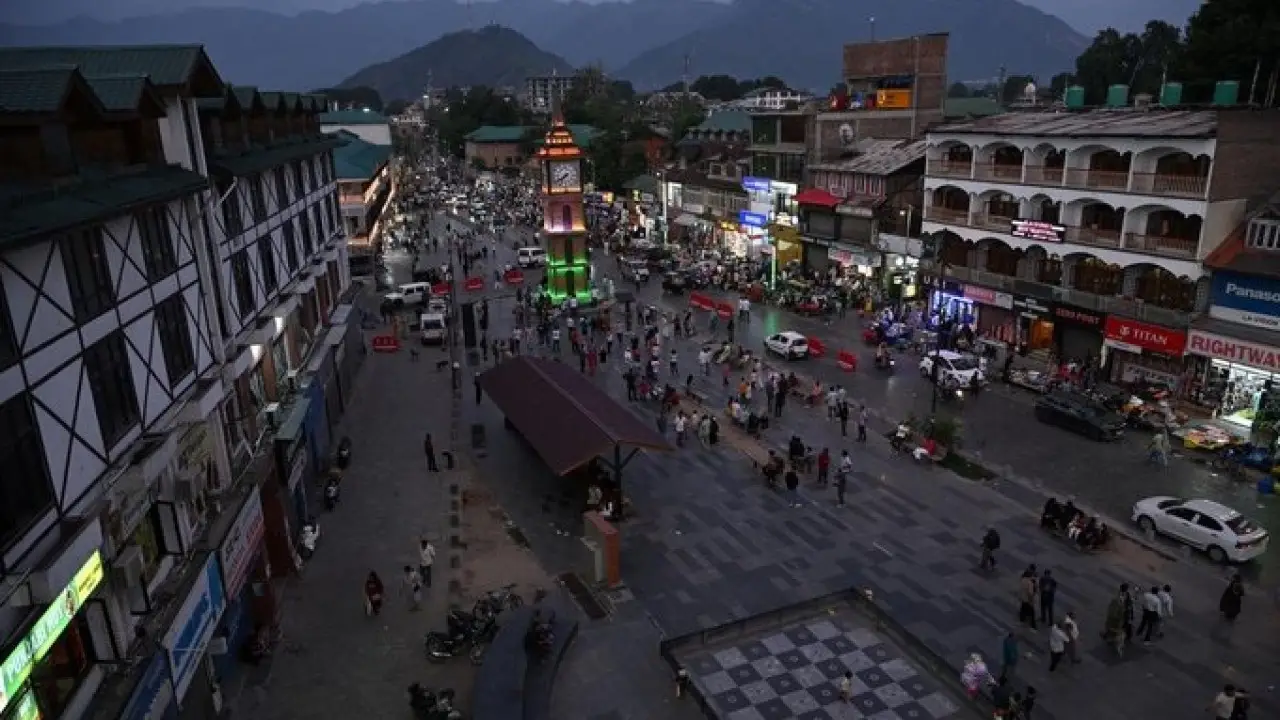
Jammu and Kashmir still has problems, some of them serious. But seven years after its constitutional reorganisation, the more revealing comparison is not between competing political claims. It is between what has actually been built, connected and opened up on the two sides of the Line of Control. Anniversaries in Kashmir have a habit of becoming arguments about history. August 5 is no exception. Seven years after Parliament altered Article 370 and reorganised the former state of Jammu and Kashmir, the familiar positions remain largely intact. Supporters speak of integration; critics of autonomy lost. Pakistan invokes grievance and selfdetermination. New Delhi points to development and normalisation. There is another way of judging the intervening years: count things. Count trains, tourists, factories, voters and new businesses.
Look at journeys that have become shorter, places that have become accessible and investments that have moved from PowerPoint presentations to factory floors. Then look across the Line of Control. The comparison is increasingly instructive. Start with the railway. For generations the Pir Panjal was not merely a mountain range but an economic barrier. In 2025 the completion of the 272-km UdhampurSrinagar-Baramulla Rail Link finally connected the Kashmir Valley to India’s national railway system. Its statistics are almost implausible: 36 tunnels and 943 bridges, constructed through some of the Himalayas’ most unforgiving geology.
The Chenab bridge rises 359 metres above the riverbed, making it the world’s highest railway arch bridge. It would be dishonest to describe this as an achievement conceived after 2019. The railway was decades in the making. But governments are ultimately judged not by foundation stones but by finished infrastructure. What had remained an aspiration for more than a generation is now a working railway. That distinction matters. Development in difficult regions is often less about announcing another scheme than completing the last 20%. Road connectivity is undergoing a similar change. The Z-Morh tunnel has improved year-round access towards Sonamarg; the much larger Zojila project promises to weaken winter’s annual grip on the SrinagarLeh route.
New highways, tunnels, medical institutions and urban infrastructure are gradually reducing the economic penalty Kashmir has historically paid for geography. Tourism provides the most visible economic dividend. Government figures put visits to Jammu and Kashmir at about 1.8 crore in 2025, despite the savage terrorist attack at Pahalgam in April that killed 26 people and temporarily devastated bookings. The attack was an important reminder that “normalcy” should not be advertised too casually. Terrorism has not disappeared. Yet neither did Kashmir’s tourist economy collapse permanently. Gulmarg and Pahalgam remain magnets, but the more interesting development is occurring beyond them. Gurez, Keran, Lolab, Doodhpathri and other places once known outside Kashmir principally through security reports are entering tourist itineraries.
A visitor to a border village creates little geopolitical drama. He does, however, create demand for a taxi, a homestay, a restaurant and a guide. For the household earning that income, this is what peace pays. The investment numbers deserve similar scrutiny. Kashmir has heard grand investment promises before. Proposals are not factories. But in 2025-26 Jammu and Kashmir recorded ₹5,824 crore of realised industrial investment, according to official data—around 13 times the average annual level before 2021. Of 440 units registered under the Centre’s new industrial scheme, 390 were reported to have begun production. Larger private projects in beverages, films, aluminium and pharmaceuticals are either operating or being grounded. This is still far from an industrial revolution.
The region needs many more private-sector jobs, and youth unemployment remains a serious weakness. But ₹5,824 crore actually invested is more significant than tens of thousands of crores contained in memoranda of understanding. The test over the next five years will be whether this first wave produces durable employment rather than subsidy-dependent enterprises. Politics, too, complicates the easy narratives. If the post-2019 order had simply extinguished political participation, the 2024 Assembly election produced an awkward statistic: turnout was 63.9%. More awkward still for the BJP, voters elected a government led by its political opponents.
Omar Abdullah’s National Conference emerged as the largest party and formed the government. That is democracy doing something useful: contradicting the government of the day. There remain legitimate arguments over the powers of an elected government in a Union Territory, and the restoration of full statehood is an unfinished piece of the constitutional settlement. But an electorate turning out in large numbers and installing an opposition government is a more meaningful measure of political life than either New Delhi’s selfcongratulation or Islamabad’s claim that democratic space has simply vanished. Now cross the Line of Control. Pakistan-administered Kashmir has rivers capable of producing substantial hydroelectricity and valleys which, from Neelum to Leepa, possess extraordinary tourism potential. Yet some of its biggest political mobilisations in recent years have concerned not investment or new transport links but the price of electricity and flour. That is a revealing paradox: a hydropower-producing region protesting about electricity. In May 2024, demonstrations over electricity tariffs and wheat prices became so serious that four people were killed and more than 100 injured. Islamabad responded with a PKR24bn package and subsidies.
The discontent returned on a still larger scale in 2025. Protests led by the Joint Awami Action Committee ended after deadly clashes and an agreement covering electricity and wheat subsidies, government privileges, health, education and other demands. Nor has the political argument disappeared. Elections in Pakistanadministered Kashmir in July this year were accompanied by protests, allegations of manipulation and deadly clashes. A particular grievance concerns the 12 assembly constituencies reserved for refugees from Indian-administered Kashmir, whose representatives can be elected by people living outside the territory. The Action Committee argues that these seats give Islamabad undue influence over local politics.
The contrast across the LoC should not be caricatured. Pakistanadministered Kashmir is not devoid of roads, schools, tourism or public institutions, just as Indian Jammu and Kashmir is not an idyll free of unemployment, political resentment or terrorism. Serious comparisons require admitting both facts. But seven years on, direction matters. On the Indian side the economic conversation increasingly concerns railway integration, tunnel construction, tourism capacity, industrial investment, startups and how much authority should return to an elected government.
Across the LoC, remarkably powerful protest movements have repeatedly been forced to bargain over electricity bills, subsidised flour, political privileges and the local share of resources generated from their own rivers. That may ultimately be the most consequential legacy of the post-2019 period. Article 370 will continue to generate arguments about history, identity and constitutional principle. No bridge can settle those questions. Nor should development be offered as a substitute for political rights. But politics is also about the mundane business of making life work. A railway that runs matters. A factory that employs people matters. A village that acquires tourists matters. An election in which the government loses matters. Kashmir has had more than its share of symbols. Seven years after August 2019, India’s strongest case is not another slogan about Kashmir. It is the accumulation of things that no longer need to be slogans at all
eader of the Opposition in the Lok Sabha, Rahul Gandhi and 10 other INDIA bloc leaders have moved...

Amidst protests in central Delhi, the Delhi Metro Rail Corporation (DMRC) announced the reopening of entry and exit...
The Delhi Police has registered an FIR regarding the alleged disturbance at the Bangla Sahib Gurdwara in...
The Delhi Police on Monday removed Jantar Mantar from the list of officially designated protest sites. The police...
The Supreme Court on Monday clarified that it has not passed any judgment on the Election Commission's (ECI)...
The Kerala Assembly passed a resolution demanding the removal of Chief Election Commissioner (CEC) Gyanesh Kumar from his...
Aries: The day will be auspicious...