Last Updated: October 22, 2026
Last Updated: October 22, 2026





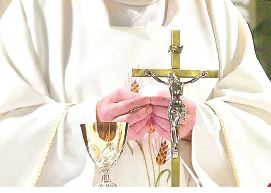
At least 4,400 people have been sexually abused by Catholic priests in Italy since 2020, according to the country’s largest victims’ advocacy group, Rete l’Abuso. The group’s findings have once again highlighted the deep-rooted crisis of sexual abuse within the Catholic Church and the continuing reluctance of Italian bishops to fully confront the issue.
Rete l’Abuso said the figure was based on victims’ testimonies, judicial sources, and media reports gathered over the past four years. The association’s founder, Francesco Zanardi, who is himself a survivor of clerical abuse, said the findings show the scale of the problem and the ongoing failure of Church authorities to respond with transparency or justice.
The Catholic Church has faced global scrutiny for decades over child sexual abuse by clergy and the institutional cover-ups that often followed. Yet, while countries like the United States, France, and Germany have launched official inquiries and published detailed reports, Italy — home to the Vatican — has lagged behind in taking similar steps.
The new data comes as the Vatican faces renewed calls to address the issue more openly. Earlier this week, Pope Leo publicly addressed the matter for the first time since taking office, urging newly appointed bishops not to conceal allegations of misconduct. His remarks followed years of efforts by his predecessor, the late Pope Francis, who had made combating clerical sexual abuse a central concern of his papacy. However, despite the establishment of several safeguarding commissions, progress has remained uneven, and transparency has been limited in several countries, particularly Italy.
In an unusually forthright assessment released on October 16, the Vatican’s own child protection commission criticized the lack of accountability among Italian dioceses. The report revealed that only 81 of Italy’s 226 dioceses had responded to a questionnaire about their safeguarding and prevention practices. The commission described this response rate as “deeply inadequate” and indicative of “institutional resistance to transparency.”
Rete l’Abuso’s report identified a total of 1,250 suspected abuse cases since 2020, some involving multiple victims. Of these, 1,106 alleged perpetrators were priests, while others were nuns, religious instructors, lay volunteers, educators, and scout leaders. The total number of survivors identified through the group’s research was 4,625, including 4,395 allegedly abused by priests.
The group said that 4,451 of the survivors were minors at the time of the abuse, and most of them were male. Among the victims were also five nuns, 156 vulnerable adults, and 11 people with disabilities.
The report further highlighted the limited action taken by Church authorities against accused priests. Out of 1,106 suspected predator priests, only 76 were subjected to internal Church trials. Of these, 17 were temporarily suspended, seven were transferred to other parishes, and 18 were either defrocked or resigned from the priesthood. The report added that five accused priests died by suicide after allegations surfaced.
Zanardi said these numbers point to a pattern of “institutional protection” for clergy members accused of abuse. “The Church in Italy continues to treat survivors with silence and avoidance,” he said. “There is a complete absence of justice within the ecclesiastical system, and civil authorities are often reluctant to intervene decisively.”
While some Italian dioceses have begun setting up safeguarding offices, victims’ groups say the initiatives remain largely symbolic. Unlike in France or Germany, no independent national investigation has been launched in Italy to examine the Church’s role in covering up abuse or to quantify the number of victims.
Advocates argue that the problem is exacerbated by Italy’s close relationship with the Vatican and by the lack of mandatory reporting requirements for clergy. They also note that many cases remain unreported because victims fear stigma, disbelief, or retaliation from their communities.
For survivors like Zanardi, the latest findings are not just statistics but evidence of ongoing neglect. He said the Italian Church’s reluctance to engage with victims contrasts sharply with its public claims of reform. “We hear apologies, we see commissions, but we don’t see accountability,” he said.
As the Vatican and Italian bishops face renewed scrutiny, calls are growing for the establishment of an independent national inquiry to uncover the full extent of abuse within Italy’s Catholic institutions. For thousands of survivors, such a step would represent not only justice but also acknowledgment of a pain that has been ignored for far too long.
Pakistan's Defense Minister Khawaja Asif has questioned alleged plans by senior government officials to permanently settle abroad. He...
The Baloch Liberation Army (BLA) has claimed responsibility for carrying out 34 operations between October 9 and 20...
Russian President Vladimir Putin said on Wednesday that Russia's first tanker carrying 40,000 tons of diesel fuel will...

Ten people were killed and 44 others injured in a horrific road accident in Pakistan's Punjab province. The...
North Korean leader Kim Jong-un's influential sister, Kim Yo-jong, and a military marshal inspected fortification work along the...

New Delhi: US Secretary of State Marco Rubio has assured India that America’s relations with any country in...
Aries: The day will be auspicious...