Last Updated: October 21, 2026
Last Updated: October 21, 2026





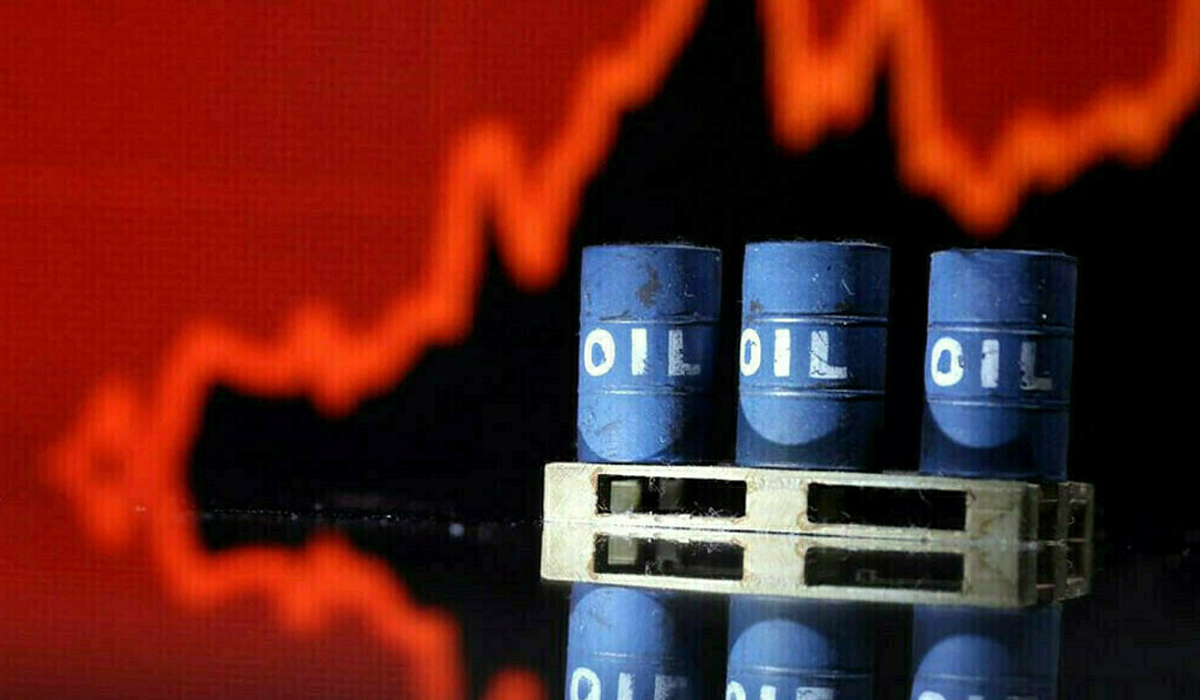
Amid the rising geopolitical tensions in West Asia, global oil prices have seen a sharp surge. Market uncertainty intensified following a stern warning issued to Iran by US President Donald Trump. The global oil benchmark, Brent crude, rose by 0.74 percent to reach $109.8 per barrel.
On Sunday, the price of the international benchmark, Brent crude, climbed 1.4% to reach $110.60 per barrel, while US crude (WTI) surged 1.8% to close at $113.60 per barrel.
Trump’s Stern Warning to Iran
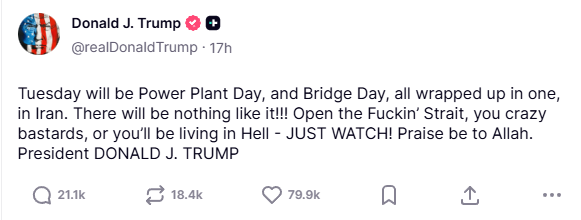
According to reports, Trump has issued a warning to Iran on the social media platform Truth Social, stating that if the Strait of Hormuz is not reopened immediately, Iran’s energy infrastructure could be targeted. Employing highly aggressive language, he signaled that the United States could take stringent military action.
In response to this statement, a senior Iranian official clarified that, under the current circumstances, the strait would not be reopened. He asserted that the passage would remain closed until full compensation is provided for the damages incurred during the conflict.
Diplomatic Efforts Underway
Amidst the escalating tensions, Oman has initiated mediation efforts. The Omani Foreign Ministry confirmed that its representatives met with Iranian officials on Sunday to discuss potential options for restoring the movement of commercial vessels.
OPEC+’s Decision to Increase Production
Meanwhile, in an effort to stabilize global supply, OPEC+ and its allies have decided to increase production. Eight nations, including Saudi Arabia, Russia, Iraq, the UAE, Kuwait, Kazakhstan, Algeria, and Oman, have agreed to boost production by 206,000 barrels per day (kbd) starting in May 2026.
What would happen if Strait is closed for a long period?
Experts believe that if the Strait of Hormuz remains closed for an extended period, it could have severe repercussions on global supply chains, potentially driving oil prices even higher.
Organisations linked to Neville Roy Singham are under US congressional scrutiny over funding. Their coverage of protests in...

US President Donald Trump says Washington and New Delhi are close to a trade agreement that will differ...
Iran has ruled out transferring its enriched uranium stockpile outside the country, with security official Mohsen Rezaei reiterating...
Donald Trump has urged Volodymyr Zelensky to pursue a peace deal with Russia, warning that Ukraine could face...
Pakistan, battling insurgencies at home and tensions along multiple borders, is too overstretched to offer meaningful military support...
The World Bank Group has launched its first comprehensive digital strategy, placing artificial intelligence, affordable internet access and...
Aries: The day will be auspicious...