Last Updated: October 20, 2026
Last Updated: October 20, 2026





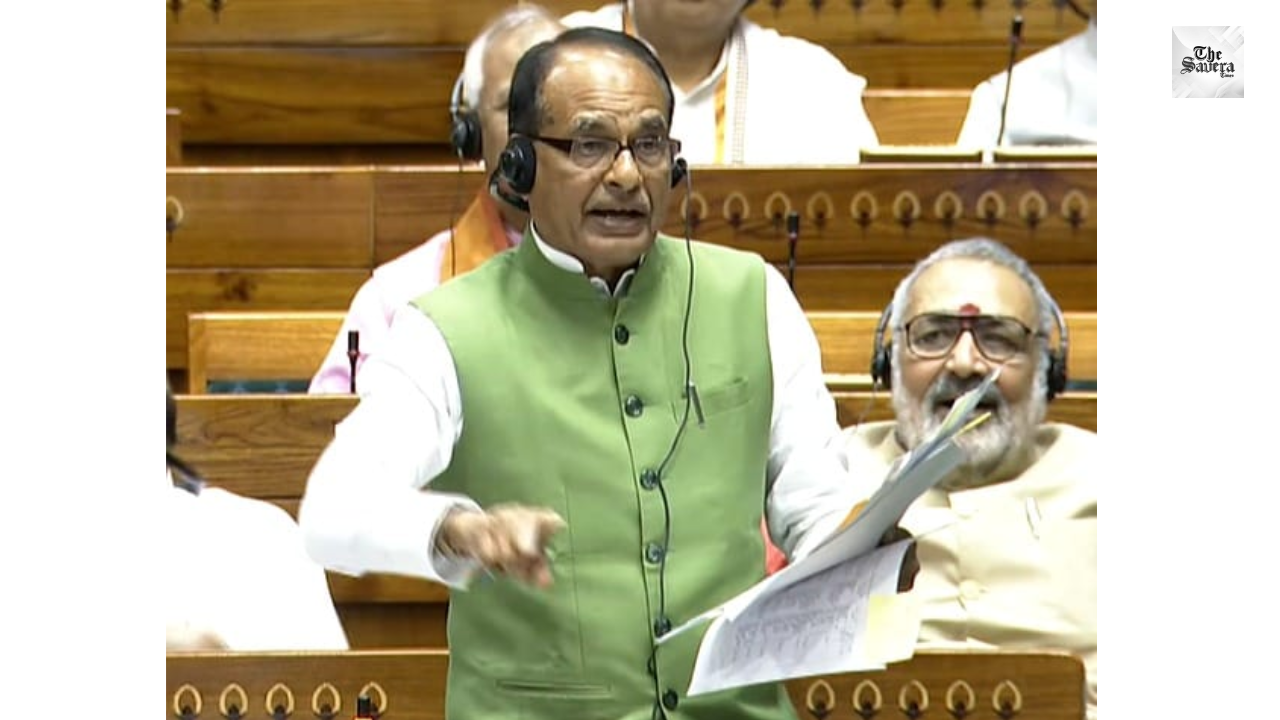
New Delhi | March 24, 2026 -Union Minister for Agriculture & Farmers Welfare and Rural Development Shivraj Singh Chouhan today asserted in the Lok Sabha that under the leadership of Prime Minister Narendra Modi, the Central Government is firmly committed to ensuring that farmers receive remunerative prices for their produce under all circumstances, and that no effort will be spared at any level to protect the interests of the nation’s Annadata. He stated that the NDA government has created a robust safety net for farmers’ incomes through record procurement at Minimum Support Price, along with schemes such as PM-AASHA, Pradhan Mantri Fasal Bima Yojana, Bhavantar payments, and the Market Intervention Scheme. He asserted that these measures have significantly strengthened farmers’ financial security and contributed to a substantial rise in their incomes.
Responding to various questions raised by Members of Parliament, Shri Chouhan said that the Modi government has taken decisive and historic steps over the past years to increase farmers’ income and safeguard their interests. He highlighted that agricultural production has increased by nearly 44%, backed by a comprehensive push to enhance both productivity and earnings. Taking a swipe at previous governments, he said that the recommendations of the Swaminathan Commission were long ignored and reduced to mere rhetoric, with excuses being made that providing MSP at 50% above cost would distort markets. In contrast, the Modi-led NDA government implemented MSP at 50% above the cost of production, ensuring farmers receive fair returns for their hard work.
The Minister emphasized that merely announcing MSP is not enough, ensuring actual procurement at MSP is the real test of commitment. In this regard, he said, the government has carried out record procurement of wheat, paddy, pulses, and oilseeds, directly benefiting farmers. He further underlined that the government’s intervention is not limited to food grains but extends to pulses, oilseeds, fruits, and vegetables, ensuring that farmers are protected whenever market prices fall.
Explaining the framework of the PM-AASHA scheme, Shri Chouhan said it was introduced during Prime Minister Narendra Modi’s tenure to protect farmers growing crops that often sell below MSP. The scheme provides a three-pronged mechanism, direct procurement under the Price Support Scheme, compensation of the gap between MSP and market price under the Price Deficiency Payment Scheme, and additional interventions when required to safeguard farmer interests.
Referring to a question on Maharashtra, Shri Chouhan pointed out that during recent natural disasters, the state government effectively leveraged the Centre-backed digital ecosystem, transferring nearly ₹14,000 crore directly into farmers’ accounts within just five days using Farmer ID systems. He noted that while states provide compensation through mechanisms like SDRF, the Centre ensures comprehensive insurance coverage and compensation through the Pradhan Mantri Fasal Bima Yojana.
Addressing concerns over falling prices of crops such as soybean, pulses, and oilseeds, the Minister said that the government does not rely solely on procurement but also deploys Bhavantar-like mechanisms, under which the entire difference between MSP and market price can be transferred directly into farmers’ accounts. Citing Madhya Pradesh as an example, he said the Bhavantar Payment Scheme has successfully protected farmers’ incomes without forcing them to stand in procurement lines or bear additional logistical burdens, and it stands as a model for other states.
Shri Chouhan further highlighted that under the Market Intervention Scheme, the government has established mechanisms for perishable commodities such as fruits and vegetables by either ensuring procurement at a model price or compensating farmers for the gap between market price and the benchmark rate. Referring to crops like grapes, chillies, potatoes, onions, and tomatoes, he stated that when local prices crash, the Centre even bears transportation costs to enable farmers to sell their produce in distant Mandis where better prices are available.
Reaffirming the government’s commitment to procurement, Shri Chouhan said that agencies such as Food Corporation of India, NAFED, state agencies, and other institutions are working in close coordination to ensure that farmers’ entire produce is procured efficiently. Procurement centres are being opened wherever required to meet demand and prevent distress sales.
Emphasizing transparency and accuracy in the implementation of the Pradhan Mantri Fasal Bima Yojana, the Minister said that crop cutting experiments are conducted at the Panchayat level, with at least four experiments carried out per cluster to ensure reliable yield estimation. He added that the government is increasingly leveraging satellite-based remote sensing technologies to improve the scientific accuracy of yield and loss assessment, ensuring that insurance claims are settled on a fair and transparent basis.
Shri Chouhan revealed that during the NDA government’s tenure, farmers have paid approximately ₹36,055 crore as premium under the crop insurance scheme, while claims worth nearly ₹1,92,477 crore have been disbursed directly into farmers’ accounts which is a clear indication of the scheme’s effectiveness and farmer-centric design. He also highlighted a major reform: earlier, crop loss assessment was largely done at the block or tehsil level, often excluding individual cases, but now provisions have been strengthened to ensure that even individual farmers suffering crop loss are eligible for compensation, leaving no farmer outside the safety net.
Concluding his remarks, Shri Chouhan asserted that these are not merely policy announcements but decisive, ground-level interventions delivering real results. He said that the Modi government stands firmly with farmers in every crisis and remains unwavering in its commitment to ensuring that farmers receive the full value of their hard work. “This is a farmer-first government,” he declared, adding that protecting farmers’ dignity, income, and rights will always remain the government’s highest priority.
Greater Noida (UP): While Dussehra is celebrated across India by burning the effigies of Ravan, Meghnad and Kumbhkaran...

Kanpur: While Vijayadashami is traditionally marked by the burning of Ravana’s effigies across the country, a temple in...

New Delhi: Global crude oil prices advanced on Tuesday, hovering near a five-month high as traders continued to...

Mumbai: Mumbai Police have recovered five empty bullet shells and two live cartridges from the site of the...

New Delhi: Mexican drug cartels are increasingly exploring local production of narcotics in India, using rented houses as...
Kolkata: Ainul Haque, a resident of Cooch Behar district in West Bengal, who has been arrested on charges...
Aries: The day will be auspicious...