Last Updated: October 4, 2026
Last Updated: October 4, 2026





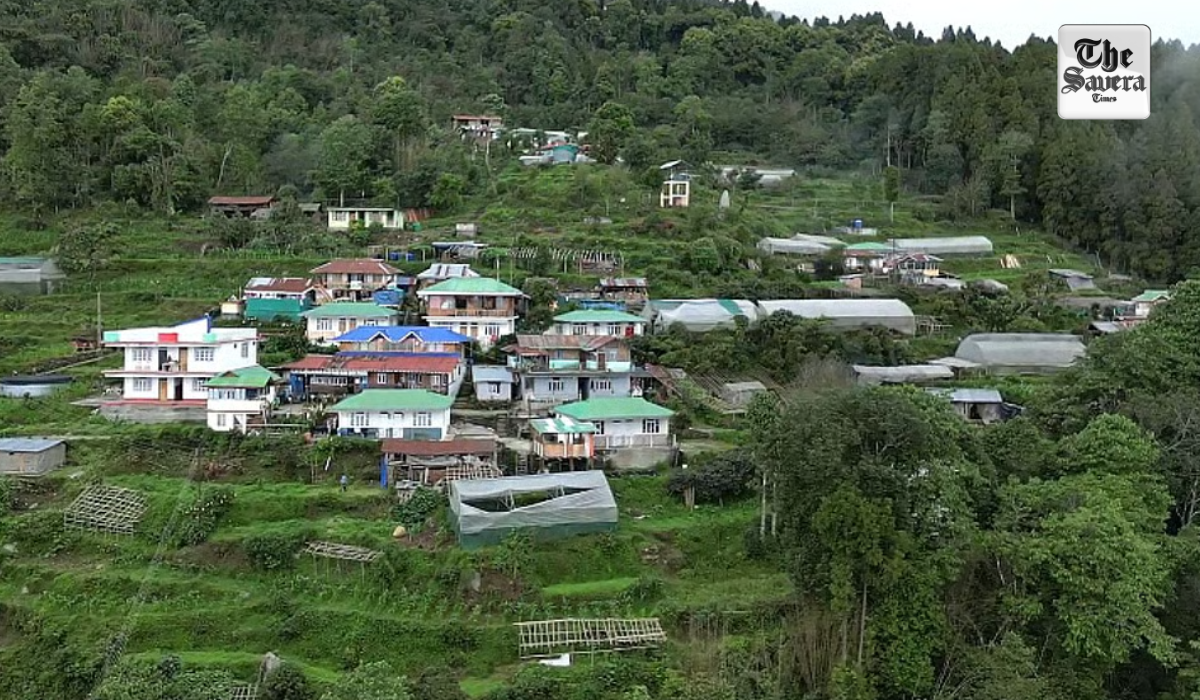
Tucked into the hills of Pakyong district in Sikkim, Yakten is a small Himalayan village that has begun striking attention for an unusual experiment in rural development.
In 2026, it won a SKOCH Award for tourism, recognition that came after it was promoted as India’s first digital nomad village under the Government of Sikkim’s NomadSikkim initiative.
The initiative has also been actively supported by the Rohan Agawane district administration with the contribution of the district’s junior engineers.
The programme has sought to position the village as a place where remote workers, travellers and local communities can coexist, with visitors drawn not only by connectivity and mountain views but also by its cultural rhythms, agrarian landscape and quieter pace of life. Yakten now is turning its attention to long-term water planning. The village is working with environmental consultancy BETWA Solutions and the local government to better understand its springs, map its watershed and prepare for the more variable monsoons that El Niño years tend to bring.
Meteorological agencies like United States’ National Oceanic and Atmospheric Administration Home predict an 82 per cent chance that El Niño conditions will develop between May and July this year, with nearly a 100 per cent probability of a “Super El Niño” forming by November. Yakten’s water comes primarily from natural springs fed by rainfall that percolates through the hillside. Like many villages at this elevation, it sits at the upper end of its hill system, which means spring discharge is naturally modest. The village has managed this well so far, but as tourism grows and rainfall patterns shift, developing a clearer picture of supply and demand has become a sensible priority.
BETWA conducted a detailed hydrological study drawing on 76 years of India Meteorological Department rainfall data from 1950 to 2025. Its findings show that while annual rainfall in the region has gradually increased, a growing share of it now arrives in short, intense bursts. These storms run off steep slopes rather than soaking into the ground to recharge springs. In El Niño years in particular, this can leave the village drier than usual, even after a wet monsoon season.
Yakten’s geology and topography add to this challenge. With slopes steeper than 35 degrees and south-eastfacing aspects, the land is not naturally efficient at capturing and holding rainwater. Changes in land use have also reduced the forest cover that once helped slow runoff and encourage infiltration.
During a field visit conducted with the Rural Development Department, four key water bodies in Yakten were mapped, including two springs — Bhiwsa spring and Hel Khola — and two ponds, Ladey Pokhri and Sookhi Pokhri. Bhiwsa spring is the main source for the village, and the team identified its recharge zone in the immediate uphill area, where targeted interventions can help improve the spring’s reliability over time. The study also helped develop a conceptual understanding of how springs in the village function and what interventions can be taken by the administration. The plan is structured in three phases.
Recharge pits have already been dug in the two priority zones and filled with phyllite stones to channel water past the clay layer and into the aquifer. Rooftop rainwater harvesting will be introduced across the village.
Over the following months, new storage ponds will be built to buffer supply during drier spells. The longer-term ambition is to create a gravity-fed system drawing from higher-elevation ponds, tracked by low-cost sensors and managed by the community.
What stands out about Yakten’s approach is that it treats water planning as part of the same ethos that has guided its tourism model: thoughtful, locally grounded and oriented toward the long term. Rather than waiting for a shortage to prompt action, the village is investing in understanding its resources now, so that growth and nature can continue to coexist. It is a small but meaningful example of what climate-smart community planning can look like in the Himalayas
From Gaganyaan and Chandrayaan-4 to Shukrayaan and the Bharatiya Antariksh Station, India is entering a new phase of...

The INDIA bloc is intensifying its campaign against CEC Gyanesh Kumar, while CJP continues separate protests over SIR...

Over the years, India’s cities have made significant strides in expanding access to public sanitation facilities. From improving...
While some areas face floods after heavy rain, rainfall deficits in Uttar Pradesh and Punjab are raising concerns...

The Uri National Highway in J&K will remain closed on October 4 and 11 for BRO hill-cutting work,...
Gujarat rolls out new GCC Operational Guidelines with a single digital portal for incentives and a two-year window...
Aries: The day will be auspicious...