Last Updated: October 21, 2026
Last Updated: October 21, 2026





Jitendra Pal Malhotra
State President, Bharatiya Janata Party, Chandigarh
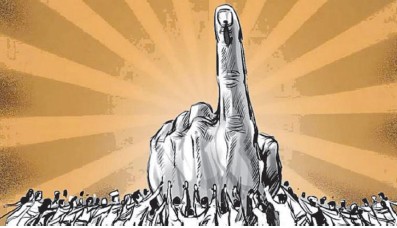
Democracy is not merely about casting a vote; it is a system built on trust and accountability. This trust can only endure if the electoral process is clean, fair, and transparent. In a large and diverse country like India, elections are not just a formal procedure, but a crucial link of trust between the people and the system. If the foundation of this system—the voter list—is weak, then questions arise about the validity of the election results. It is essential to understand SIR in this context.
Under the leadership of Prime Minister Narendra Modi, the government has always believed that the system must be reformed periodically to strengthen democracy. SIR is part of that philosophy. It is easy to label it a political weapon, but the truth is that it is an administrative and constitutional process aimed at making the electoral system more reliable.
SIR stands for Special Intensive Revision. In simple terms, it is a process of thoroughly scrutinizing voter lists. Under this process, names of deceased individuals are removed, duplicate entries for the same person are corrected, new eligible citizens who have turned 18 are added to the list, and names of those who are not Indian citizens are removed. The meaning is clear—those who are eligible should have their names on the list; those who are not, should not.
It is often said that SIR is against democracy. But the question is, does conducting elections with incorrect or fraudulent names strengthen democracy? The truth is that democracy is strengthened not by numbers, but by legitimate votes. If the voter list is clean, people’s trust in the elections will also increase.
Another misconception being spread about SIR is that it is a new scheme of the current government. The truth is that special revision of voter lists in India has been happening not just now, but for decades. This process has been adopted under various governments since independence. At that time, no one called it an attack on democracy, because everyone knew that it was necessary to maintain the integrity of the elections. Why is there suddenly so much opposition to SIR today? The answer lies in politics. For years, there have been flaws in the voter lists, which some political parties have exploited for electoral gain. When it comes to correcting these flaws, opposition is inevitable. But democracy runs on rules, not convenience.
The Indian Constitution clearly states that the right to vote belongs only to Indian citizens who are 18 years of age or older. The Election Commission has been entrusted with the responsibility of enforcing this rule. SIR is in the process of implementing this constitutional responsibility on the ground. It does not take away anyone’s rights; rather, it protects the rights of the rightful individuals.
It is also being alleged that SIR is against the poor or weaker sections of society. This is baseless. If a person is poor, a laborer, or a migrant, but is an Indian citizen and of eligible age, then SIR is a process to protect their name, not remove it. This system does not consider anyone’s caste, religion, or economic status—it only considers citizenship and eligibility.
The real problem lies with the names that have remained on the list for years without proper verification. When such names are removed, the electoral equations change. Perhaps some people are uncomfortable with this change.
It is also important to understand that SIR is not a sudden decision. It is a defined process that the Election Commission conducts with complete transparency. People are given ample opportunity to present their case, show documents, and make corrections. Calling it repression is not only wrong but also questions the hard work of the officials who are dedicated to conducting fair elections.
The biggest enemy of democracy is not change, but stagnation. If India does not improve its electoral processes with time, democracy will remain only in name. SIR is a necessary step in this direction of reform. SIR is not a process to exclude anyone. It is an attempt to strengthen the system on which public trust rests. A clean voter list not only ensures fair elections but also strengthens faith in democracy.
Today, it is necessary to view SIR beyond the political noise. The protection of democracy is not always achieved through grand slogans. Often, it happens through quiet but correct procedures.
SIR is the same process—simple, necessary, and constitutional.
And perhaps that’s why it makes those uncomfortable who see democracy not as a rule, but as a convenience.
State Bank of India has confirmed that 3,897 customer records containing personal information were found on the dark...
A fire in a hut in Nonapar village of Deoria district claimed three lives, including those of a...

Amit Shah paid tribute to police personnel who died in the line of duty at the National Police...
Reduced water levels at Har Ki Pauri and other Haridwar ghats have inconvenienced pilgrims during the Upper Ganga...
Six people returning from a Dussehra Mela were seriously injured when a car hit them on National Highway...

Two people were killed and ten injured after a passenger bus met with an accident at Gala Pachound...

Aries: The day will be auspicious...