Last Updated: November 1, 2026
Last Updated: November 1, 2026





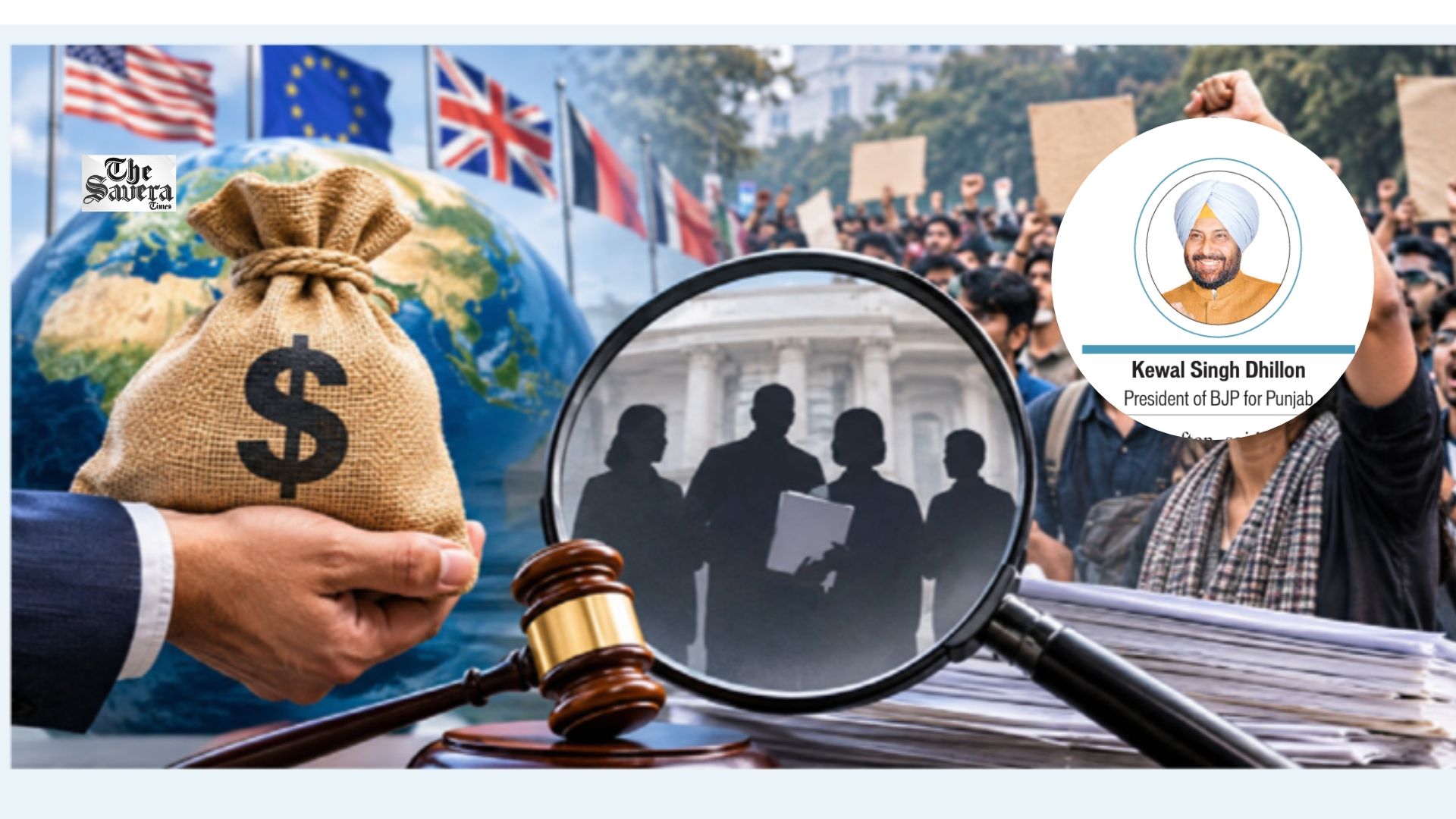
It is often said that in a democracy, the ultimate verdict rests with the people. However, this verdict can be meaningful only when elections are free and fair and the electoral rolls are accurate. How can an election be trusted if the electoral rolls contain the names of deceased persons, duplicate entries of the same voter, or the names of people who moved away years ago without any verification? Therefore, the Special Intensive Revision (SIR) of electoral rolls should not be viewed as a political battle but as an exercise to clean up the democratic process. The Congress and its allies are questioning this exercise. The issue is not whether they have the right to raise questions, but whether opposing the entire exercise is justified when irregularities exist in the electoral rolls. Why not suggest measures to rectify these shortcomings? While dissent is a fundamental democratic right, is it healthy politics to turn every government initiative or electoral reform into a street-level confrontation? This Is Not the First Time an SIR Has Been Conducted The revision of electoral rolls is not new to India. Such exercises have been conducted 12 times in 1952–56, 1957, 1961, 1965, 1966, 1983–84, 1987–89, 1992–93, 1995, 2002–03, 2004 and now in 2025. Notably, the Congress was in power at the Centre during 10 of these 12 exercises. If the process was acceptable then, why is it facing such strong opposition now, when the BJP is in power at the Centre? Cleaning up electoral rolls is not the agenda of any particular political party; it is an exercise that concerns every eligible voter. Incorrect entries must be removed, while voters whose names are mistakenly deleted must be given an opportunity to have them restored. That is what a credible electoral system should ensure. The Data Speaks for Itself The figures cited from various states highlight the scale of alleged irregularities. In Uttar Pradesh, the Special Summary Revision (SSR) reportedly identified 25.47 lakh duplicate entries and 46.23 lakh entries belonging to deceased voters. Similarly, Maharashtra recorded 17.63 lakh duplicate entries and 34.81 lakh entries of deceased persons. In Andhra Pradesh, the figures stood at 7.37 lakh and 26.95 lakh, respectively; Karnataka reported 7.10 lakh duplicate entries and 24.17 lakh entries of deceased voters; Telangana recorded 6.70 lakh and 18.07 lakh; Jharkhand, 4.38 lakh and 16.40 lakh; Tamil Nadu, 3.99 lakh and 15.22 lakh; Gujarat, 3.81 lakh and 9.22 lakh; Rajasthan, 3.44 lakh and 8.75 lakh; and Madhya Pradesh, 2.77 lakh and 8.46 lakh. In Delhi, 13.58 lakh ineligible entries were reportedly removed. Given the scale of these figures, does the need for verification and corrective action not become evident? Why the Uproar Over the 13-Crore Figure? The controversy largely revolves around the removal of 13 crore names from electoral rolls. However, it is important to understand the reasons behind these deletions. According to the figures cited, approximately 6.3 crore entries, or 48.1 per cent, belonged to people who had permanently shifted elsewhere. Another 3 crore entries, or 22.9 per cent, related to individuals who could not be traced during verification. Around 2.8 crore entries, or 21.4 per cent, belonged to deceased persons, while 1 crore entries, or 7.6 per cent, were duplicates. There is a clear distinction between removing the names of deceased persons, verifying the status of those who have relocated and inadvertently deleting the name of a legitimate voter. These are different issues and must be treated accordingly. Alongside removing incorrect entries, it is equally important to safeguard the voting rights of every eligible citizen. The Role of the Commission and the Courts The Election Commission is responsible for conducting this exercise, and several legal questions have also been raised before the Supreme Court. These include the Commission’s powers, the legality of the procedure and the rights of voters. The matter has been debated in the Supreme Court, and more than 700 judicial officers have reportedly been engaged in the verification process. The objective should be to ensure that every irregularity is properly examined and addressed. Criticism of the Election Commission is a democratic right, but allegations should be supported by evidence rather than speculation. A more constructive approach would be to identify specific shortcomings and seek practical solutions. Why Is the Election Commission Blamed for Electoral Defeats? Between 2014 and 2025, the Congress reportedly lost 56 Assembly elections, all before the present intensive revision exercise. Does this mean electoral rolls were responsible for every defeat? Elections are not won or lost solely on the basis of electoral rolls. A party’s policies, leadership, campaign strategy, local issues and public expectations all play important roles. Political power has changed hands in states such as Punjab, West Bengal, Uttar Pradesh, Bihar, Gujarat, Madhya Pradesh, Maharashtra, Haryana, Karnataka and Rajasthan. Every political party has a responsibility to respect the people’s mandate and honestly assess its own shortcomings rather than attributing every electoral setback to the Election Commission. Safety of Officials Is Also Essential to Democracy Democracy does not function on votes alone; it also depends on the safety of officials responsible for conducting elections. Incidents involving police personnel during protests on October 7 and the demonstration by the Opposition INDIA bloc inside the Supreme Court premises on October 12 have raised concerns. On July 20, 118 police personnel were reportedly injured in New Delhi. Another incident involving two police officers was reported in Delhi on October 10. There have also been reports of incidents involving women Booth Level Officers (BLOs) and other election staff. Peaceful protest is a democratic right. However, threatening officials, resorting to violence or obstructing them from performing their duties cannot be justified in the name of democracy. Addressing Voters’ Concerns Concerns have been raised that deletion of a person’s name from the electoral roll could affect access to ration, pensions or passport facilities. Such fears are misplaced because electoral registration and eligibility for government welfare schemes are separate matters. Notably, approximately 2.37 crore new names belonging to people aged between 18 and 28 have reportedly been added. The process requires the submission of Form 6 and is also linked to a Supreme Court ruling dated May 27, 2026. Citizens must be provided with clear information on how to check their voter registration status and appeal against any incorrect deletion. Questions have also been raised about the centralisation of data through digital platforms such as ECINET. The focus should be on ensuring that technology makes the process more transparent, accessible and secure. Ultimately, It Is a Matter of Responsibility Democracy can be strengthened only when the Election Commission, the judiciary and other constitutional institutions remain credible and effective. Citizens and political parties have every right to question institutions, but criticism must be based on facts and evidence. At the same time, institutions must ensure transparency and accountability in their functioning. The success of the intensive revision exercise will depend on three essential safeguards: removing incorrect entries, retaining the names of all eligible voters and providing a fair hearing and appeal mechanism wherever errors occur. Political parties must recognise that cleaning up electoral rolls and protecting voters’ rights are not conflicting objectives. Both are essential to a fair electoral system. The debate on electoral reforms must therefore move beyond political accusations and focus on facts, transparency and accountability. Democracy rests on three fundamental principles: respect for the people’s mandate, trust in constitutional institutions and protection of every eligible citizen’s right to vote.
Two major political events have intensified political activity in the national capital, New Delhi, on Sunday.
The Supreme Court, while hearing cases of digital fraud, made strong comments about the rapidly spreading cybercrime in...
Stay updated with the day’s biggest developments from India and around the world. Read the top headlines across...

Rahul Gandhi targeted Chief Election Commissioner Gyanesh Kumar at the INDIA bloc's mock Parliament programme, claiming the Opposition...
The BJP’s ‘Zakhm 84 De’ conclave in Chandigarh on November 4 will feature survivor accounts, discussions on the...
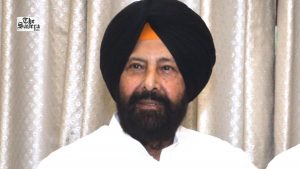
Gajpat Singh Grewal has received anticipatory bail in the disproportionate assets case involving former Punjab minister Bikram Singh...
Aries: The day will be auspicious...