Last Updated: October 23, 2026
Last Updated: October 23, 2026





Parneet Sachdev
Chairman of Real Estate Regulatory Authority and a leading author
Arthashastra
The Special Intensive Revision (SIR) of electoral rolls has triggered a political debate across the country, with the exercise being described by its critics as a threat to voter rights and defended by the Election Commission as a necessary exercise to clean up electoral rolls. In Punjab, the argument has acquired an additional dimension, with questions being raised over the relationship between voter registration, welfare benefits and the conduct of the exercise on the ground.
A closer look at some of the claims, however, shows that the numbers and the process need to be understood before drawing conclusions.
The most striking figure in the debate is the claim that 13 crore voters have been deleted. That figure needs some qualification. The names identified during the exercise include people who are marked as absent, shifted, deceased, duplicate or otherwise ineligible. They cannot all be treated as 13 crore living voters who have been removed from the rolls. There is a difference between an entry being identified during verification and a name being finally deleted from the electoral roll.
SIR itself is not a new feature of India’s electoral system. Intensive revisions have been carried out at different points since 1951, including during periods when Congress-led governments were in power. The current exercise is therefore part of a longer history of electoral-roll revision rather than a process being used for the first time.
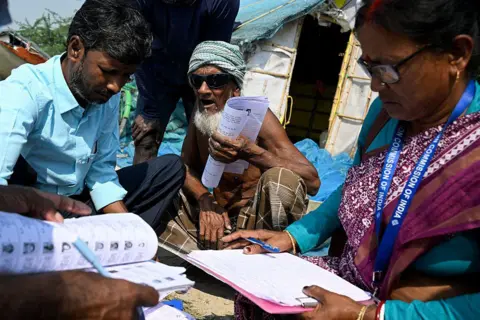
The role of Booth Level Officers is central to the present exercise. BLOs are expected to visit voters at their homes and verify the information available on the rolls. It is through this field exercise that categories such as absent, shifted, deceased and duplicate voters are identified. That does not mean that mistakes are impossible. In a process involving millions of voters, the quality of field verification remains important. But the procedure itself is based on verification by election officials rather than simply deleting names from a computer system.
The issue of young voters has also figured prominently in the political argument. The allegation that Gen-Z voters are being targeted needs to be compared with the enrolment figures. Across Assam, Tamil Nadu, Puducherry and West Bengal, 26.73 lakh voters aged 18-19 were on the final rolls cited in the debate. Tamil Nadu alone saw 7.40 lakh new voters in this age group enrolled during SIR. These figures do not rule out individual cases where young voters may have faced problems, but they are relevant to the larger question of whether there is evidence of systematic exclusion of first-time voters.
Form 6 provides another way of looking at the issue. The form allows an eligible person to seek inclusion in the electoral roll. If names have been wrongly left out, the number of applications for re-inclusion, the grievances filed and the number of names subsequently restored would provide a more concrete indication of what happened on the ground. The same applies to legal challenges. The absence or presence of a large number of such cases is relevant when assessing claims of systematic exclusion.
The political discussion has also brought the tenure of Chief Election Commissioner Gyanesh Kumar into the picture. Kumar took charge as CEC on February 19, 2025. Haryana, Maharashtra and Delhi elections that are sometimes cited in the current political argument were held before he assumed the post. That chronology matters when responsibility for those elections is being attributed to the present CEC.
Similarly, reports of differences within the Election Commission need to be seen in context. The Commission has three members – the CEC and two Election Commissioners – and has stated that the final decisions relating to SIR were taken unanimously. Questions about individual administrative decisions or disagreements do not, by themselves, establish that the institution has broken down.
The ECINet issue followed a similar course. Concerns were raised over access available to Electoral Registration Officers. The matter was taken up internally, and directions were issued to restore full statutory access to EROs. Chief Electoral Officers were also asked to confirm compliance. Whatever questions were raised about the system, the issue resulted in an administrative response from the Commission.
There is also a legal dimension to the SIR debate. The Supreme Court has examined the Election Commission’s power to conduct the exercise under Article 324 of the Constitution and Section 21(3) of the Representation of the People Act, 1950. The legality of the exercise, therefore, has been considered within the constitutional and statutory framework governing elections.
Punjab has brought another issue into the discussion: the alleged connection between voter registration and welfare benefits. Chief Minister Bhagwant Mann has asked beneficiaries of the Mata Dhiyan Satkar Yojana to complete the SIR process and remain on the revised electoral roll. He has also said that failure to fill the form could lead to deletion of a name and affect access to social-security benefits. The statement has particular relevance because the question of linking welfare benefits with electoral-roll status has been raised politically as a practice associated with BJP-ruled states. Punjab provides a different example. A similar controversy has also surfaced in Karnataka, where Deputy Chief Minister D.K. Shivakumar made a comparable linkage in relation to the Gruha Jyothi scheme.
There is, however, an important distinction between a political statement linking the two and an actual rule under which welfare eligibility depends on being on the electoral roll. The two should not automatically be treated as the same thing.
The SIR exercise has also produced friction at the ground level in Punjab. Punjab Chief Electoral Officer Anindita Mitra flagged instances of public misbehaviour towards BLOs during the survey in Patiala and Barnala. Such incidents highlight the difficulties faced by officials who are carrying out door-to-door verification across a large electorate.
At the same time, two separate questions are involved here. Whether BLOs have faced harassment or obstruction is one issue. Whether eligible voters have been wrongly excluded is another. Complaints about the conduct of the field exercise cannot, by themselves, establish that voter exclusion has taken place. Conversely, concerns about voter exclusion should not be dismissed simply because election officials have faced difficulties on the ground.
The wider electoral record is also relevant when broader claims are made about the functioning of the electoral system. The same system has produced changes of government in Punjab, Karnataka, Telangana and Kerala, while the BJP has won elections in several other states. That does not settle the questions surrounding SIR, but it does provide some context to claims about the electoral system being incapable of producing political change.
For now, the most important part of the SIR exercise is what happens between the initial identification of names and the publication of the final electoral rolls. A voter marked as absent or shifted is not necessarily a voter permanently removed from the rolls. The verification, claims and objections process, Form 6 applications and the final decisions are all part of that chain.
That is where the debate will eventually have to move – from the headline numbers to individual cases and the records behind them.
The questions are fairly straightforward. Why was a particular voter marked absent, shifted or otherwise ineligible? Was that information verified by the BLO? Did the voter get an opportunity to respond? How many voters sought inclusion through Form 6? How many were restored to the rolls? And what does the final electoral roll show?
Those details will provide a much clearer picture of the SIR exercise than either the broadest allegations or the strongest political defences of it.
For Punjab, in particular, the credibility of the exercise will depend on how accurately the field verification is carried out, how effectively genuine grievances are addressed and whether eligible voters have a meaningful opportunity to remain on, or be restored to, the electoral roll. The answers will ultimately lie in the records and the final rolls.
BJP leader Kewal Singh Dhillon has criticised the Punjab government over its Assembly priorities, raising the killing of...
The Punjab Assembly on Friday unanimously passed a resolution to protect the voting rights of eligible citizens during...
Chief Minister Bhagwant Mann has hit back at Union Home Minister Amit Shah's statement regarding the drug problem...
Congress MLA Sukhpal Singh Khaira was suspended from the Punjab Assembly for the remainder of the session. The...
The Chief Electoral Officer of Punjab has announced special camps across the state on Saturday, October 24th, 2026....
The Punjab Assembly passed a resolution calling for an inquiry into alleged irregularities in electoral rolls during SIR....
Aries: The day will be auspicious...