Last Updated: November 2, 2026
Last Updated: November 2, 2026





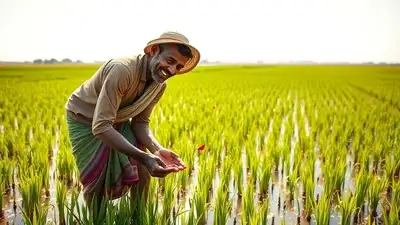
Kharif sowing has begun on a slower note in India, with farmers planting 7.25 million hectares by June 5, 2026 about 200,000 hectares less than the same period last year. The early numbers come as El Niño conditions raise concerns over the progress and spread of the southwest monsoon, which is crucial for India’s kharif crops. The United States’ National Oceanic and Atmospheric Administration formally declared on June 11, 2026 that El Niño had set in. The India Meteorological Department’s long-range forecast, issued on May 29, 2026, had already projected seasonal rainfall at 90 per cent of the Long Period Average (LPA), with a 60 per cent probability of deficient rainfall. The LPA is the rainfall recorded over a region over several decades and is used as the benchmark for monsoon forecasts. Rice, one of India’s most important kharif crops, has seen 285,000 hectares sown so far, slightly higher than 265,000 hectares at the same time last year. But paddy planting is still at an early stage. Rice has a normal kharif area of about 412,000 hectares, and the bulk of sowing will depend critically on the monsoon’s pace and spread. Other key kharif crops, including pulses, oilseeds, maize and cotton, are also in their early stages, with planting yet to gain momentum as the monsoon advances. The season, however, is already unfolding under the shadow of a potentially powerful El Niño. Kharif planting usually accelerates as the monsoon advances across central, western and northern India. Satellitebased soil moisture data for the week of May 30 to June 5 shows early signs of stress in several regions. About 55-60 per cent of India’s net sown area is rainfed, making it heavily dependent on the monsoon. This means delayed or uneven rainfall can quickly affect sowing decisions, crop choices and early crop growth across large parts of the country. Soil moisture is important because it indicates whether the soil has enough water for seed germination and crop growth. Pockets of Odisha, Chhattisgarh, Haryana, southern Karnataka, western Maharashtra, southern West Bengal, parts of Andhra Pradesh and several northeastern districts are already drier than their 10-year average. These areas could face greater pressure if El Niño conditions weaken or delay monsoon rainfall. (Courtesy: DTE
It is a matter of pride for India that the World Bank has acknowledged our progress. The data...

Rahul Gandhi sitting in the front seat of an open bus, with other Opposition leaders behind him, and...

Every two to three months, a tragic incident involving domestic flights brings heartbreak to those traveling by air....

Stay updated with the day’s biggest developments from India and around the world. Read the top headlines across...

The Gujarat government has approved 15 days of Diwali parole for 143 eligible prisoners across the state. The...

The CBI has extradited Sourabh Chandrakar, a key accused in the Mahadev online betting app case, from Oman...

Aries: The day will be auspicious...