Last Updated: October 21, 2026
Last Updated: October 21, 2026





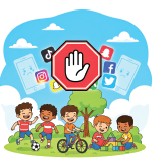
As concerns deepen over young people’s mental health, online safety and rising digital dependency, governments across several continents are considering a major step that could reshape how minors interact with technology. Lawmakers in Europe, Australia and parts of Asia are now pushing for a ban on social media access for all users under the age of 16, signalling a global shift toward stronger online protections for children.
The European Parliament has taken one of its strongest positions so far on the issue. It has called for a region-wide prohibition on social media use for anyone younger than 16. The proposal, although not legally binding, adds significant weight to an ongoing debate across Europe, where concerns have grown over studies linking heavy social media use among young teenagers to anxiety, depression, cyberbullying and addictive behaviour. Lawmakers say these findings have created an urgent need to reassess the age at which children can safely engage with online platforms.
The resolution passed with 483 votes in favour, 92 against and 86 abstentions. It proposes two key restrictions. Children under 13 would be barred entirely from social media platforms, video-sharing sites and artificial intelligence-based companions. Those between 13 and 15 would be allowed access only with verified parental consent. The proposal also argues that current age-verification systems are too weak, allowing children as young as eight or nine to open accounts without meaningful checks. Supporters say a unified 16-and-over standard across the European Union would close these gaps and ensure consistent enforcement across member countries.
Some European leaders had already expressed support for a higher age limit. French President Emmanuel Macron previously called for a ban on social media use for children under 15. However, the structure of the European Union complicates enforcement, as age-limit rules must be implemented individually by each member state. The latest Parliament vote is expected to intensify pressure on national governments to act.
In a striking development, the European Parliament has also recommended holding senior tech executives personally accountable if their companies repeatedly fail to comply with laws protecting minors. This could include Meta’s Mark Zuckerberg and X’s Elon Musk. Lawmakers argue that personal liability is necessary because large technology companies often treat fines as routine business costs. Those in favour believe this step would compel stronger compliance. Critics warn that such measures could lead to extensive legal challenges and raise difficult questions about executive responsibility for large, global platforms.
As Europe debates these proposals, Australia has already moved ahead with a concrete plan of its own. The country is preparing to enforce a national age limit of 16 for all social media accounts. Starting December 10, platforms such as Facebook, Instagram, TikTok and Snapchat will be required to remove users under the age of 16 or face heavy penalties. The Australian government says the measure is designed to protect children from online predators, harmful content and the design features that encourage addiction. Officials also view it as a preventative step to reduce long-term mental health risks in young users.
The new law is already prompting changes in platform behaviour. Snapchat confirmed on Monday that it has begun asking teenage users in Australia to verify their ages. The company said many users will now be required to complete verification to continue accessing the platform. This indicates how social media companies may adapt their systems as more countries consider age restrictions.
Other nations are also watching closely. Denmark and Malaysia have announced plans to explore bans for under-16s, and lawmakers in several additional countries are studying the Australian model. Supporters of these measures say they could become a global trend as governments respond to growing pressure from parents, educators and health experts.
With momentum spreading across multiple regions, the debate is shifting from whether governments should intervene to how quickly under-16 restrictions might be introduced. The moves in Europe and Australia suggest that stricter rules on youth access to social media may soon become part of a broader international effort to reshape the digital environment for minors.
Pakistan, battling insurgencies at home and tensions along multiple borders, is too overstretched to offer meaningful military support...

The World Bank Group has launched its first comprehensive digital strategy, placing artificial intelligence, affordable internet access and...

Fifty-four organisations and movements associated with France's October protests, along with their wider networks of supporters and international...
In the aftermath of the Indian agencies cracking down heavily on Indian influencers who were promoting pro-Pakistan content,...
Nearly 100 new cases of dengue have been reported in Pakistan's Khyber Pakhtunkhwa province in the last 24...

Following violent protests and looting in France, the government has decided to impose new curfews in different areas...

Aries: The day will be auspicious...