Last Updated: October 8, 2026
Last Updated: October 8, 2026





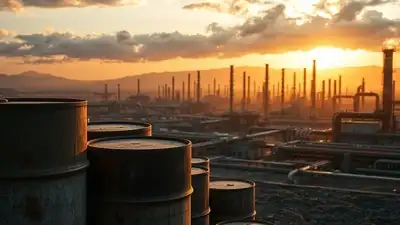
Following the success of BRICS, it’s time to consider global supply. The US has been at war with Iran for over six months. Instead of a ceasefire, missile and drone attacks are taking place. On the one hand, the US is targeting Iranian oil tankers, while on the other, Iran, instead of yielding, claims to be firing missiles at US bases. Broadly speaking, the war continues, and petrol and diesel prices in 100 countries around the world are rising by an average of 5 percent. India’s problem now is that despite announcements of diversifying oil imports, India still has to import up to 85 percent of its petrol, diesel, and gas needs. It’s still true that 50 percent of India’s crude oil comes through the Hormus route. In January-February 2026, India imported 2.6 million barrels of crude oil daily through this route. We mostly buy oil from Iraq, Saudi Arabia, the UAE, and Kuwait. At that time, this represented 50 percent of our total imports. Then the war intensified and became concentrated on the Hormus route. We had to rely solely on oil imported from Russia and the United States. Now, the US doesn’t want us to buy more oil from Russia, so it imposed tariffs and penalties on us. India maintains that we are a sovereign nation and that the US doesn’t decide from whom we buy oil. That’s why India hasn’t reduced its oil purchases from Russia. Now, Russia has also stepped up its efforts to extract more oil at home. We prefer to buy oil from Russia because it sells at our preferred rates. Russia has begun extracting oil from its massive Vostok oil project in the Arctic. President Vladimir Putin also demonstrated the loading of the first consignment through a video conference. Russia aims to begin producing 30 million tons of crude oil annually from this project by the second half of 2027. If this much oil enters the market from Russia, the importance of Hormus and the old oil supply equation will be disrupted. Putin’s project is located in northern Siberia. It connects several oil fields, including Vankor and Pyakha. Vankor Neft has been given the responsibility to complete this project. Four Indian government companies have a combined 49.9 percent stake in it. These include ONGC, Indian Oil, Oil India, and Bharat Petro Resources. If dependence on the Strait of Hormus for oil is abandoned, the oil will be transported via a 790-kilometer pipeline to the Bukhta-Sever terminal on the Black Sea. Tankers will be loaded there and sold to India or other countries. This will create an alternative route, eliminating the need for oil ships to transit the Strait of Hormus. If the resolution is implemented, India could have reserves of 7 billion tons of oil, which would be a major solution to our oil supply problem. While this option appears very attractive, India remains an import-dependent economy, so it clearly cannot ignore the United States. The country’s digital and electrical equipment needs are met by the United States. We also meet our security needs through American imports. Undoubtedly, the demands of the times are that we cannot be unilateral, but it is also clear that India will not abandon this important partnership with Russia.
New Delhi: Prime Minister Narendra Modi welcomed policymakers, maritime leaders, and experts from around the world to the...
New Delhi: The outlook for onion availability has strengthened considerably with robust market arrivals and the commencement of...
New Delhi: The Delhi High Court on Wednesday permitted a senior director of Vivo Mobile India to travel...
New Delhi: INDIA bloc leaders, including Leader of Opposition in the Lok Sabha Rahul Gandhi and Congress MP...

Varanasi: Uttar Pradesh Chief Minister Yogi Adityanath on Wednesday said that the state has undergone a major transformation...

Chandigarh: The Punjab Vigilance Bureau (VB) during its ongoing drive against corruption in the state, the Punjab Vigilance...
Aries: The day will be auspicious...