Last Updated: November 8, 2026
Last Updated: November 8, 2026





Abhishek Vij
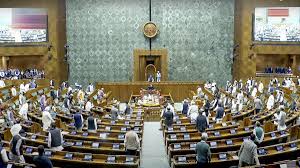
A three-day special session of the Indian Parliament will begin on April 16. The objective of this session is to deliberate and pass the amendments to the Nari Shakti Vandan Act. This will be an extraordinary and progressive step, marking a historic decision to end long-standing gender discrimination in the legislature. It can be called one of the most important decisions of India’s 21st century.
The amendments to implement the Women’s Reservation Act will be considered and decided, thus realizing the dreams of the past and fulfilling the resolve of the future. It is hoped that Parliament will welcome this progressive step and unanimously pass this bill, which will empower the face and existence of women in the future.
This issue should not be dragged into the quagmire of politics. It should be remembered that Parliament passed a law granting reservation to women in 2023. The 2011 census, originally scheduled for 2021, could not be conducted due to the COVID-19 pandemic. After repeated postponements, the census is now being resumed in 2026, and in Punjab, it began on April 1st. Therefore, if this amendment had not been made, the full census, delimitation, and 33% reservation for women would have been granted after the 2029 elections. A special session of Parliament has been called to enumerate women in the country based on the 2011 census data and grant them the right to reservation. This simply means that when the general elections are held in 2029, whether or not parliamentary seats are increased, one-third of them will be reserved for women. It is clear that this Act will be passed and implemented during this session. The credit for this will go to the Modi government.
The ruling party says that the purpose of passing and implementing the Nari Shakti Vandan Act is to immediately advance women’s representation. The BJP has also made an effort at the party level to enlighten women about this Nari Shakti Vandan Act. It has been decided that from Monday onwards, only women spokespersons will present the BJP’s point of view in all debates on news channels throughout this week, and that too not only on the Nari Vandan Women Act discussion, but on every discussion. On Monday, a Nari Shakti Vandan conference was also held at Vigyan Bhawan in New Delhi, in which enlightened women participated and they also mentioned the names of women personalities from the opposition who have illuminated Indian women empowerment with their talent, such as former Lok Sabha Speaker Meira Kumar.
In fact, if the Delimitation Commission’s report, based on the latest census data, had been awaited, women would have neither received adequate representation in the next general election, which could have marked a new dawn for India, nor would they have been able to fully participate in the deliberations of crucial decisions in Indian democracy. Currently, the voter turnout is such that the number of women voters is nearly half that of men. It is unfair to ignore this share of the total vote, as, from state assemblies to the central parliament, the number of women representatives has ranged from 7-8 percent to 12-13 percent. Therefore, if the number of qualified women following this Act can give a new impetus to the functioning of Indian democracy, it should be welcomed.
Prime Minister Narendra Modi on Sunday extended warm Diwali greetings to people across the country, wishing everyone happiness,...

Festivals are not merely a means of celebration; rather, they serve as a vital medium to comprehend the...
Shri Lal Krishna Advani Ji enters the hundredth year of his life today, 8th November. This year, his...
Growing cooperation between China and Pakistan in the space sector highlights emerging gaps in international space governance and...

The recent draft UGC regulations released by the UGC sparked considerable controversy and debate. It was perceived as...

Diwali has been celebrated with great joy and enthusiasm in India for centuries. It symbolizes the victory of...

Aries: The day will be auspicious...