Last Updated: October 6, 2026
Last Updated: October 6, 2026





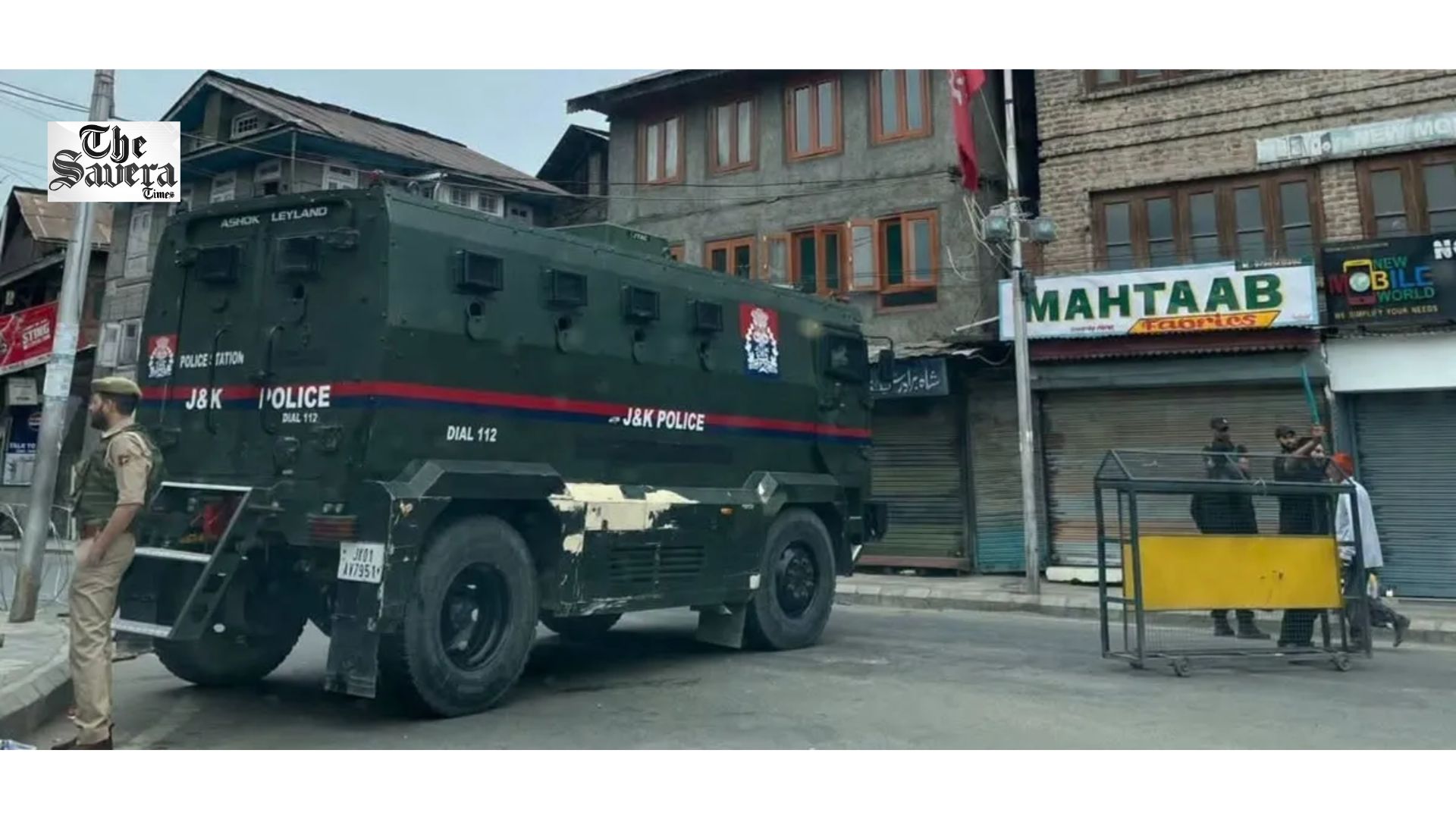
Srinagar: Authorities on Monday imposed partial restrictions in parts of Srinagar city to maintain law and order ahead of proposed processions and programmes announced by political parties, including the ruling National Conference, in connection with Martyrs Day.
Police said restrictions have been enforced in five police station areas of the old city — Khanyar, Nowhatta, M.R. Gung, Safa Kadal and Zadibal. Officials clarified that the restrictions are only for maintaining public order and do not apply to emergency movement.
Security Tightened Around Martyrs Graveyard
Since Sunday evening, authorities have sealed routes leading to the Martyrs Graveyard at Naqshband Sahib in Nowhatta, where political leaders traditionally paid floral tributes on July 13.
Police and Central Reserve Police Force (CRPF) personnel have been deployed in large numbers around the area. Entry routes from Khanyar and the Nowhatta-Jamia Masjid side have been closed, while police vehicles have been stationed at key locations.
Vehicular movement on roads leading to the graveyard has also been suspended, and additional security personnel have been placed at entry and exit points.
History Behind July 13 Martyrs Day
July 13 has historically been observed as Martyrs Day in Jammu and Kashmir. The day marks the killing of 22 protesters on July 13, 1931, during firing outside the Srinagar Central Jail.
The incident occurred when protesters gathered outside the jail during the trial of Abdul Qadeer, who was accused of making a provocative speech against Maharaja Hari Singh’s rule.
Those killed in the firing were later buried in the courtyard of the Naqshband Sahib mosque in Srinagar, which became the site for annual tributes.
The day was observed as a public holiday in the erstwhile Jammu and Kashmir until 2019, when Article 370 was abrogated and the state was reorganised into two Union Territories. After that, the practice of official observance was discontinued and July 13 was removed from the list of public holidays.
Political Leaders Plan Tributes Amid Restrictions
The ruling National Conference had announced that its leaders and workers would visit the graveyard to offer floral tributes to those killed in 1931.
Meanwhile, Iltija Mufti, daughter of former Jammu and Kashmir Chief Minister Mehbooba Mufti and a Peoples Democratic Party leader, claimed that her mother had been placed under house arrest to prevent her from visiting the graveyard.
Senior religious leader and chief cleric Mirwaiz Umar Farooq had also announced plans to participate in a peaceful procession to pay tributes.
Authorities, however, have continued restrictions around the area, citing the need to maintain peace and prevent any law-and-order situation during the observance.
Budgam Police recovered medicines and food from a bag near Palmaidan, intensifying the probe into the suspected local...
The Uri National Highway in J&K will remain closed on October 4 and 11 for BRO hill-cutting work,...
New Delhi: Pakistan’s Inter-Services Intelligence (ISI) has reportedly launched a massive drive to recruit retired army and navy...
Srinagar: The Economic Offences Wing (EOW) of Jammu and Kashmir Crime Branch said on Thursday it has filed...
Pakistan-based LeT terrorist Mohammad Asif alias Hashim Moosa, wanted in the Pahalgam terror attack case, was killed in...
Srinagar: The BJP on Wednesday staged a protest in Jammu and Kashmir’s Srinagar against the National Conference government...
Aries: The day will be auspicious...