Last Updated: October 17, 2026
Last Updated: October 17, 2026






The pressure of war in West Asia continues to mount. Under these circumstances, an erosion of trade and investment is inevitable.
The value of the Rupee continues to decline. The impact of high crude oil prices and the unavailability of gas is bound to influence the sentiment of both buyers and sellers in the markets. No matter how many assurances the government offers—promising that the country will not be allowed to face a shortage of oil and gas—the massive surge in international crude oil prices, and their rise to the $100-per-barrel mark, serves as a major red flag for investors.
If this price surge persists, investors can expect to witness a phase of stagnation and gloom in this sector. The current reality is that ever since the war broke out, supply chains have been disrupted, and investment has taken a severe hit.Foreign investors have withdrawn a staggering Rs 52,704 crore from the Indian stock market. Prior to this, India had been emerging as a symbol of stability for foreign investors. In the month of February, foreign investors had infused Rs 22,615 crore into the Indian stock market—marking the highest level of investment seen in the last 17 months.
However, as tensions surrounding the war in West Asia have escalated—with no signs of abating anytime soon—a state of profound uncertainty has arisen regarding the supply of crude oil and gas. It now appears that the trajectory of the market will be determined primarily by crude oil prices. (Incidentally, decisions regarding interest rates by the US Federal Reserve and inflation rate data also typically influence market dynamics.) In his research, the Vice President of Religare noted that the past week was characterized by significant volatility. Geopolitical developments and disruptions in supply chains caused crude oil prices to become unstable.
Read The Savera Times Evening Bulletin for the top India and world news, latest breaking headlines, major developments...

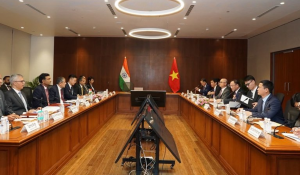
New Delhi: India and Vietnam on Friday reviewed their cooperation across key areas, including economic security, maritime engagements,...
New Delhi: The Union Ministry of Home Affairs (MHA) has sought detailed reports from the Punjab government on...

New Delhi: All India Students’ Association (AISA) National President Neha Bora was detained by the Delhi Police on...

New Delhi: The Directorate of Enforcement (ED) has provisionally attached assets and proceeds of crime worth Rs 136.44...
Mumbai: Jindal Saw on Friday reported a steep decline in its earnings for the second quarter of FY27,...
Aries: The day will be auspicious...