Last Updated: October 21, 2026
Last Updated: October 21, 2026





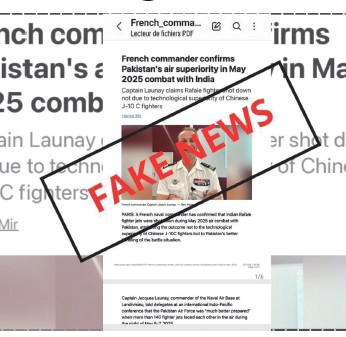
The French Navy has directly challenged a Pakistan based media outlet for circulating false claims about India’s military operations and alleged air engagements with Pakistan after the Pahalgam terror attack in Jammu and Kashmir, an attack that killed 26 civilians. What began as a single misleading report has now developed into a wider debate on the spread of military misinformation and the ease with which fabricated narratives travel across borders.
The controversy arose after Geo TV published an article suggesting that France had endorsed Pakistan’s Air Force during what the outlet described as post Pahalgam confrontations with India. The report attempted to place the French Navy in the middle of a geopolitical dispute by falsely attributing extraordinary remarks to a French naval officer, including claims that Indian Rafale fighter jets had been shot down by Pakistan with Chinese support. France responded firmly and publicly, dismissing the report as fiction.
The Marine Nationale, the naval arm of the French Armed Forces, issued a precise rebuttal. In a clear statement on X, the French Navy said the comments quoted by the Pakistani channel were never made by the officer in question. It added that the report was filled with misinformation and disinformation. The Navy also pointed out that the officer’s name had been incorrectly published. The report referred to him as Jacques Launay, while his correct name is Captain Yvan Launay.
This intervention from France brought global attention to the growing problem of fabricated military narratives. The disputed Geo TV article, published on November 21, had claimed that a French commander had confirmed Pakistan’s air superiority and suggested that Indian Rafale jets underperformed during border tensions. The claims were presented with supposed authority but lacked any verifiable foundation. France has now made it clear that the officer never discussed India Pakistan military dynamics at any point.
The French Navy explained the actual role of Captain Yvan Launay. He is the commander of the naval air station at Landivisiau, the base where Rafale Marine aircraft are stationed. His recent presentation, the Navy said, was technical in nature and focused on Rafale Marine missions, high intensity air combat challenges and operational readiness. It had no connection with South Asian military affairs. The attempt to project his work as an assessment of India Pakistan engagements, the Navy said, was entirely fabricated.
The Pakistani outlet went further by adding more fabricated quotes to support a broader narrative. It claimed that Captain Launay had commented on the Rafale radar system and blamed operational shortcomings for alleged failures in combat. It also attributed to him a sweeping endorsement of the Rafale’s superiority over China’s J 10C aircraft. France has now clarified that no such statements were made.
This episode illustrates a wider trend in which military gossip, sensational claims and geopolitical propaganda are circulated under the guise of expert commentary. In the age of rapid digital transmission, fabricated claims gain an audience before official clarifications can be issued. Defence analysts point out that such narratives often attempt to shape public perception at a time when regional tensions are high and information warfare is becoming central to international relations.
The French Navy’s reaction reflects growing concern that fabricated military claims can complicate diplomatic relations and create unnecessary confusion. By issuing a direct and detailed rebuttal, France has attempted to halt the spread of falsehoods and emphasised the importance of factual accountability.
In the aftermath of the Pahalgam terror attack, India and Pakistan remain sensitive to any suggestion of foreign involvement or endorsement. False reports that appear to lend legitimacy to one side can escalate tensions. For this reason, France’s response carries significance beyond the correction of a single news article. It stands as a reminder of the responsibility of media organisations to verify information, particularly in matters involving defence, diplomacy and regional security.
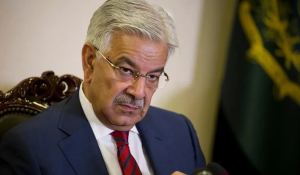
Pakistan's Defense Minister Khawaja Asif has questioned alleged plans by senior government officials to permanently settle abroad. He...
The Baloch Liberation Army (BLA) has claimed responsibility for carrying out 34 operations between October 9 and 20...
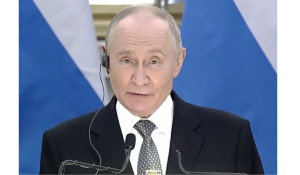
Russian President Vladimir Putin said on Wednesday that Russia's first tanker carrying 40,000 tons of diesel fuel will...
Ten people were killed and 44 others injured in a horrific road accident in Pakistan's Punjab province. The...
North Korean leader Kim Jong-un's influential sister, Kim Yo-jong, and a military marshal inspected fortification work along the...

New Delhi: US Secretary of State Marco Rubio has assured India that America’s relations with any country in...
Aries: The day will be auspicious...