Last Updated: October 21, 2026
Last Updated: October 21, 2026





Diksha & Daivik Dhar
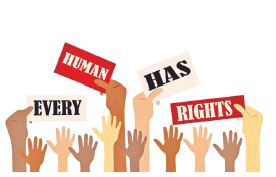
India’s constitutional framework guarantees a range of human rights, both civil–political and socio-economic. Over the years, statutory bodies like the National Human Rights Commission (NHRC) and corresponding State Human Rights Commissions (SHRCs), together with legislative instruments like the Protection of Human Rights Act, 1993 (PHRA), have played a pivotal role in safeguarding those rights. This article examines how the Commission works, the legal framework provided by the PHRA, recent amendments, latest data/trends, and the challenges ahead.
The Protection of Human Rights Act (PHRA), enacted in 1993, established the National Human Rights Commission of India (NHRC) and empowered it to investigate complaints of human rights violations by public servants. It also enabled setting up State Human Rights Commissions and Human Rights Courts for trial of offences arising out of such violations.
Key functions of NHRC/SHRC under PHRA include:
Inquiry into human rights violations, either suo motu or on petition.
Visiting jails, detention centres, and reviewing safeguards for persons under detention.
Reviewing factors that inhibit enjoyment of rights, promoting human rights awareness, and recommending remedial measures.
Intervening in court proceedings related to human rights violations (with permission).
Over time, PHRA has been amended to improve its effectiveness and broaden the scope of NHRC/SHRC memberships.
It made changes relating to the structure and functioning of NHRC and SHRCs.
Perhaps the most significant recent reform, this amendment came into force from 2 August 2019.
Salient changes under this 2019 amendment include:
Broadening eligibility for appointment as Chairperson of NHRC: now a former Judge of the Supreme Court (not only former Chief Justice of India) can be appointed.
Increase in number of members with knowledge of human rights: from two to three, with at least one woman member.
Inclusion of additional ex officio members: Chairpersons of the National Commission for Backward Classes, National Commission for Protection of Child Rights, and Chief Commissioner for Persons with Disabilities as “deemed members” of NHRC.
Reduction in tenure: Chairpersons and members of NHRC and SHRCs have reduced terms of office (three years instead of five).
Greater administrative and financial powers to NHRC & SHRCs as claimed by government.
These changes aimed to make the commissions more representative, more inclusive of various marginalized parties, and to improve their responsiveness.
III. Recent Data & Trends
To understand the health of human rights in India, data from NHRC, state commissions, and expert surveys provide useful insights.
Number of cases registered by the NHRC
In 2019, about 76,600 cases were registered.
This increased to over 112,300 in 2022, an increase of 46%.
But in 2023, the registered cases dropped to 79,000, a reduction of about 29% from 2022.
From April to early August 2024, ~21,640 cases were registered.
Nature of Complaints
Strikingly, close to 90% of cases each year are categorized under “Others,” meaning they are not categorized into more specific types like custodial deaths, violations involving women, children, SC/ST/OBC, etc. Only about 10–12% fall under those specific categories.
State-Level Trends
In Madhya Pradesh, there has been a sharp rise: in 2024–25, there were 10,373 human rights complaints, averaging 29 cases daily.
Assessment by Human Rights Measurement Initiative (HRMI)
HRMI’s India report (2024) indicates that violations of civil & political rights (especially physical integrity rights, i.e. the right to be safe from the state) remain seriously concerning. India scored 3.8 out of 10 in that category.
Despite legal and institutional frameworks, challenges persist:
Generic Classification of Complaints: The “Others” category is overused (90%), making detailed analysis and targeted policy responses difficult.
Backlog & Pendency: Many cases, especially at the SHRC level, remain unresolved for long periods. Staffing shortages and lack of investigative power hamper speed.
Limited Enforcement Powers: NHRC/SHRC recommendations are often non-binding; the government sometimes delays or fails to implement recommended actions.
Tenure & Autonomy Issues: Reduction of term might lead to insecurity or dependency; ensuring real autonomy (financial, administrative) is essential.
Coverage & Accessibility: Remote areas, marginalized communities may have less access to complaint mechanisms. Also, awareness among citizens is uneven.
Data Transparency: There are delays in publishing annual reports; detailed, timely, disaggregated data (by gender, caste, region) is often missing.
The PHRA and the human rights commissions have laid down an indispensable framework for rights protection in India. Amendments like those of 2019 have addressed certain gaps: broader eligibility, inclusion of marginalized persons, stronger institutional representation, and enhanced powers.
However, recent data shows worrisome trends: many cases unclassified or in “others,” a large backlog, decline in number of registered cases in 2023 (after a peak), and persistent challenges in implementation of recommendations.
Recommendations (from our analysis) include:
Improve classification & data disaggregation: More precise categorization of complaints (e.g. by type of violation, affected group) to enable better policy response.
Strengthen enforcement: Make NHRC / SHRC recommendations more binding, ensure prompt implementation and provide mechanisms to monitor compliance.
Increase resources, staffing & capacity: Especially for SHRCs, which often suffer from vacancies and understaffing.
Enhance public awareness: Education campaigns so people know their rights and how to approach commissions; ensure access in remote and vulnerable communities.
Ensure autonomy in practice: Financial, administrative, and appointment processes should be shielded from political interference, aligning more closely with international standards (such as the Paris Principles).
Regular reviews & amendments: As society evolves, further reforms may be needed (e.g. digital rights, privacy, minority protections) and thus the legal framework must evolve.
In sum, while India’s human rights protection framework has robust foundations, its efficacy depends heavily on implementation, transparency, and the willingness of institutions and the State to act in good faith. The PHRA’s amendments mark progress, but much remains to be done to ensure that human rights are not just enshrined in law, but realized in daily life.
Diksha & Daivik Dhar; Goa Institute of Management, Goa
Reduced water levels at Har Ki Pauri and other Haridwar ghats have inconvenienced pilgrims during the Upper Ganga...

Six people returning from a Dussehra Mela were seriously injured when a car hit them on National Highway...

A bus travelling from Pachiound to Ramnagar fell into a gorge at Gulli Gula in Udhampur district. Nine...

Start your day with The Savera Morning Brief, bringing you the latest news from India and around the...

Union Home Minister Amit Shah will pay tribute to police martyrs at the National Police Memorial in New...
Four more people, including two women, have been arrested in the Tiger Shroff firing case. Delhi Police are...
Aries: The day will be auspicious...