Last Updated: September 27, 2026
Last Updated: September 27, 2026





IIT Kharagpur and the Mumbai Archaeological Survey of India (ASI) have launched a joint research project to investigate how historical climate fluctuations and sea-level changes shaped maritime trade and human activity around Elephanta Island and India’s western coast.
The interdisciplinary project will combine advanced earth-science techniques with archaeological evidence to reconstruct past sea levels, climatic conditions and maritime activity from the Early Historic to Medieval period. The Mumbai Port Authority has committed Rs 1 crore towards the initiative.
The interdisciplinary initiative is expected to provide new scientific insights into the relationship between environmental change, coastal geography, ancient settlements and maritime networks.
The Intergovernmental Panel on Climate Change predicts global sea levels could rise by 0.4 to 0.8 metres by the end of 2100. For the western coast of India, the rise might be even up to 1 metre, which could submerge low-lying areas of Mumbai and affect areas around Elephanta Island, home to the 1,500-year-old iconic rock-cut caves of Lord Shiva, a UNESCO World Heritage Site.
The project will address the effects of climate change and sea-level rise on maritime trade activity from the Early Historic to the Medieval period, covering a period of approximately 1,500 to 1,000 years before the present. The findings are also expected to have important implications for understanding the future effects of sea-level rise due to climate change.
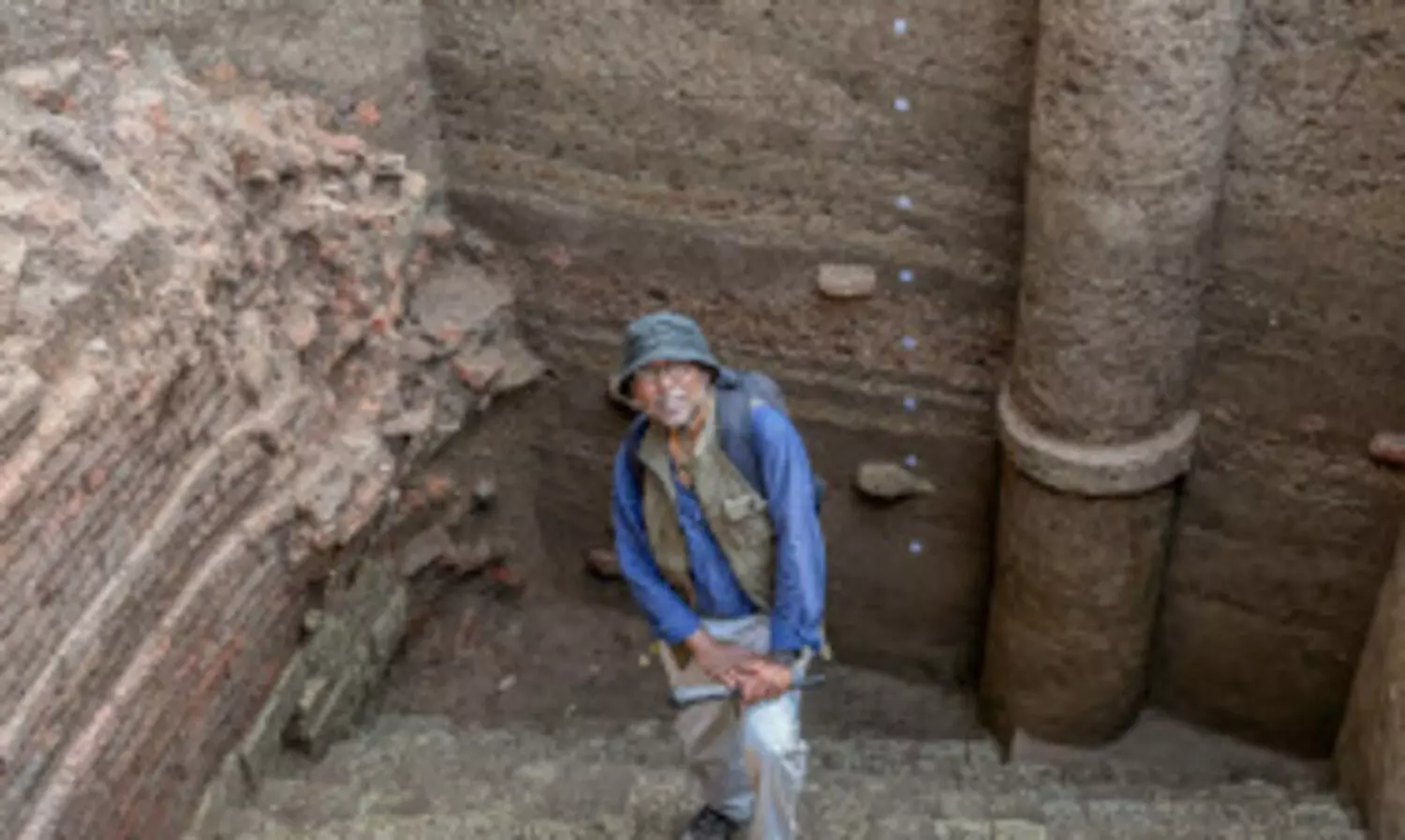
Recent excavations led by Abhijit Ambekar of the ASI have uncovered evidence suggesting that Elephanta Island was an important centre of human activity around 1,500 years ago.
Archaeologists unearthed a massive 165-square-metre, eight-metre-deep rectangular reservoir connected to a stepped junction, indicating sophisticated freshwater storage systems on the island.
The excavation also yielded giant storage jars, Indo-Mediterranean amphora fragments, turquoise glazed ware and Mesopotamian torpedo jars, pointing to extensive maritime links.
Submerged wharf structures, intertidal habitation remains and multiple watermarks on port installations further suggest that Elephanta was integrated into wider maritime trade networks rather than serving solely as a religious site.
The modern terrain, with two hills divided by a tidal valley and surrounded by low-gradient, mangrove-fringed foreshores, makes the island highly sensitive to even minor shifts in sea level.
Stay updated with The Savera Times Evening Wrap, featuring the top news and latest updates from India and...

New Delhi: The deal with France to procure more Rafale fighter jets will help India establish a second...

West Bengal CM Suvendu Adhikari says the BJP-led state government will protect 'gaumata' and will not tolerate insults...

Chennai: The Tamil Nadu government on Sunday withdrew its order exempting the Public (Law and Order) Department from...

Delhi PWD Minister Parvesh Sahib Singh regretted slapping an AAP supporter and alleged that his family was abused...

India’s first LNG-powered train was flagged off from Sabarmati by Amit Shah and Gujarat CM Bhupendra Patel, introducing...

Aries: The day will be auspicious...