Last Updated: October 21, 2026
Last Updated: October 21, 2026





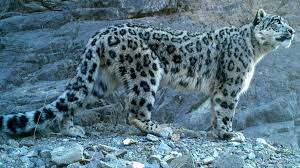
Snow leopards, the elusive big cats that inhabit the high mountains of Central and South Asia, face a new kind of threat—one that lies deep within their genes. A study led by researchers from Stanford University has found that snow leopards (Panthera uncia) have exceedingly low genetic diversity, a factor that could endanger their long-term survival.
The research, published on October 7 in the *Proceedings of the National Academy of Sciences*, represents one of the most comprehensive genetic studies of the species to date. The team, led by Stanford biologists Katie Solari and Dmitri Petrov, collaborated with wildlife officials and scientists from 11 countries across the snow leopard’s range to better understand the species’ genetic history.
Until now, only four snow leopards had been fully genetically sequenced, largely because of the species’ remote and inaccessible mountain habitats. The new study increased that number tenfold, analysing the genomes of 41 snow leopards—35 from the wild and six from zoos worldwide. The findings revealed a consistent pattern of low genetic variation throughout the population.
According to the researchers, this limited diversity did not result from a sudden population crash, as seen in other big cats such as cheetahs and Florida panthers, but from a long period of stable yet small population size. The team found evidence of what they called “historic inbreeding,” where snow leopards, isolated in fragmented mountain habitats, have interbred over generations.
Interestingly, the researchers also discovered that despite inbreeding, snow leopards possess a lower “homozygous load,” meaning they have fewer harmful genetic mutations inherited from both parents. This suggests that over thousands of years, natural selection may have gradually eliminated many detrimental mutations from their gene pool.
“This purging of bad mutations could have allowed the snow leopard population to remain relatively healthy, even with low genetic diversity,” the study noted. Essentially, individuals carrying harmful traits were less likely to survive or reproduce, slowly reducing the number of deleterious genes in the population.
In contrast, cheetahs underwent at least two severe “bottlenecks,” during which their populations sharply declined, leading to a rapid loss of genetic variation. This left them more vulnerable to disease and reproductive problems. Snow leopards, on the other hand, have remained small in number for much longer, evolving in extreme isolation across their rugged habitat.
However, the study warns that this fragile genetic balance could now be threatened by climate change. While the remoteness of their range once protected snow leopards from direct human interference, shifting temperatures and changing weather patterns are now altering prey availability and mountain ecosystems.
“Human population growth never really reached snow leopards’ habitat, but climate change will,” said Petrov. “The environment is changing everywhere, and even the most remote mountains will be affected.”
Today, an estimated 8,000 snow leopards survive across 12 countries in Asia. The study’s authors caution that while their past may have equipped them to withstand isolation, their genetic limitations could make it harder for them to adapt to rapid environmental changes now unfolding across their range.
Reduced water levels at Har Ki Pauri and other Haridwar ghats have inconvenienced pilgrims during the Upper Ganga...

Six people returning from a Dussehra Mela were seriously injured when a car hit them on National Highway...

A bus travelling from Pachiound to Ramnagar fell into a gorge at Gulli Gula in Udhampur district. Nine...

Start your day with The Savera Morning Brief, bringing you the latest news from India and around the...

Union Home Minister Amit Shah will pay tribute to police martyrs at the National Police Memorial in New...

Four more people, including two women, have been arrested in the Tiger Shroff firing case. Delhi Police are...

Aries: The day will be auspicious...