Last Updated: October 21, 2026
Last Updated: October 21, 2026





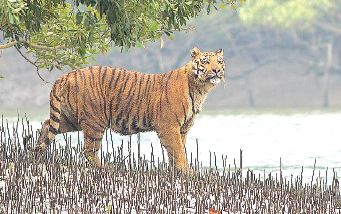
The conservation outlook for Sundarbans National Park has worsened over the past five years, dropping from ‘Good with Some Concerns’ in 2020 to ‘Significant Concerns’ in 2025, according to the International Union for Conservation of Nature (IUCN) World Heritage Outlook 4 report released at the ongoing IUCN Congress in Abu Dhabi. The report assessed all Natural World Heritage Sites globally and highlighted growing threats to biodiversity and ecosystems.
The Sundarbans now faces multiple pressures, including rising salinity, heavy metal contamination, and unsustainable resource extraction. Climate change impacts such as rising sea levels and more frequent storm surges are affecting mangroves and reducing species diversity. Additionally, the mangrove systems in Bangladesh’s portion of the Sundarbans are threatened by the pathogenic ‘top dying’ disease.
While hunting was the principal threat to Asia’s World Heritage Sites five years ago, climate change has now taken the top position. Other key threats include tourism, invasive alien species, road and railway construction, and unsustainable land use. Anthropogenic pressures such as rapid habitat clearance, forest fires, roadkill, waste disposal, illegal logging, and encroachment continue to degrade ecosystems even within legally protected areas.
The report noted that climate change is accelerating biodiversity loss across Asia, causing coral bleaching and glacier melt, which threaten freshwater ecosystems. Besides the Sundarbans, India’s Manas National Park and the Western Ghats remain in the ‘Significant Concern’ category. Sites such as Great Himalayan National Park, Kaziranga, Keoladeo, Nanda Devi, and Valley of Flowers are classified as ‘Good with Some Concerns’, while Khangchendzonga National Park retains a ‘Good’ rating.
Globally, the assessment shows a declining trend in positive conservation outlooks. Of the 228 sites assessed since 2014, 63% had a positive outlook in 2014, 2017, and 2020, but the figure fell to 57% in 2025. Climate change is identified as the primary threat worldwide, affecting 43% of sites at a ‘High’ or ‘Very High’ level and showing the fastest growth among current threats. Between 2020 and 2025, 31 sites reported an escalation in climate-related threats.
Invasive alien species now affect 30% of all World Heritage Sites, with islands such as the Galápagos, Lord Howe, Vallée de Mai, Cocos, New Zealand Sub-Antarctic, and Socotra particularly impacted. Pathogens are the second fastest-growing threat, increasing from two sites in 2020 to 19 in 2025.
The report emphasizes the importance of the ‘One Health’ approach, recognizing the links between human, animal, and ecosystem health in protecting natural heritage. It calls for effective strategies to prevent and control the spread of invasive species and pathogens in the face of climate change.
The IUCN’s findings underline the urgent need for strengthened conservation measures and adaptive management to safeguard Natural World Heritage Sites amid mounting environmental and anthropogenic pressures.
Reduced water levels at Har Ki Pauri and other Haridwar ghats have inconvenienced pilgrims during the Upper Ganga...

Six people returning from a Dussehra Mela were seriously injured when a car hit them on National Highway...

A bus travelling from Pachiound to Ramnagar fell into a gorge at Gulli Gula in Udhampur district. Nine...

Start your day with The Savera Morning Brief, bringing you the latest news from India and around the...

Union Home Minister Amit Shah will pay tribute to police martyrs at the National Police Memorial in New...

Four more people, including two women, have been arrested in the Tiger Shroff firing case. Delhi Police are...

Aries: The day will be auspicious...