Last Updated: October 21, 2026
Last Updated: October 21, 2026





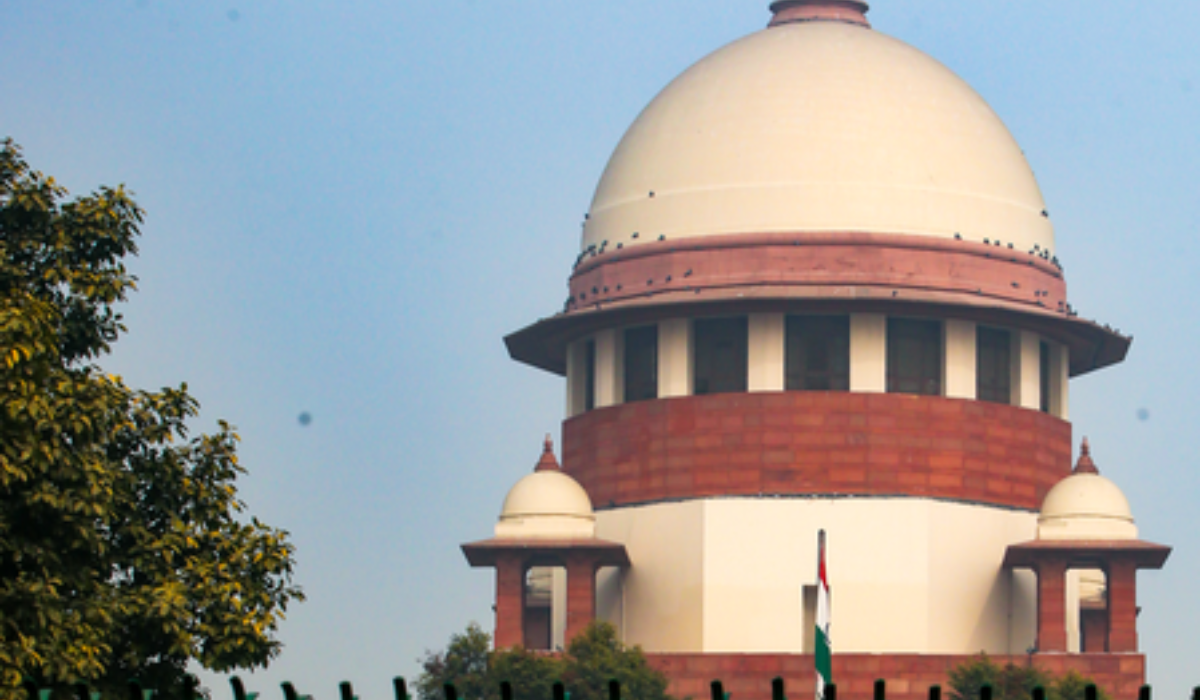
New Delhi: The Supreme Court of India has held that High Courts do not have the authority to waive statutory penalties on deficient stamp duty, clarifying that such powers lie solely with the designated competent authority under the law.
Karnataka High Court order set aside
In a significant decision, a bench of Justices Sanjay Kumar and K. Vinod Chandran set aside the Karnataka High Court order directing the payment of understated stamp duty on lease documents and waiving the penalty.
Penalty mandatory under law
The case involved a pending partition suit filed in 2008, challenging the validity of two lease documents on the grounds of understated stamping.
A bench headed by Justice Sanjay Kumar clarified that if a document is found to be understamped, it is mandatory to impound it under the Karnataka Stamp Act, 1957, and the law provides no scope for reducing the penalty.
The court stated, “The High Court cannot waive the penalty by itself directing the payment of stamp duty, as it is mandatory under the law.”
Court has no discretion in imposing penalty
The Supreme Court also clarified that when a party wishes to introduce an understamped document as evidence, the imposition of penalty is mandatory, and the court has no discretion in this matter.
The judgment stated, “The court has no power to impose a penalty less than ten times the amount of the deficiency determined.”
Role of Deputy Commissioner Clarified
However, the bench stated that if the matter is referred to the Deputy Commissioner, he may exercise his discretion to reduce or waive the penalty in accordance with the law. However, this power cannot be exercised by the High Court in its supervisory jurisdiction.
The court also clarified that in lease cases, the responsibility for paying stamp duty and penalty lies with the lessee.
Trials will not proceed without stamp duty
The Supreme Court also rejected the demand to expedite the trial outside the stamp duty process. The court stated that documents can be admitted as evidence only if the Stamp Act is fully complied with.
The Supreme Court disposed of the appeal by overruling the Karnataka High Court’s decision waiving the penalty and did not comment on the core controversy of the case.
Bharatiya Janata Party (BJP) National General Secretary Smriti Zubin Irani launched a scathing attack on Congress MP and...
New Delhi: Cockroach Janata Party (CJP) leaders Saurav Das and Ashutosh Ranka will be released from judicial custody...

According to police, three suspicious young men are seen in CCTV footage. Efforts are underway to identify them....
A video has surfaced of an alleged attempted assault on Jan Suraj Party's Bihar president Manoj Bharti. The...
Two accused have been convicted and sentenced to 10 years of rigorous imprisonment in a 2017 drug trafficking...
The Delhi Police on Wednesday sought a three-day extension in the judicial custody of Cockroach Janata Party (CJP)...
Aries: The day will be auspicious...