Last Updated: October 21, 2026
Last Updated: October 21, 2026





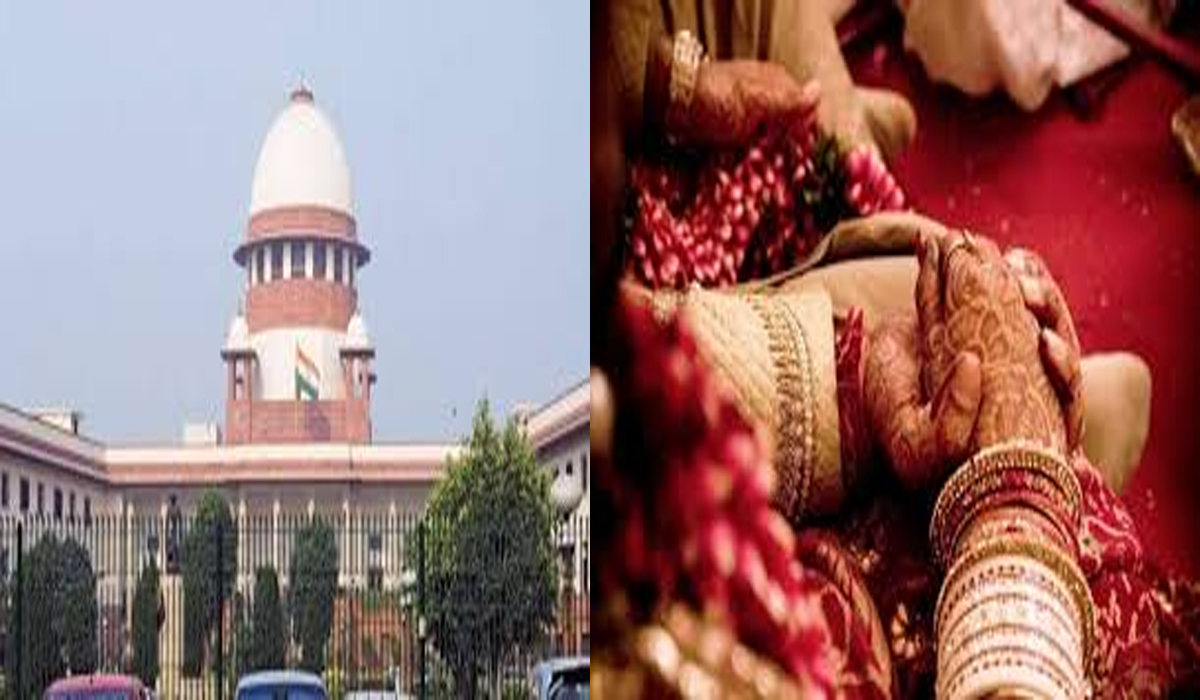
New Delhi : In a recent decision of the Supreme Court, it was articulated that wedding ceremonies are not merely occasions designated for enjoy. Instead, they should be approached with a sense of reverence, eschewing extravagance.
In the verdict passed on April 19, in which it quashed the couple’s divorce proceedings and a dowrycase lodged against the husband and his family members, the Bench of Justices BV Nagarathna and Augustine George Masih explained what a marriage under the Hindu Marriage Act entails. Here are five salient points made by the apex court in the case.
1. Not an event for “song and dance”
2. Not a “Commercial transaction”
3. Cannot be recognised in the “absence of a valid ceremony”
4. Hindu marriage is a “samskara”; spouses are equal
5. Only monogamy legal under Hindu Marriage Act
The pronouncement emphasized that “further, sub-section (2) of Section 7 states that where such rites and ceremonies include the saptapadi, i.e., the taking of seven steps by the bridegroom and the bride jointly before the sacred fire, the marriage becomes complete and binding when the seventh step is taken. Therefore, the requisite ceremonies for the solemnization of the Hindu marriage must adhere to the applicable customs or usage, and in cases where the saptapadi has been embraced, the marriage attains completeness and binding status upon the culmination of the seventh step.”
The Supreme Court articulated that “the customary ceremonies, with all their attendant geographical and cultural variations, are purported to purify and elevate the spiritual essence of an individual,” while the 1955 Act “duly recognizes both the material and spiritual dimensions of this significant event in the lives of the married couple.”
The decree emphasized that in addition to establishing a mechanism for marriage registration to confer the status of a married couple and acknowledge rights in personam and rights in rem, the Act accords special significance to rites and ceremonies. Consequently the essential conditions for solemnizing a Hindu marriage should be diligently, rigorously, and devoutly observed. This is because the inception of a sacred process cannot be minimise.
The bench asserted that the pledges exchanged between the parties to a Hindu marriage and the vows taken by them to remain lifelong couple establish the cornerstone of a enduring commitment between spouses, a commitment that should be upheld by them. If such steadfast dedication to each other is maintained by the couple, then there would be notably fewer instances of marital breakdown leading to divorce.
Good Evening Viewers! Catch up on the day's biggest stories with The Savera Times Evening Bulletin. Get the...

Congress leaders continued their protest outside the Jaipur Police Commissionerate on Tuesday, demanding the registration of a zero...
On the auspicious occasion of Vijayadashami, Prime Minister Narendra Modi on Tuesday called on the countrymen to unite...
A historic milestone was achieved on Tuesday in the expansion of Chhattisgarh's rail networkA historic milestone was achieved...

Model Shraddha Dubey, one of the main accused in the death of Lucknow businessman Shiv Sharma, has been...

Rashtriya Swayamsevak Sangh (RSS) chief Mohan Bhagwat on Tuesday called for strengthening national unity, social harmony, indigenous practices...
Aries: The day will be auspicious...