Last Updated: October 12, 2026
Last Updated: October 12, 2026





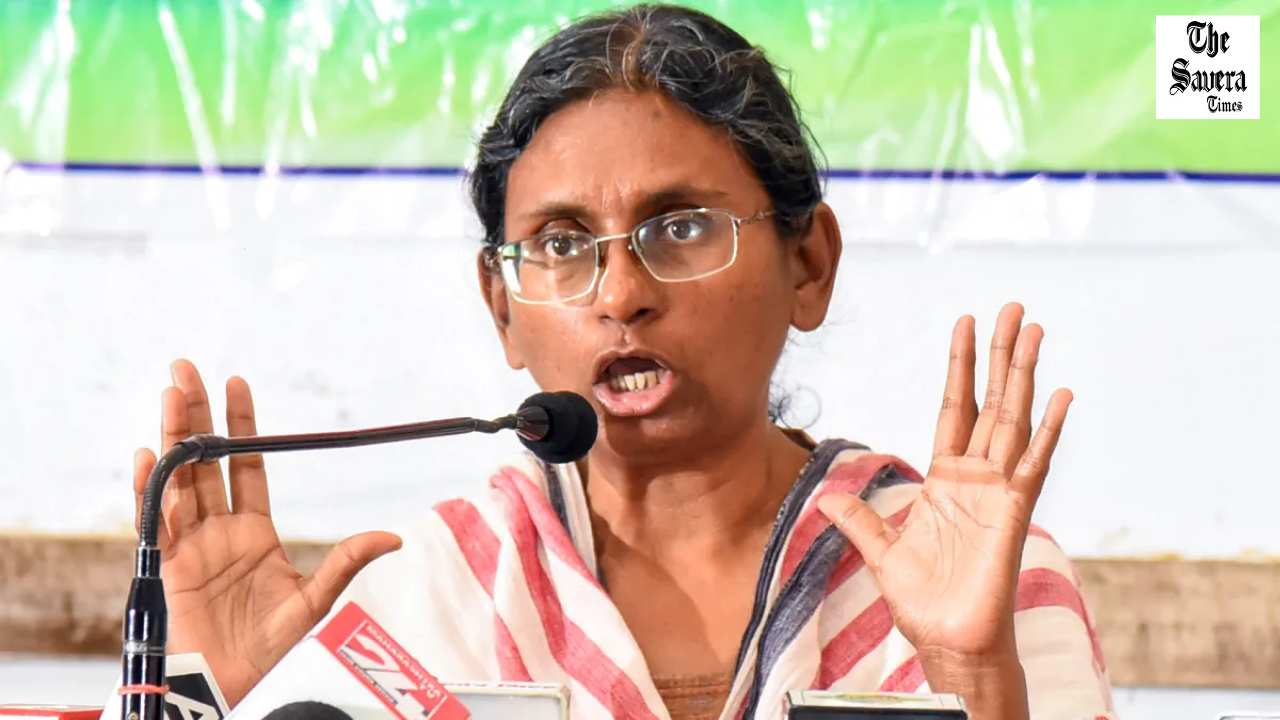
New Delhi: The Supreme Court on Friday declined to entertain Congress leader Meenakshi Natarajan’s plea challenging the rejection of her Rajya Sabha nomination from Madhya Pradesh, observing that the proper remedy lies under the election law framework and before the Election Commission. The court indicated that disputes arising from the rejection of nomination papers are generally not adjudicated through writ petitions at the pre-election stage.
A bench of the apex court noted that when a Returning Officer rejects a nomination, the aggrieved candidate must ordinarily pursue remedies available under election laws rather than seek immediate judicial intervention. The court emphasized that election-related disputes are governed by a separate legal mechanism designed to address such grievances.
The controversy began after Natarajan’s nomination for the Rajya Sabha elections from Madhya Pradesh was rejected by the Returning Officer during scrutiny. Objections were raised alleging that she had not fully disclosed details related to a case in the affidavit submitted along with her nomination papers. The objection was reportedly filed by a BJP functionary, who claimed that the affidavit lacked complete information regarding a matter pending before a court in Hyderabad.
The rejection triggered a political storm, with the Congress alleging that the decision was unjustified and contrary to electoral norms. Party leaders argued that the matter cited against Natarajan did not amount to a criminal case requiring disclosure in the manner interpreted by the Returning Officer.
During the proceedings, Natarajan maintained that there was no pending criminal case against her that required disclosure under election rules. She argued that the issue related only to a legal notice or a private complaint and not to a criminal case in which charges had been framed. According to her submissions, the relevant provisions of Form 26 did not apply to the circumstances cited by those objecting to her candidature.
Her legal team contended before the court that the Returning Officer had wrongly interpreted the law and that the rejection deprived her of an opportunity to contest the election. Senior advocate Abhishek Manu Singhvi argued that a level playing field was essential for free and fair elections and sought judicial intervention.
However, the Supreme Court remained unconvinced by the plea for immediate relief. The bench reiterated that courts have consistently held that challenges to nomination rejections should ordinarily be addressed through election-related remedies rather than through writ jurisdiction before the election process concludes.
The court’s decision effectively closes the door on Natarajan’s attempt to secure urgent judicial relief before the Rajya Sabha election process moves ahead.
The case has attracted significant political attention because the Rajya Sabha elections in Madhya Pradesh are closely watched by both the ruling BJP and the Congress. With Natarajan’s nomination rejected, the composition of the contest underwent a major change, prompting allegations and counter-allegations between the two parties.
While the Supreme Court has declined to intervene at this stage, the legal and political debate over the nomination rejection is expected to continue through the channels available under election law.
Amidst heavy security and barricades by the Delhi Police, INDIA Bloc leaders began a protest march towards the...
The Reserve Bank of India (RBI)'s new measures to curb speculation in the rupee and maintain stability in...

Gold exchange-traded funds (ETFs) witnessed a sharp rise in investor interest in September, with net inflows surging 71.4...

Rahul Gandhi accused the Modi government of protecting Chief Election Commissioner Gyanesh Kumar, criticised security restrictions in Delhi...
Chief Justice Surya Kant said every citizen can approach the Supreme Court through a petition after declining a...
A major fire broke out at a scrap warehouse opposite the Maruti Temple in Sangameshwar, Maharashtra, around midnight....

Aries: The day will be auspicious...