Last Updated: October 21, 2026
Last Updated: October 21, 2026





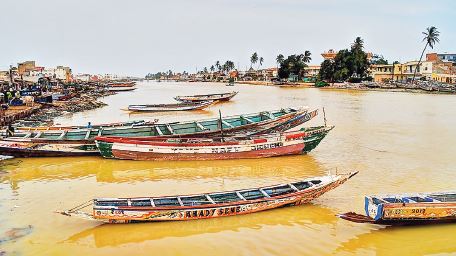
A new report has highlighted the urgent need for sustainable water management to ensure water security and equity across the Senegal River Basin in West Africa. The basin spans Guinea, Mali, Mauritania, and Senegal and includes nine sub-basins, notably the Lower and Middle Senegal River Valleys, as well as the Bafing, Baoule-Bakoye, Faleme, Ferlo, Terekole Magui Kolimbine, Karakoro, and Gorgol rivers.
The report is a joint effort by the Food and Agriculture Organization (FAO) and the Organization for the Development of the Senegal River (OMVS). It warns that water stress is intensifying due to rising demand from urbanisation, agriculture, and the compounding effects of climate change.
Senegal faces particularly high stress on both surface and groundwater resources. Current withdrawals are projected to rise by 30 to 60 per cent by 2035, driven largely by agricultural use, which accounts for 93 per cent of total demand. Domestic and industrial uses account for just 4.4 per cent and 2.6 per cent, respectively. Around 70 per cent of the population is engaged in farming, with roughly 30 per cent of agricultural land irrigated, predominantly in the Senegal River Valley. By 2050, total irrigated land in the basin is expected to more than double from 195,000 hectares to 430,000 hectares.
The study employs an integrated hydrological model developed with Water Evaluation and Planning (WEAP) software to monitor SDG indicator 6.4.2, which measures freshwater withdrawal against available resources while accounting for environmental flows. By combining hydrological analysis, spatial disaggregation, and scenario modelling, the report offers a detailed view of water stress at national and sub-basin levels. Data from 2020 to 2024 accounts for natural year-to-year variability in hydrological conditions.
Analysis shows significant heterogeneity among the sub-basins. The Bafing and Faleme demonstrate structural resilience, whereas the Lower and Middle Valleys face chronic vulnerability due to seasonal flow variations and concentrated agricultural and domestic use. Other sub-basins, including Faleme, Ferlo, and Gorgol, experience moderate stress during dry periods.
The report also evaluates three climate scenarios: stable wet, stable dry, and very dry conditions. It finds that water stress is highest under stable wet conditions, followed by stable dry, with the very dry scenario producing lower annual stress. These findings highlight the need for tailored management strategies that reflect local hydrological realities.
By providing detailed, sub-national data, the report aims to equip policymakers and stakeholders with the insights necessary to design effective water management plans, strengthen basin-wide coordination, and promote long-term water security in the face of growing demand and climate pressures.
Start your day with The Savera Morning Brief, bringing you the latest news from India and around the...

Union Home Minister Amit Shah will pay tribute to police martyrs at the National Police Memorial in New...

Four more people, including two women, have been arrested in the Tiger Shroff firing case. Delhi Police are...
We are very proud that at present India is the number one country in the world by surpassing...

Every investor wants the wealth-creating power of equity and the reassuring stability of debt. Balanced Advantage Funds attempt...
Tourism is a major source of government revenue in our country. There are different types of tourism. Scenic...

Aries: The day will be auspicious...