Last Updated: October 11, 2026
Last Updated: October 11, 2026





In Bengal, eating non-vegetarian food at certain temples is not considered unusual. Fish and meat are part of several traditional rituals, particularly in Shakta temples where such food is offered to deities as bhog.
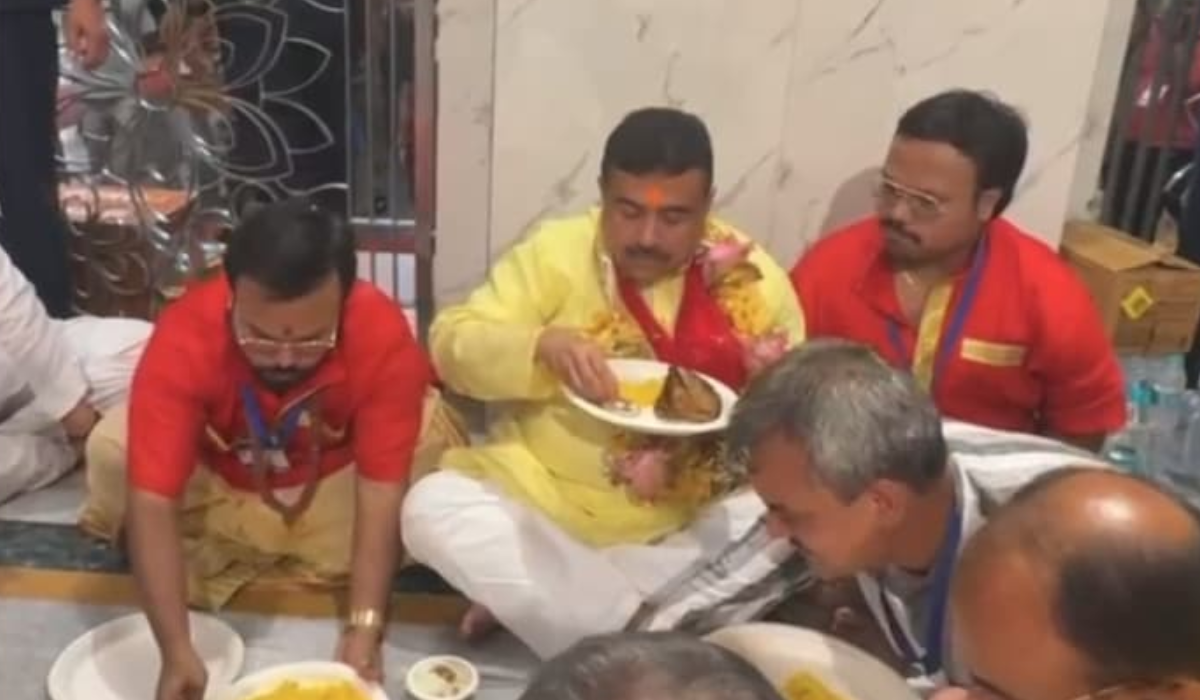
The issue, however, has taken a political turn after West Bengal Chief Minister Suvendu Adhikari was seen eating fish bhog at Kolkata’s historic Kalighat Temple.
Adhikari Eats Fish Bhog at Kalighat
Adhikari visited the Kalighat Temple on the occasion of Kaushiki Amavasya, an important occasion for followers of the Shakta tradition.
A video showed the Chief Minister sitting on the floor and having temple bhog that included a large fish head, fried fish and basanti pulao.
Kalighat has a long-standing tradition of offering fish and sacrificial goat meat to Goddess Kali. The offerings are subsequently consumed by devotees.
Row Began With Bageshwar Baba’s Appeal
The latest controversy comes against the backdrop of remarks by Dhirendra Shastri, head priest of Bageshwar Dham, who had appealed to Bengali Hindus to avoid non-vegetarian food during Durga Puja.
Shastri also criticised those who consume non-vegetarian food during the festival and called for meat and liquor shops in West Bengal to remain closed during Durga Puja.
His comments triggered a reaction in Bengal, where fish and meat are traditionally an important part of the local diet and, in some religious traditions, are also offered as bhog.
BJP Says Dietary Choices Should Not Be Imposed
The BJP has sought to distance itself from the idea that people in Bengal should be forced to follow a particular diet.
West Bengal BJP chief Samik Bhattacharya said no religious figure from outside Bengal should decide what people in the state eat. He maintained that Bengalis have traditionally consumed fish and meat.
Adhikari, meanwhile, had welcomed Dhirendra Shastri during his Bengal visit and urged him to establish a centre in the state. At the same time, Adhikari said Shastri was entitled to his personal opinion and that people could choose whether to accept it.
BJP Uses Kalighat Visit to End Veg-Non-Veg Debate
Following Adhikari’s visit to Kalighat, BJP spokesperson Pradeep Bhandari said the episode should put an end to the ongoing debate over vegetarian and non-vegetarian food in Bengal.
He said Adhikari’s participation in the traditional fish bhog at Kalighat reflected Bengal’s religious customs and way of life.
Adhikari also explained his own dietary practices, saying he follows sattvik food traditions on occasions such as Mahashtami and during Kartik month, while also consuming non-vegetarian offerings made to Goddess Kali.
Fish and Religious Traditions in Bengal
Fish has long been a staple of Bengali cuisine and also holds a place in several religious traditions in the region.
At Kalighat, fish and goat meat are among the offerings associated with Goddess Kali. While some Hindu traditions emphasise vegetarian offerings, Shakta practices in parts of eastern India include non-vegetarian offerings as part of religious rituals.
The contrasting traditions have now brought the broader question of vegetarian and non-vegetarian food during religious festivals back into the political spotlight.
Jaipur: The Anti-Narcotics Task Force (ANTF) of Rajasthan Police has arrested wanted drug smuggler Sohanlal, alias Sonu, carrying...

Imagine a foreign national standing among Indian citizens at a political protest, raising questions about the government or...

Aizawl: The Assam Rifles, in coordination with other law enforcement agencies, seized methamphetamine tablets and foreign-made cigarettes worth...
Kolkata: A Returning Officer (RO), acting on behalf of the Election Commission of India (ECI), has lodged a...
New Delhi: The Delhi BJP Mahila Morcha staged a protest on Saturday to demand the expulsion from Congress...
Sanaa: Saudi warplanes launched fresh airstrikes on Houthi-held areas in northwestern Yemen on Saturday as fighting intensified between...