Last Updated: October 12, 2026
Last Updated: October 12, 2026





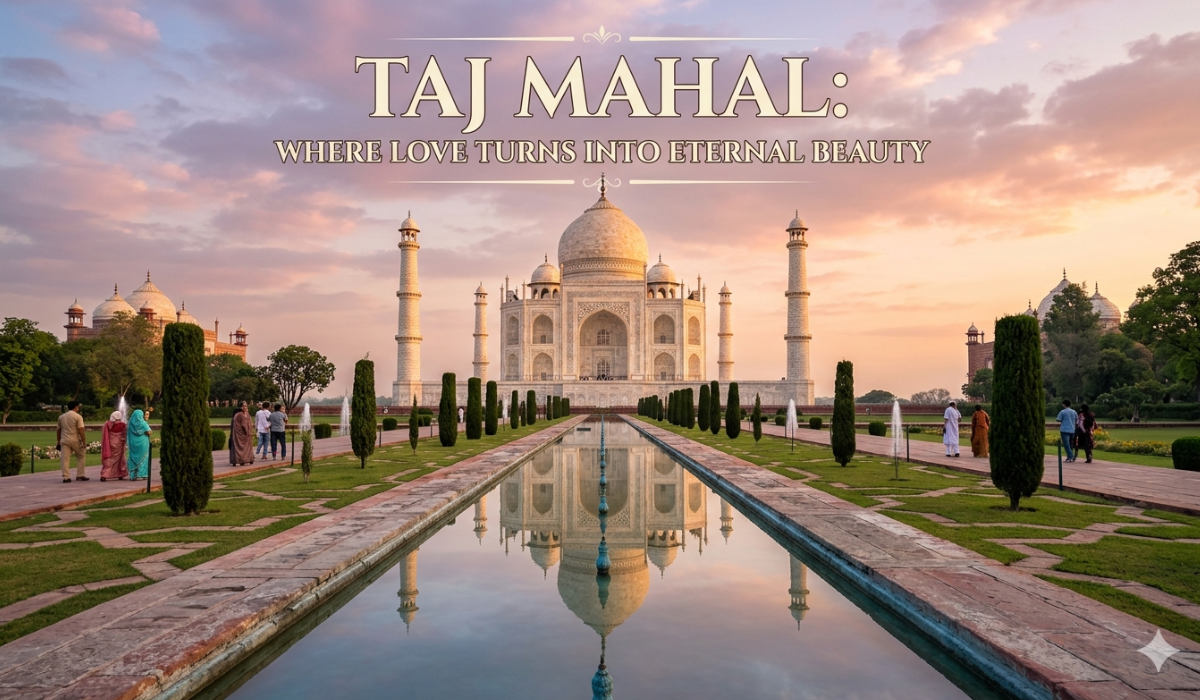
Few monuments in the world capture the imagination quite like the Taj Mahal. Bathed in the soft glow of sunrise or shimmering under moonlight, this ivory-white marvel stands as a timeless symbol of love, artistry, and India’s rich cultural heritage.
A Glimpse into History
The Taj Mahal was commissioned in 1632 by Mughal emperor Shah Jahan in memory of his beloved wife Mumtaz Mahal. Located in Agra on the banks of the Yamuna River, the monument took over 20 years to complete, employing thousands of artisans, craftsmen, and laborers from across Asia.
Built primarily from white marble, the structure is adorned with intricate carvings, calligraphy, and precious stones. The central dome, flanked by four minarets, showcases perfect symmetry—an architectural hallmark of Mughal design. The Taj Mahal is not just a tomb; it is a masterpiece that blends Persian, Islamic, and Indian architectural styles.
Symbol of Love and Cultural Importance
Often referred to as the “epitome of love,” the Taj Mahal represents the deep bond between Shah Jahan and Mumtaz Mahal. Beyond its romantic legacy, it holds immense cultural and historical significance for India.
Recognized as a UNESCO World Heritage Site, the Taj Mahal is considered one of the New Seven Wonders of the World. It stands as a testament to the artistic brilliance of the Mughal era and continues to inspire poets, artists, and travelers from around the globe.
The monument also plays a vital role in India’s identity, symbolizing the country’s rich past and architectural excellence. It is frequently featured in global tourism campaigns and remains one of the most photographed landmarks in the world.
Boost to Tourism and Local Economy
The Taj Mahal attracts millions of visitors every year, both domestic and international. This steady flow of tourists significantly contributes to the local economy of Agra.
Local businesses—including hotels, restaurants, handicraft shops, and tour services—thrive because of the monument’s popularity. Artisans selling marble inlay work, a traditional craft inspired by the Taj Mahal’s design, find a steady market among tourists.
Additionally, guides, photographers, transport providers, and small vendors depend on tourism for their livelihood. The monument has created countless job opportunities, making it a lifeline for many families in the region. Government initiatives to promote tourism have further enhanced infrastructure, improving connectivity and visitor experience.
A Timeless Legacy
Despite the passage of centuries, the Taj Mahal continues to stand tall as a symbol of eternal beauty and human creativity. Its charm lies not just in its stunning architecture, but also in the emotions and history it represents.
Preserving this heritage is crucial, as environmental challenges and pollution pose threats to its pristine beauty. Efforts by authorities and conservationists aim to protect this global treasure for future generations.
In a world constantly changing, the Taj Mahal remains a constant reminder of love, legacy, and artistic excellence—an enduring jewel in India’s crown.
One of the most common questions people ask these days is how to lose belly fat. Belly fat...

Turtle doves picking fallen grain from Paddy fields, Cicada chirping on willow trees and the cackle of migratory...

Andre Agassi became one of the greatest tennis players in the world. Agassi’s father, Mike, a former Olympic...

Have you ever wondered how the words you speak can influence your thoughts, emotions, behavior, relationships and even...

Ac There’s no doubt that smoking can cause serious health related problems and also up the risk of...

Are you one of those who exercise daily but are still unable to lose weight? We might have...

Aries: The day will be auspicious...