Last Updated: October 20, 2026
Last Updated: October 20, 2026





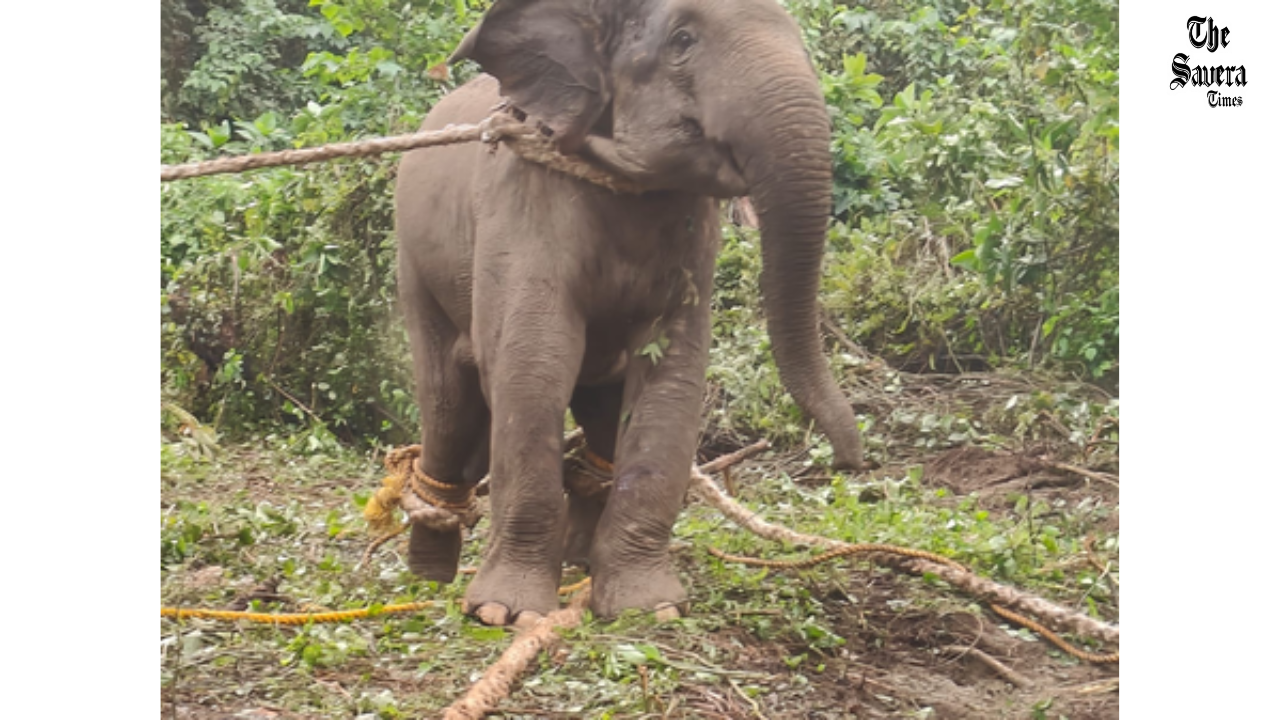
In Months of hard work disappeared in a single night for residents of Katai Tola, a tribal-dominated village in Jharkhand’s Latehar district. Surviving on small-scale farming and daily wage labour, they had finally found reason to celebrate this year after a good paddy harvest. They had also begun preparing for potato cultivation, hoping for a better season ahead. But on the night of November 5, 2025, a herd of 14 to 15 elephants entered the village. They ate from at least 200 bundles of paddy stored in threshing grounds and then destroyed the rest. For Arvind Oraon, a village resident, the elephants consumed 19 sacks of paddy stored in his threshing ground. Oraon regrets that because he returned late from the local market, he could not move the threshed and bagged paddy from the threshing ground to his house. These are not large landowners who can recover easily. Forest department staff came, assessed the crop damage and left.
Almost every day, reports emerge from some part of Jharkhand of elephants killing people, destroying standing crops or damaging villagers’ homes. Tribal regions surrounded by forests and plateaus remain the worst affected. Farmers say paddy and potatoes have become elephants’ favourite food. Jharkhand, which has remained in the headlines over human-elephant conflict, is witnessing large-scale destruction of crops and stored grain by wild animals. The state has around 2.4 million small and marginal farmers. Data shows that in Jharkhand over the past five years, an average of 9,245 crop damage cases and 1,146 grain damage cases caused by elephants have been recorded annually. Farmers say hundreds of incidents go unreported. In just the last two-and-a-half months, elephants have killed at least 15 people across different parts of the state. According to state forest department data, elephants killed 397 people during the four-year period between 2021 and March 2025. At the same time, the continuing deaths of elephants themselves tell another painful story.
Tribal-dominated districts including Khunti, West Singhbhum, Simdega, Gumla, East Singhbhum, Seraikela, Ranchi and Latehar, as well as parts of North Chotanagpur, have remained highly sensitive to elephant attacks and loss of life and property. Currently, farmers in Seraikela, West Singhbhum, Khunti, Ranchi and Latehar are facing serious difficulties. Between Sunday and Monday night, November 8, herds of elephants created havoc in Rania and Karra blocks of Khunti district. In Digri Dagutoli village of Rania, an Adivasi woman was trampled to death. Several farmers’ crops were also destroyed. In remote areas of Rania block, villagers and farmers are troubled not only by elephants, but also by wild boars and monkeys
The Central Government's UDAN (UDAN, meaning Ude Desh Ka Aam Naagrik) scheme has played a significant role in...

Greater Noida (UP): While Dussehra is celebrated across India by burning the effigies of Ravan, Meghnad and Kumbhkaran...

Kanpur: While Vijayadashami is traditionally marked by the burning of Ravana’s effigies across the country, a temple in...

New Delhi: Global crude oil prices advanced on Tuesday, hovering near a five-month high as traders continued to...

Mumbai: Mumbai Police have recovered five empty bullet shells and two live cartridges from the site of the...

New Delhi: Mexican drug cartels are increasingly exploring local production of narcotics in India, using rented houses as...