Last Updated: October 12, 2026
Last Updated: October 12, 2026





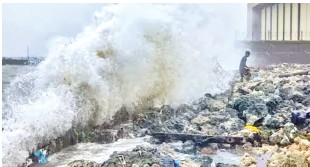
Tamil Nadu is now placing big bets on large-scale energy storage and offshore wind to shape the next chapter of its clean power future, aiming to meet ambitious renewable targets while handling rising demand and grid stress. The state has long been a leader in onshore wind generation, but its installed capacity has aged, and further expansion on land is constrained by limited space and transmission bottlenecks. As a result, policymakers and industry players are pushing to unlock offshore wind potential and pair it with robust storage solutions to balance variable generation.
Offshore wind is seen as a game-changer because turbines at sea can operate at higher capacity factors and supply stronger, more consistent wind resources. Surveys by national energy bodies have identified tens of gigawatts of offshore wind potential along Tamil Nadu’s coast, making it one of India’s most promising regions for ocean-based wind farms. If developed, this could significantly boost clean energy output and support nearby industrial hubs with reliable power. But the sector is still in its early stages and faces hurdles such as high upfront costs, uncertainty over tariffs, and the need for dedicated transmission infrastructure, including coastal substations and evacuation corridors that are yet to be built.
To help overcome these barriers, the central government has introduced viability gap funding to support the first gigawatt of offshore wind capacity, with Tamil Nadu expected to compete for a substantial share of this funding. Tenders for offshore projects are being readied, with detailed wind resource assessments underway in key areas. But questions remain over logistics, port upgrades for heavy turbine assembly, and how to address environmental and social concerns from fishing communities.
Energy storage is equally central to Tamil Nadu’s strategy because it smooths out the variability inherent in wind and solar power. The state’s electricity regulator has recently approved plans for standalone battery energy storage systems with a combined capacity of 1500 megawatt-hours, spread across multiple substations. These large battery projects are expected to help manage peak demand, improve grid stability, and ensure renewable power can be dispatched when needed most. They are being developed through competitive bidding and supported by federal funding schemes designed to encourage investment in storage infrastructure.
Successfully integrating offshore wind and storage will require synchronising generation growth with transmission upgrades and demand management. Tamil Nadu’s experience shows that early leadership in renewables does not automatically translate into smooth transitions, especially when older turbines need repowering and new technologies must be integrated. But if the state can navigate land constraints, attract investment, and build the necessary grid systems, it could offer a blueprint for operating a high-renewables system at scale in India’s fast-growing energy landscape.
eader of the Opposition in the Lok Sabha, Rahul Gandhi and 10 other INDIA bloc leaders have moved...

Amidst protests in central Delhi, the Delhi Metro Rail Corporation (DMRC) announced the reopening of entry and exit...
The Delhi Police has registered an FIR regarding the alleged disturbance at the Bangla Sahib Gurdwara in...

The Delhi Police on Monday removed Jantar Mantar from the list of officially designated protest sites. The police...

The Supreme Court on Monday clarified that it has not passed any judgment on the Election Commission's (ECI)...

The Kerala Assembly passed a resolution demanding the removal of Chief Election Commissioner (CEC) Gyanesh Kumar from his...

Aries: The day will be auspicious...