Last Updated: October 21, 2026
Last Updated: October 21, 2026





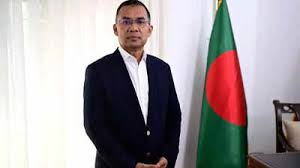
Abhsihek Vij
The results of Bangladesh’s general elections were announced on Friday morning. 299 seats in the 300-seat Parliament were contested. Tarique Rahman, who had been leading Bangladeshi politics from abroad for 17 years, led his party, the Bangladesh Nationalist Party, and its coalition of party workers, to victory in 212 seats.
The 11-party coalition had to face a crushing defeat. After coming to power, Tarique Rahman of the BNP was granted complete freedom to amend the Bangladesh Constitution. The main issue of the referendum was constitutional amendment, which the hardline Jamaat-e-Islami (JI) supported, and their alliance’s victory in 77 seats means the coalition will be in charge.
The main points were: a bicameral system, a new upper house with 100 members, a ten-year term for the Prime Minister (two five-year terms), and the implementation of the July Charter, the main demand of the student movement. The election, held 18 months after Sheikh Hasina sought refuge in India, saw a voter turnout of 60 percent on Thursday. The election results, announced Friday morning and afternoon, sent a clear message: the people have handed over the reins of Bangladesh to Tariq Rahman’s BNP. Tariq is the son of former Prime Minister Begum Khaleda Zia.
Following the death of Begum Khaleda Zia, women overwhelmingly voted for Tariq Rahman. Women have voted against the fundamentalist politics of Jamaat-e-Islami. Hindus, who constitute 9 percent of Bangladesh’s population, also chose to vote for the BNP because they did not find Jamaat-e-Islami’s radical policies safe. Meanwhile, former Prime Minister Sheikh Hasina, who has taken refuge in India, has called the elections fraudulent and demanded the results be annulled, but India has welcomed the results.
Prime Minister Narendra Modi spoke to Tariq Rahman over the phone, congratulating him. Mamata Banerjee also congratulated Rahman on his victory, calling him her brother. In response, the BNP Chairman thanked Prime Minister Modi on behalf of Tariq Rahman and expressed his desire to build better relations with India. Past experience has shown that Tariq Rahman’s party has not been particularly friendly towards India, but now leaders’ attitudes often change according to new circumstances. India understands that replacing the radical Jamaat with Tariq Rahman and his party in power will facilitate a reset of relations. It is possible that the two countries may reach agreement on issues such as restoring democracy in Bangladesh, maintaining agreements reached during the Sheikh Hasina government, and not providing protection to separatist organizations.
We believe Tariq Rahman will not forget that the 16 million Hindu voters in Bangladesh enthusiastically participated in the elections and gave overwhelming support to the Bangladesh Nationalist Party. Now, they expect protection from the new government. It remains to be seen how the new government’s attitude towards Pakistan will be. Currently, Bangladesh is operating in a friendly manner with Pakistan.
Jamaat-e-Islami, which has stated its commitment to play a meaningful opposition role, will also largely support Pakistan’s rhetoric. This means that Tariq Rahman, as Prime Minister, will have to create a balance that ensures appropriate economic and political relations with neighboring India without upsetting Pakistan. In our view, the Bangladesh election results are not disappointing for India and will provide an opportunity to reshape relations between the two countries
Bharatiya Janata Party (BJP) National General Secretary Smriti Zubin Irani launched a scathing attack on Congress MP and...
New Delhi: Cockroach Janata Party (CJP) leaders Saurav Das and Ashutosh Ranka will be released from judicial custody...
According to police, three suspicious young men are seen in CCTV footage. Efforts are underway to identify them....
A video has surfaced of an alleged attempted assault on Jan Suraj Party's Bihar president Manoj Bharti. The...
Two accused have been convicted and sentenced to 10 years of rigorous imprisonment in a 2017 drug trafficking...
The Delhi Police on Wednesday sought a three-day extension in the judicial custody of Cockroach Janata Party (CJP)...
Aries: The day will be auspicious...