Last Updated: October 24, 2026
Last Updated: October 24, 2026





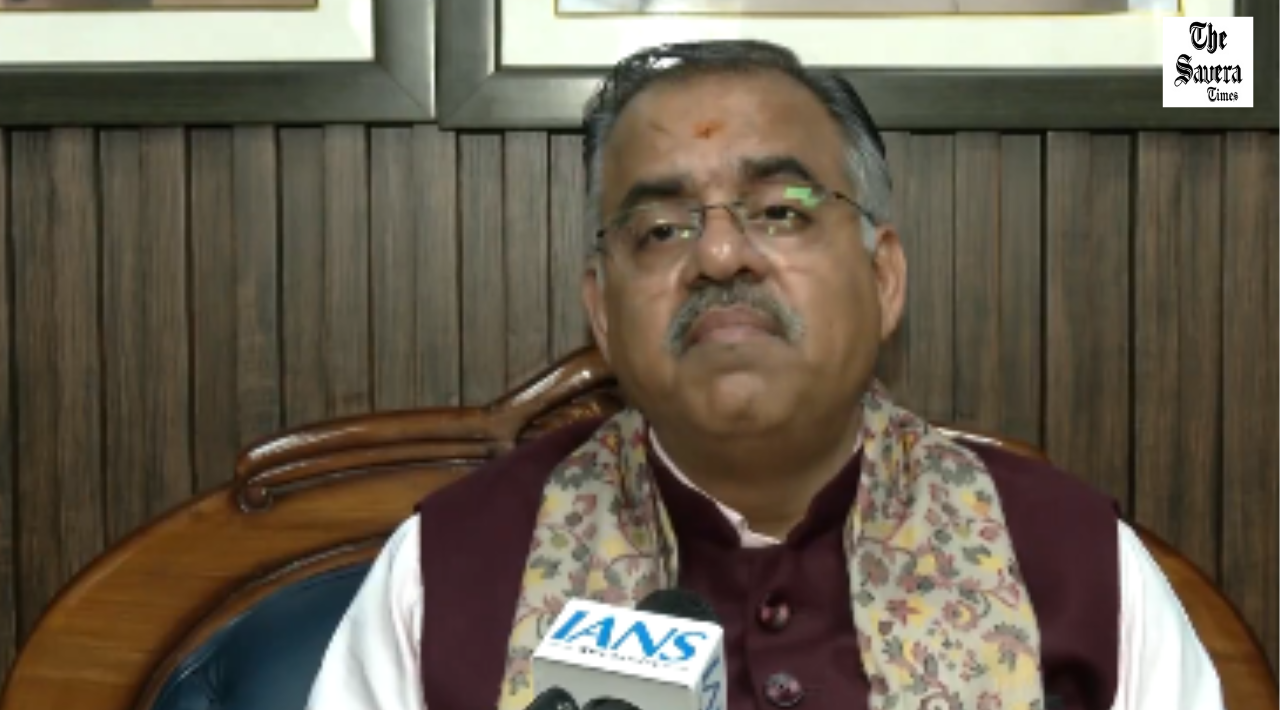
New Delhi: Bharatiya Janata Party (BJP) National General Secretary Tarun Chugh sharply criticized Congress leader Rahul Gandhi for his recent comments on farmers and agricultural issues. Chugh challenged Gandhi’s assertions, raising questions about the Congress party’s track record when it was in power between 2004 and 2014 and rebutting claims made by the Opposition.
Delhi: BJP National General Secretary Tarun Chugh says, “Rahul Gandhi is talking about farmers, but I want to ask him—between 2004 and 2014, when you were in power, what was the country’s agriculture budget? It was ₹25,000 crore. Today, under the leadership of Narendra Modi, it… pic.twitter.com/gdGj15hslV
— IANS (@ians_india) February 28, 2026
In a statement issued from the national capital, Chugh accused Gandhi of distorting facts and focusing only on political rhetoric instead of acknowledging what he described as the “substantial rise” in the agriculture budget under Prime Minister Narendra Modi’s leadership.
Addressing reporters, Chugh said, “Rahul Gandhi talks about farmers and their welfare, but when his party was in power between 2004 and 2014, the central government’s agriculture budget was only around ₹25,000 crore,” he claimed. By contrast, Chugh highlighted that the agriculture allocation in the current government’s budget has risen significantly to about ₹1.5 lakh crore, underscoring what he said was a “clear commitment” to strengthening the farming sector.
Chugh argued that this increase reflects the BJP government’s prioritization of agricultural and rural development, aiming to support farmers with enhanced financial allocations. He insisted that the Opposition should examine these figures before attacking government policy and framing narratives around farmer distress.
Analysing parliamentary records from recent years, official budget documents show that allocations for agriculture and allied sectors have indeed risen multiple times since 2014, pointing to an increase in resources directed at farming infrastructure, subsidies, and credit support compared to the decade prior to Narendra Modi’s tenure.
The confrontation over agricultural policy comes amid an ongoing political dispute in which Rahul Gandhi has accused the Modi government of “sacrificing farmers” in relation to broader economic agreements, such as a proposed India-US trade deal that he argues could negatively impact Indian agriculture. Gandhi’s remarks have sparked reactions from multiple BJP leaders, including Commerce Minister Piyush Goyal, who accused Gandhi of misleading people by exaggerating the potential negative effects of the deal on farmers.
Gandhi’s criticism is part of a sustained Opposition push to frame agricultural issues as central to public debate, especially in many states where farming communities form a significant part of the electorate. His remarks have triggered protests, including demonstrations by farmers and allied groups outside BJP offices, illustrating the depth of concern and political mobilization around farm sector policies.
Chugh’s rebuttal reflects a broader political strategy by the BJP to counter the Congress narrative ahead of key state elections and parliamentary discussions. By focusing on numbers from past budgets and contrasting them with current allocations, the BJP leadership seeks to frame its governance as more responsive to agrarian needs than previous administrations.
Critics of the BJP, including Congress spokespersons, have countered that while budget figures may have increased nominally, issues such as inflation, input costs, payment delays, and market uncertainties continue to impact farmers’ real incomes and livelihood security. These criticisms are being amplified through rallies, public meetings, and Opposition campaigns, aiming to keep agricultural distress at the forefront of voter concerns.
The clash between Chugh and Gandhi underscores the political sensitivity of agricultural policy in India, where millions depend on farming and allied activities for their livelihoods. With elections approaching in several regions, both national parties are intensifying efforts to shape public opinion through competing narratives on budget priorities, trade policies, and farmer welfare schemes. Economic data, political rhetoric, and grassroots sentiments will likely continue to shape this debate in the coming months.
A bomb scare at Kolkata airport followed the discovery of a lipstick-written threat on a flight from Phuket....

AISA president Neha Bora appeared before the SEM court in Delhi after the High Court dismissed her plea...

A massive fire swept through food shops behind Raipur Temple in Noida’s Sector 126, killing one person. Police...

Catch up on the biggest developments across India and around the world with The Savera Afternoon Bulletin, covering...

Jamia Millia Islamia has moved all classes online until further notice as students continue their hunger strike and...
An 18-year-old Class 12 student died after being found burnt at a school in Delhi’s Krishna Nagar. Police...

Aries: The day will be auspicious...