Last Updated: October 21, 2026
Last Updated: October 21, 2026






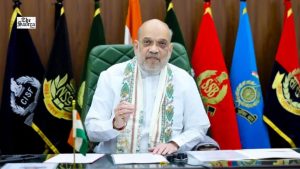
The long-simmering internal rift within the Tata Group, one of India’s most influential corporate houses, has surfaced publicly, prompting intervention from the highest levels of government. Senior leaders of the group, including Tata Trusts Chairman Noel Tata and Tata Sons Chairman N Chandrasekaran, met Union Home Minister Amit Shah and Finance Minister Nirmala Sitharaman in New Delhi on October 7 amid escalating tensions over governance and board appointments.
According to official sources, the government has urged the Tata Group leadership to resolve internal differences and restore stability “by whatever means necessary.” The meeting followed weeks of unease within Tata Trusts, the philanthropic arm that holds a 66 per cent stake in Tata Sons, the holding company of the conglomerate. The Trusts effectively control the 156-year-old Tata Group, which spans more than 400 companies across sectors and contributes nearly four per cent to India’s GDP.
The immediate cause of the dispute lies within the Tata Trusts board, where divisions among trustees have widened ahead of a key meeting scheduled for October 10. The authority of Noel Tata, who succeeded his half-brother Ratan Tata as chairman following the latter’s death in October 2024, has come under challenge from a section of trustees.
The seven active trustees of the Tata Trusts include Noel Tata, Venu Srinivasan, former Defence Secretary Vijay Singh, Mehli Mistry (a cousin of the late Cyrus Mistry), lawyer Darius Khambata, former Citi India CEO Pramit Jhaveri, and Jehangir HC Jehangir. The group appears divided into two camps — one led by Noel Tata and Venu Srinivasan, and another aligned with Mehli Mistry.
The rift reportedly began at a meeting on September 11, convened to decide on the reappointment of Vijay Singh as a nominee director on the Tata Sons board. The Tata Trusts have the authority to appoint one-third of the Tata Sons board members. However, Singh’s reappointment proposal, moved by Noel Tata and Srinivasan, was rejected by the other four trustees — Mistry, Jhaveri, Jehangir, and Khambata. They instead supported the inclusion of Mehli Mistry on the Tata Sons board, a move that was opposed by Noel and Srinivasan, resulting in a stalemate.
Following the disagreement, Singh resigned from the Tata Sons board. The episode underscored growing friction over appointments and decision-making processes within the Trusts. Officials familiar with the matter told The Economic Times that such decisions traditionally require unanimity and that pushing through without consensus goes against the established Tata ethos.
The split is said to be both ideological and personal. Mehli Mistry’s faction reportedly feels excluded from key discussions and has called for greater transparency and corporate governance reforms. In contrast, Noel Tata’s supporters view these actions as an attempt to undermine his leadership and destabilize the Trusts’ structure.
Government sources quoted by CNBC-TV18 described the situation as serious, noting that “the government cannot be a silent spectator to a coup attempt by four trustees of Tata Trusts.” They added that Tata Trusts must maintain a clear separation of roles and responsibilities from Tata Sons and that internal power struggles should not affect the functioning of the larger group.
According to PTI, the Centre is actively engaging both factions to prevent the rift from spilling into Tata Sons’ operations. The message from the government is that the Tata Group’s stability is vital to the national economy and to India’s corporate governance reputation. Officials have also emphasized that trustees must work harmoniously and discreetly, without resorting to public confrontation.
As the Tata Trusts board prepares to meet on October 10, all eyes are on how the group navigates this leadership challenge. The outcome will determine not only the direction of the Trusts but also the stability of Tata Sons, which anchors the country’s most diversified conglomerate.
Industry observers say the dispute marks one of the most serious internal challenges to the Tata Group since the 2016 ouster of Cyrus Mistry as Tata Sons chairman. Given the group’s scale and influence, any prolonged conflict could have wider implications for corporate governance standards and investor confidence in India’s largest business house.
Reduced water levels at Har Ki Pauri and other Haridwar ghats have inconvenienced pilgrims during the Upper Ganga...

Six people returning from a Dussehra Mela were seriously injured when a car hit them on National Highway...

A bus travelling from Pachiound to Ramnagar fell into a gorge at Gulli Gula in Udhampur district. Nine...

Start your day with The Savera Morning Brief, bringing you the latest news from India and around the...

Union Home Minister Amit Shah will pay tribute to police martyrs at the National Police Memorial in New...
Four more people, including two women, have been arrested in the Tiger Shroff firing case. Delhi Police are...
Aries: The day will be auspicious...