Last Updated: September 22, 2026
Last Updated: September 22, 2026





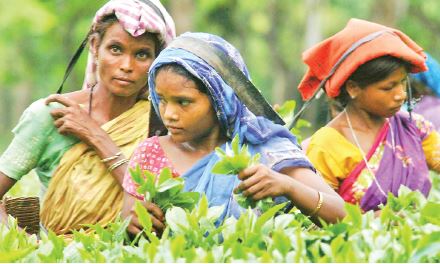
In Assam, where tea is one of the state’s defining industries, 36 communities known collectively as tea tribes are demanding Scheduled Tribe (ST) status. The All Adivasi Students’ Association of Assam (AASAA), formed in 1996, has been spearheading this movement since the late 1990s.
Recently, the agitation saw a breakthrough. According to AASAA’s George Dipak Nag from Udalguri district in Bodoland, the state government has agreed to issue caste certificates in the original community or tribe names instead of the general “tea tribes” label. A gazette notification is expected on September 18, just ahead of the Bodoland Territorial Council elections. “This is a huge step forward. It will help preserve the culture and heritage of these tribes and remove the colonial connotation of the ‘tea tribes’ term,” Nag said.
AASAA argues that the term masks distinct tribal identities. While there are thought to be 98 to 108 tea tribes in Assam, the organisation represents 36 that already enjoy ST status in other states. Without the tag in Assam, these groups are categorised as OBCs and miss out on government benefits. “Our ultimate aim is ST recognition,” said AASAA chief advisor Anil Toppo.
The issue has deep roots. In the 19th century, the British brought workers from central and eastern India to Assam’s tea estates. Over time, assimilation eroded traditional customs. Today, communities such as the Munda, Santhal, Oraon, and Gond are collectively called tea tribes, though they retain ST status elsewhere. “This is a political name given after 1947,” said trade unionist Royal Soren of Tezpur. His union, the Akhil Bharatiya Chah Mazdoor Sangha, is demanding land pattas, higher wages of Rs 650 instead of Rs 250, and ST recognition.
Currently, Assam has a Tea Tribes and Adivasi Welfare Department, which critics say perpetuates the label. Some groups also point out that certain tribes lived in Assam even before the colonial era. The population of the 36 tea tribes is estimated at over 10 million. Activists argue that the lack of recognition keeps them deprived of healthcare, education, and social security. Many tea garden women face malnutrition and anaemia, with poor medical access leading to deaths during pregnancy. Children often walk long distances to attend school.
The demand, however, faces resistance. Tribes like the Rava oppose inclusion, while Bodo groups fear loss of job opportunities if more tribes are recognised as STs. Other communities, including the Ahoms, Moran, Motak, Sutia, and Koch-Rajbongshis, are also seeking the same status, intensifying political complexities ahead of local polls.
With 850 registered tea gardens in Assam, the debate over nomenclature and recognition carries economic, social, and political weight. While tea continues to be Assam’s global identity, for many workers, the struggle is about reclaiming their own.
Over 12.22 crore individual toilets have been built in rural households across India, and 98,273 biogas plants have...

The chief ministers of Uttar Pradesh, Uttarakhand, Himachal Pradesh, Rajasthan, Delhi and Haryana signed an agreement on September...

As Brussels moves the trade agreement between India and the European Union (EU) towards signature, India and Italy...

India’s festive hiring is expected to rise 15–20 per cent this year, with the 2026 festive season likely...

Stay updated with the biggest India and world headlines, breaking news, political developments, business updates, sports and other...

The All India Mobile Retailers Association has sought exemption for small and medium mobile retailers from proposed UPI...

Aries: The day will be auspicious...